This building was first constructed as Fukagawa Cafeteria for Tokyo City back in 1932. It then went through several iterations, eventually becoming a Registered Tangible Cultural Heritage of Tokyo in 2008 for its connections to reconstruction efforts after the great Kanto earthquake of 1923, and for being the sole city cafeteria building still in existence. It currently functions as an information centre for tourists, a gallery and classrooms.
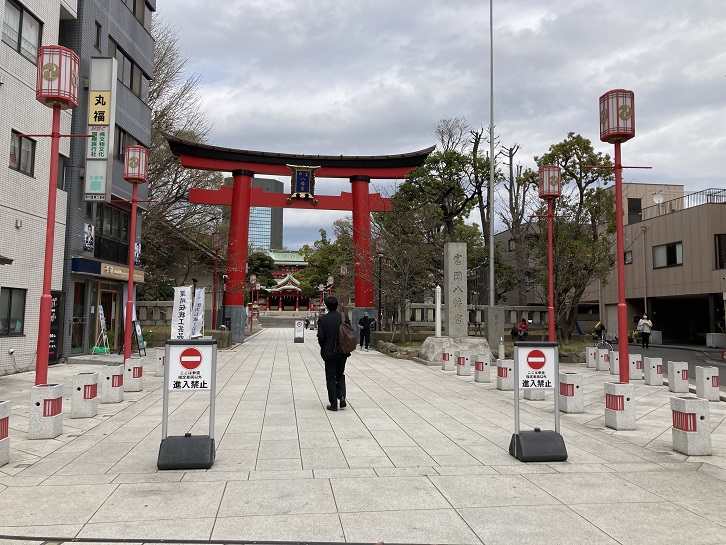
This shrine is famous for being the site of Tomioka Hachiman Matsuri, one of the Three Great Festivals of Edo. The largest of the celebrations, the "Hon-Matsuri", is held every 3 years and features a parade of fifty-some portable shrines around town. The carriers of the shrines are dowsed in water as they proceed, which is a spectacle to behold. It is also known as the site of origin for sumo wrestling.
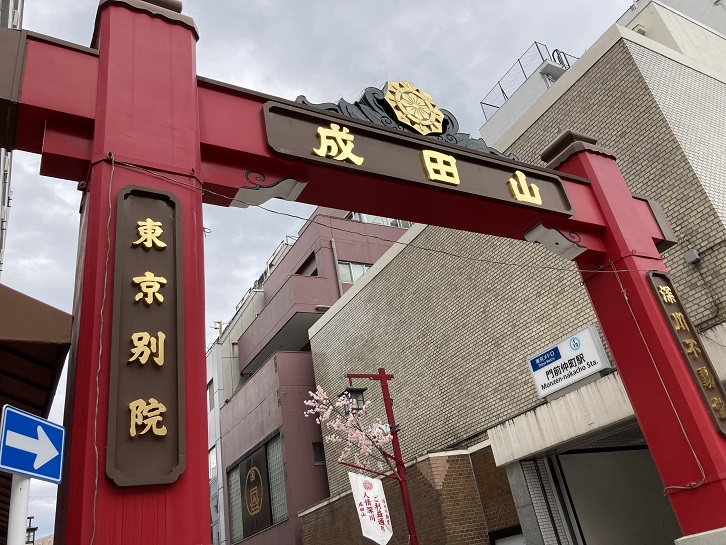
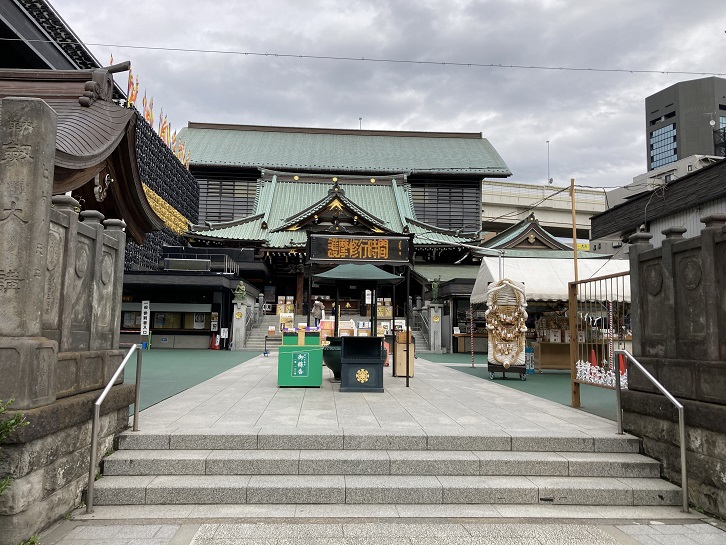
Fukagawa Fododo Temple is the Tokyo branch of Narita-san Shinshoji Temple from Narita City, Chiba prefecture, and has been a beloved local structure since olden times. The greatly impressive Goma Fire Ritual is held daily at scheduled hours
and features the beating of four taiko drums. The temple also houses one the greatest ceiling art of Japan, the Shikoku Pilgrimage, and a prayer hallway decked with 10,000 Buddha statues.
The Seven Lucky Gods of Fukagawa can be found in 3 shrines and 4 temples. The recommended route to visit all of them is : Monzen-nakacho Sta., Tomioka Hachimangu Shrine (Ebisu, Protector of Crops), Fuyuki Bentendo Temple (Benzaiten, Goddess of Music), Shingyoji Temple (Fukurokuju, God of Wisdom), Enjuin Temple (Daikokuten, God of Prosperity), Ryukoin Temple (Bishamonten, God of War), Fukagawa Inari-jinja Shrine (Hotei, God of Happiness), Fukagawa Shinmelgu Shrine (Jurojin, God of
Health), Morishita Sta.
Tokyo University of Marine Science and Technology (Etchujima Campus)
This university opened in October of 2003 when the Tokyo University of Mercantile Marine and Tokyo University of Fisheries were combined into one institute. It is the only university in Japan with a focus on oceanography, maritime affairs and fisheries. The main building was constructed in 1932 and holds great historical value. Meiji-maru, which is an Important Cultural Property, is kept on campus.
Built in Glasgow, Great Britain, in 1874, this is the oldest iron ship in existence within Japan. It was used as a royal ship for Emperor Meiji. Aside from functioning as a lighthouse patrol ship and as a training ship for some 5000 young sailors, it also saved many lives during the great Kanto earthquake of 1923 and the Bombing of Tokyo in 1945. It was the first ship to be registered as an Important Cultural Property in 1978.
The festival at Tomioka Hachimangu Shrine was one of the ????? famous festivals in Edo (Tokyo). The main festival is held in every three years. The festival is known as Mizukake Matsuri or Hadaka Matsuri.
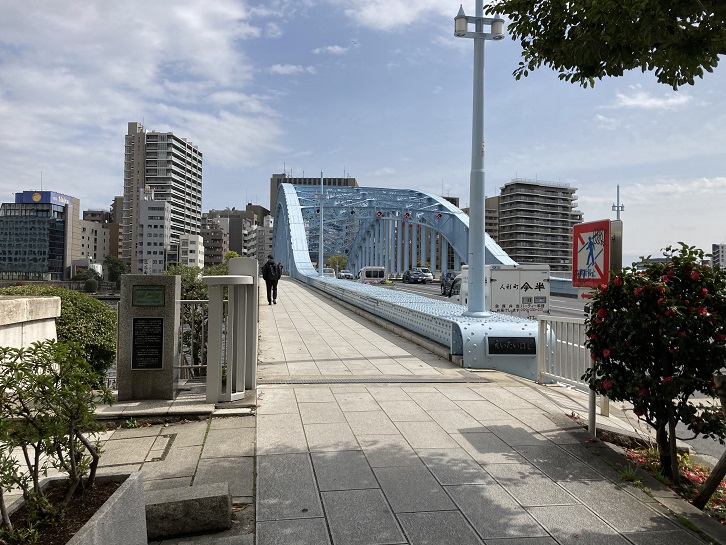
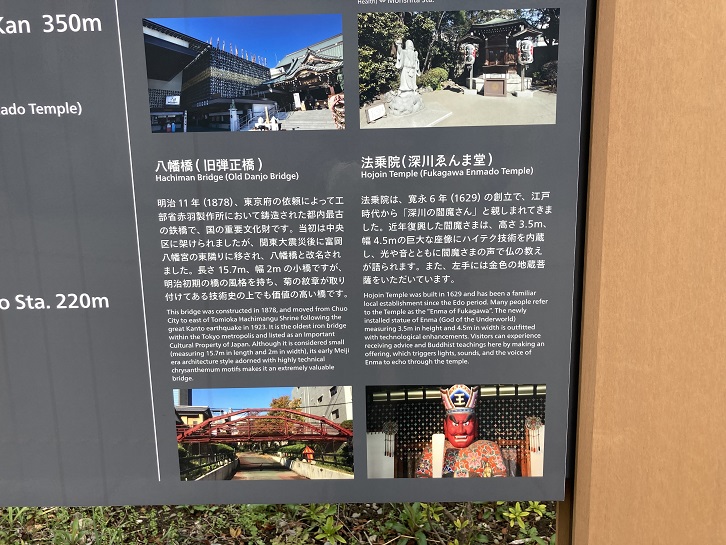
This bridge was constructed in 1878, and moved from Chuo City to east of Tomioka Hachimangu Shrine following the great Kanto earthquake in 1923. It is the oldest iron bridge within the Tokyo metropolis and listed as an Important Cultural Property of Japan. Although it is considered small (measuring 15.7m in length and 2m in width), its early Meiji era architecture style adorned with highly technical
chrysanthemum motifs makes it an extremely valuable bridge.
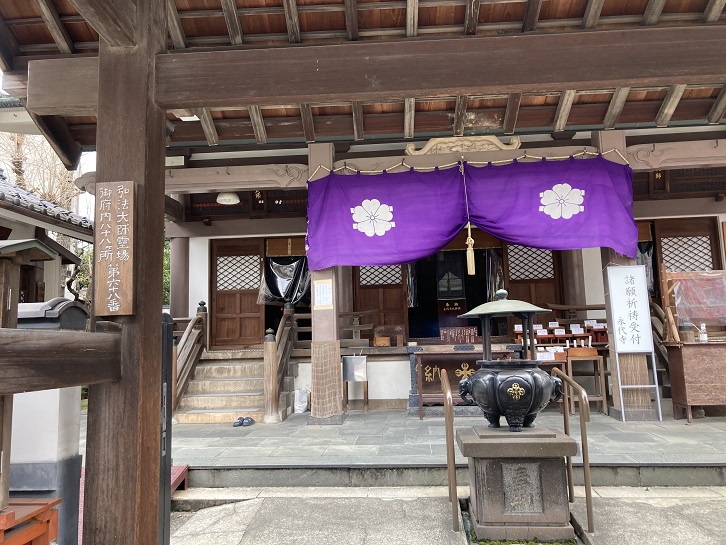
Hojoin Temple was built in 1629 and has been a familiar local establishment since the Edo period. Many people refer to the Temple as the "Enma of Fukagawa". The newly installed statue of Enma (God of the Underworld) measuring 3.5m in height and 4.5m in width is outfitted with technological enhancements. Visitors can experience
receiving advice and Buddhist teachings here by making an offering, which triggers lights, sounds, and the voice of Enma to echo through the temple.
Yasujiro Ozu, the movie director, was born in Fukagawa in 1903. He became known for his works depicting the households and lives of Japanese families, like "Tokyo Story" and "Late Spring". The Ozu Yasujiro Introduction Exhibition Corner displays photographs and memorabilia from his life and works, and explains his importance to the world of Japanese cinema and beyond.
Koto City Tourism Association is located within Business Center. Information on sightseeing spots within the city, guided walking tours, noteworthy events and promotional activities are gathered, organized, and relayed here. Aside from various pamphlets and guides, the office also sells Kotomi-chan merchandise (Kotomi-chan is the official Koto City Tourism mascot).
江東区役所
江東区は、親水公園など豊かな水辺と緑が暮らしの中に息づく「水彩都市」です。江戸文化の風情を残す下町のイメージがある一方で、臨海部では未来型の都市整備が進んでいます。区では、「SPORTS & SUPPORTS KOTO City in TOKYO スポーツと人情が熱いまち江東区」をブランドコンセプトに国内外に区の魅力を積極的に発信しています。
Koto City Office
Koto City is filled with greenery and waterways, making it a "waterscape city". While the older parts of town still retain their traditional atmospheres from the Edo period, the bay area showcases a modern cityscape that continues to grow and develop. The city's branding concept is "SPORTS&SUPPORTS KOTO City in TOKYO", which
encapsulates the city's love for sports and the active support of its warm communities.
Tokyo East 21 opened for business in 1992. This complex contains a hotel, a shopping mall and office buildings. The hotel has various luxurious guest rooms, a large banquet hall, a pool, and ceremonial rooms for weddings, while the shopping mall contains many restaurants and event spaces, which are utilized often by the workers in the attached office buildings.
This gallery in Takenaka Corporation Tokyo head office is operated by the Public Interest Foundation. Their concept is "Architecture Blessing", and they introduce various Phenomena around the environment, education and others through architecture and art from professionals but also everybody. They also host lectures and workshops related to exhibitions.
This wide space, used by many for recreation and relaxation, features the representative Kiba Park Ohashi Bridge, a playground area, a barbecue area, a dog park, and a botanical garden. Every October, the Koto City Community Festival is held here to great excitement. The north part of the park leads up to the Museum of
Contemporary Art Tokyo, another popular destination.