@その1.江戸城とお堀めぐり・江戸城と内堀をめぐる  

都会の真ん中に広がる緑豊かな皇居東御苑は、名城・江戸城跡。一歩足を踏み入れると、迫り来る巨大な石垣に圧倒されるはず。江戸城内はもちろん、お堀端に点在する江戸の面影をたっぷり紹介します。将軍の気分を存分に味わって!
 

コース 踏破記  

今日は千代田区の「@その1.江戸城とお堀めぐり・江戸城と内堀をめぐる」を歩きます。東京メトロ大手町駅をスタート・ゴール地点として、皇居二の丸庭園・北の丸公園を巡り、内堀通りを半周して皇居外苑から大手町駅に戻ります。江戸城を味わい尽くす歴史のコースです。

スタート地点:大手町交差点
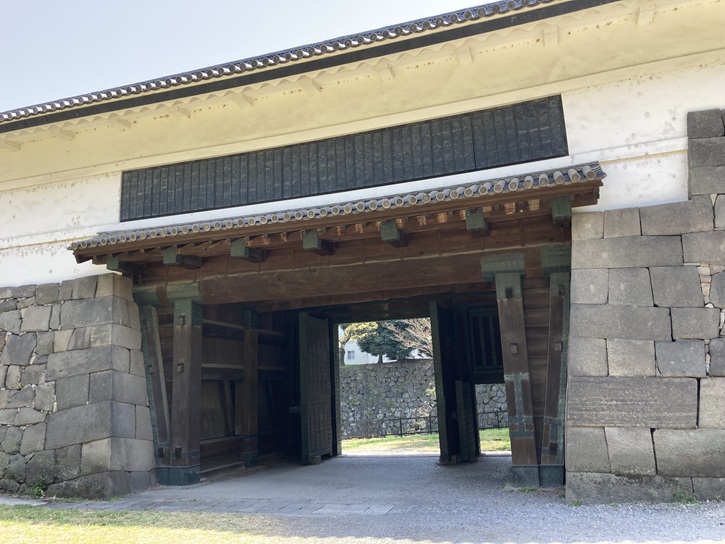
ポイント1 江戸城の正門 大手門
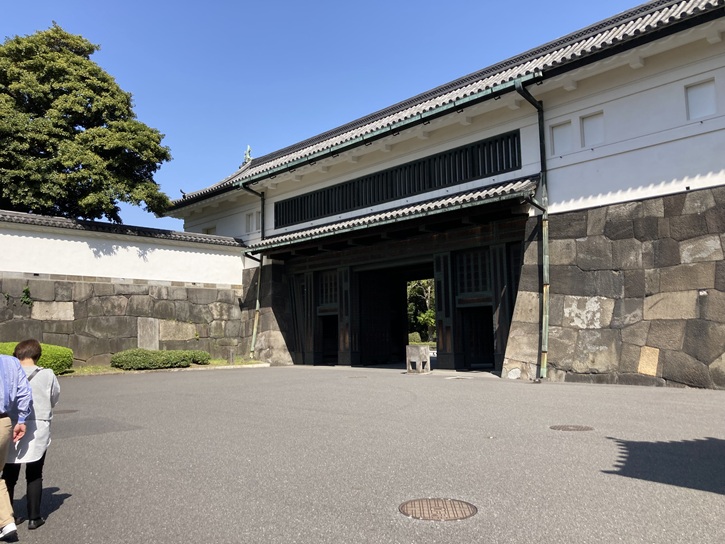
築城名手として知られた津藩の初代藩主藤堂高虎らによって、慶長年間(1596年〜1615年)に創建された。江戸城の正門にあたり、参勤交代で江戸に滞在していた大名たちが、新年や月次で登城する際に使用された。現在の門は、昭和四十二年(1967年)に復元されたもの。
ポイント2 江戸城最大の検問所 百人番所
皇室ゆかりの品を収蔵・展示する三の丸尚蔵館を過ぎ、大手三之門の石垣を抜けると、左手に現れるのが百人番所。城内最大の検問所で、与力20人・同心100人に加え、鉄砲百人組と呼ばれた根来組、伊賀組、甲賀組、二十五駒組が昼夜交代で警備にあたっていた。
 
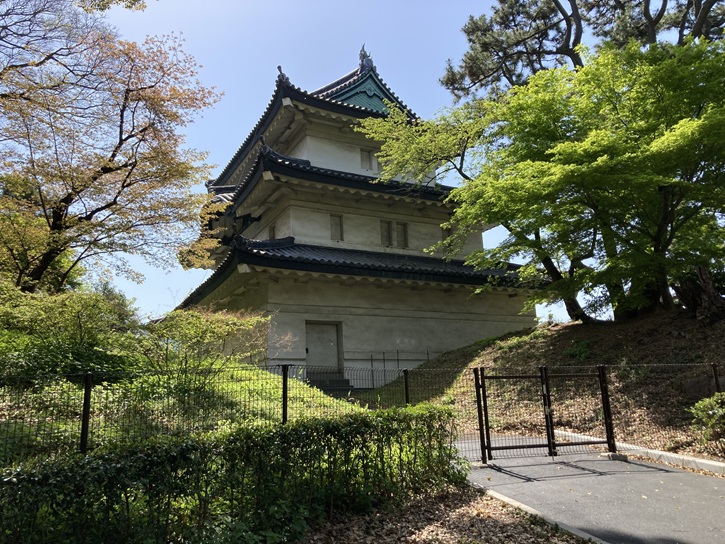
ポイント3 天守の代用とされた櫓 富士見櫓
皇居東御苑の南端に位置し、現存する唯一の江戸城の三重櫓である。明暦の大火(1657年)で焼失したものの、2年後に再建。同じ火事で失われた天守の代用とされた。どこから見ても同じような形に見えることから、「八方正面の櫓」とも呼ばれている。
 
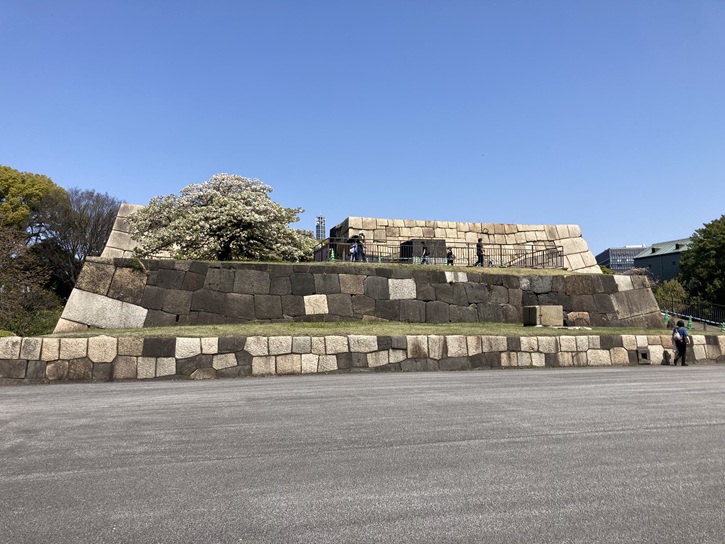
ポイント4 巨石の石積みに圧倒される 天守台
江戸城に天守があったのは慶長十二年(1607年)から約50年。その間に3度建て替えられた。家光の時代に建造された最大にして最後の天守は、明暦の大火で焼失。天守台は再建されたが、天守の建設は保科正之の進言で城下の復興を優先して、中止された。
 
ポイント5 小堀遠州が作庭した 二の丸庭園
二の丸は、将軍の世嗣(後継者)や前将軍の正室のための御殿が置かれた場所である。鑑賞や遊興の場として親しまれた池泉回遊式庭園は、寛永七年(1630年)ごろに、武家で茶人の小堀遠州が作庭した。現在の庭は、昭和四十年(1965年)に復元したもの。
 
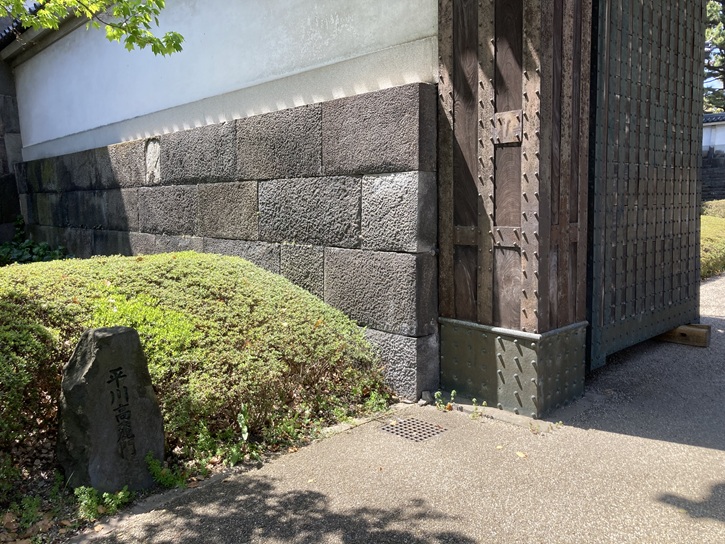
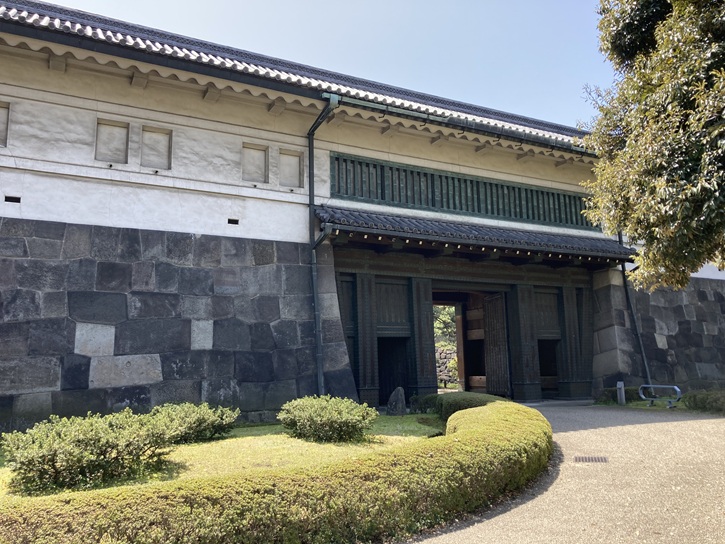
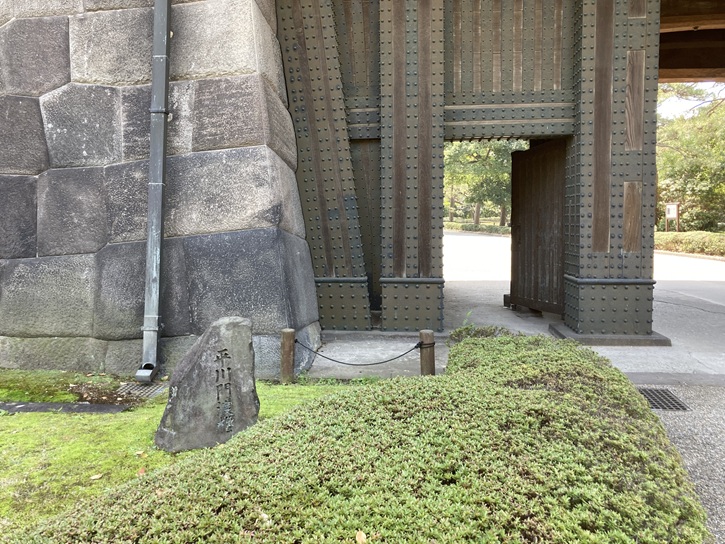
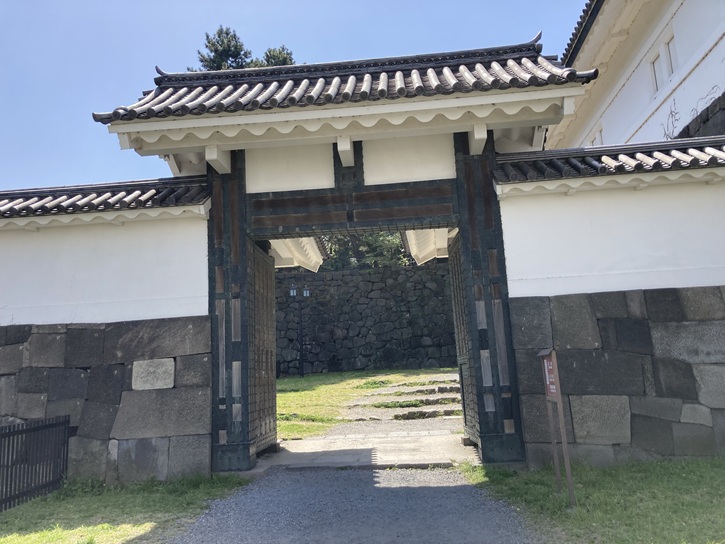
ポイント6 大奥女中の通用門 平川門
三の丸の正門である平川門は、元和六年(1620年)に仙台藩初代藩主の伊達政宗らによって築かれた。別名「お局門」と呼ばれるのは、本丸大奥に通じていたため奥女中が通用門として使用したから。また、城内の死者や罪人などの出ロとされたことから不浄門ともいう。
ポイント7 江戸東京の基礎を築いた武将 太田道灌公追慕之碑
平川門を出て左手に、3つの石を組んだ石碑がある。江戸・東京の繁栄と発展の基礎を築いた室町時代の武将太田道灌の追慕碑だ。長録元年(1457年)、太田氏は現在の皇居東御苑あたりにわずか1年で江戸城を築城したという。この碑の材は、虎ノ門の石垣の一部。
 
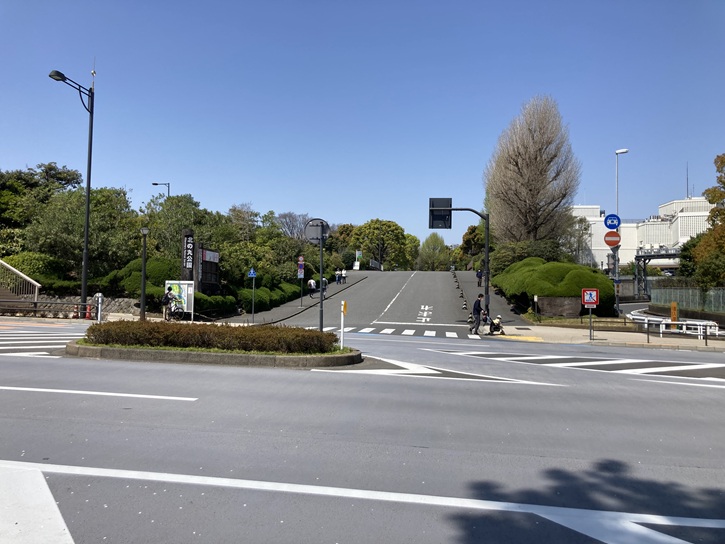
ポイント8 天下祭りの山車も通った 竹橋御門跡
北の丸東の出入口で、元和六年(1620年)、平川門と同じく仙台藩主伊達政宗らによって築かれた。天下祭り(神田明神と日枝神社の例大祭)の山車行列が通過したのもこの門だった。門は撤去されてしまったが、平川門へつながる細長い帯曲輪(*)は健在。

(*)帯曲輪(おびくるわ):曲輪(廓)は、城を構成する区画のこと。帯曲輪は、本丸などの主要な区画の周囲にある細長い曲輪。
 
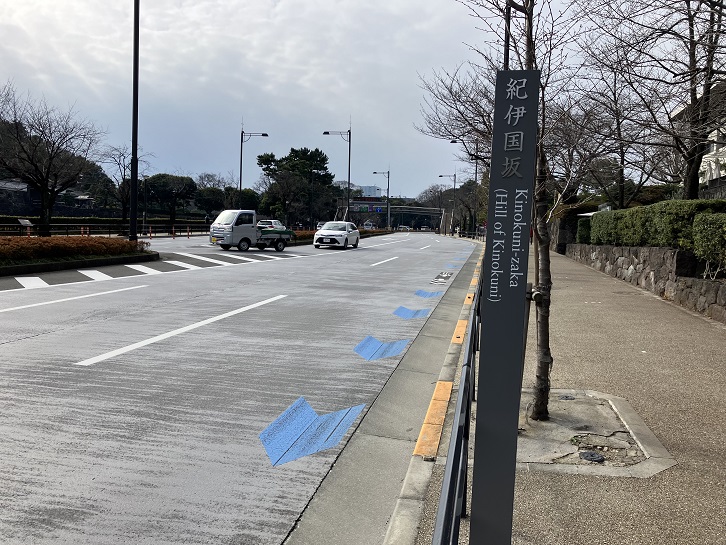
ポイント9 紀州徳川家に由来する 紀伊国坂
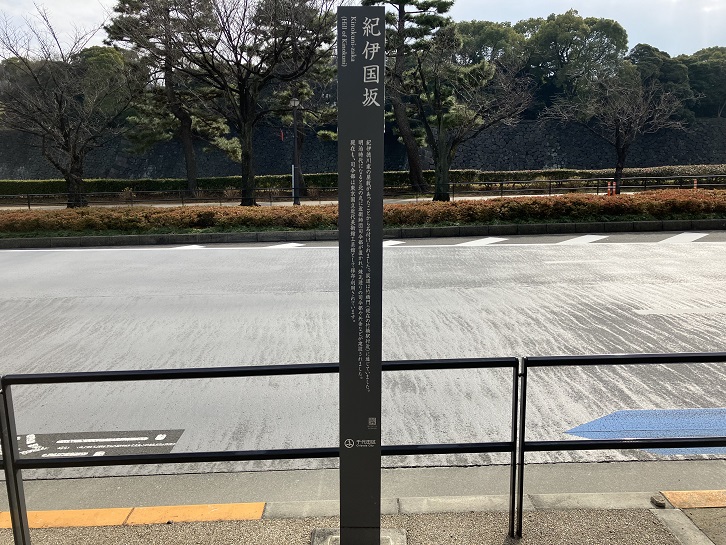
東京国立近代美術館前から内堀通りに通じる代官町通りが「紀伊国坂」と呼ばれているのは、紀州徳川家の屋敷があったことに由来する。坂道は竹橋門(竹橋駅付近)の入口へと続いていたという。紀州徳川家の屋敷は明暦の大火後、現在の紀尾井町へ移転した。
 
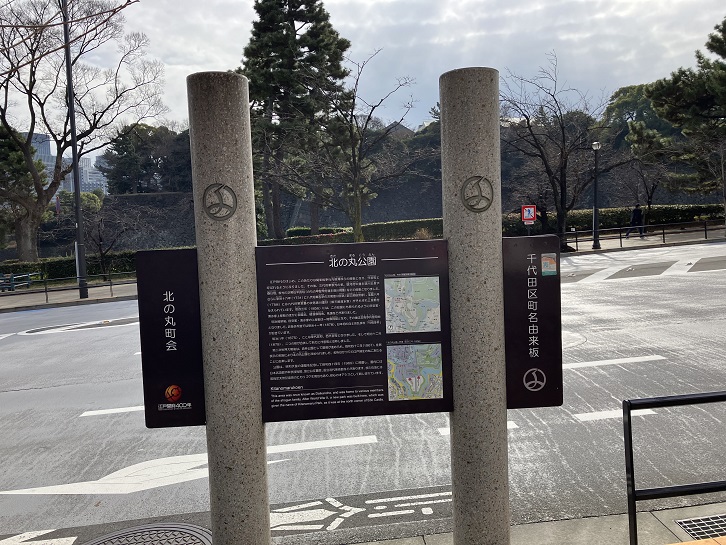
ポイント10 春日局も暮らした場所 北の丸公園
北桔橋門方向に向かって紀伊国坂を上ると右手に北の丸公園が広がる。ここは、江戸城北の丸にあたり、江戸時代初期は内藤清成ら代官の屋敷があった。その後、三代将軍家光の弟忠長や春日局が居住。江戸中後期には、御三卿(*)の田安家と清水家の屋敷となった。

(*)御三卿(ごさんきょう):徳川一族で、田安、一橋、清水の三家をさす。江戸中期に将軍家より分立。御三家と同様に、将軍を補佐し、将軍に継嗣がないときは、将軍家を相続することができた。
 
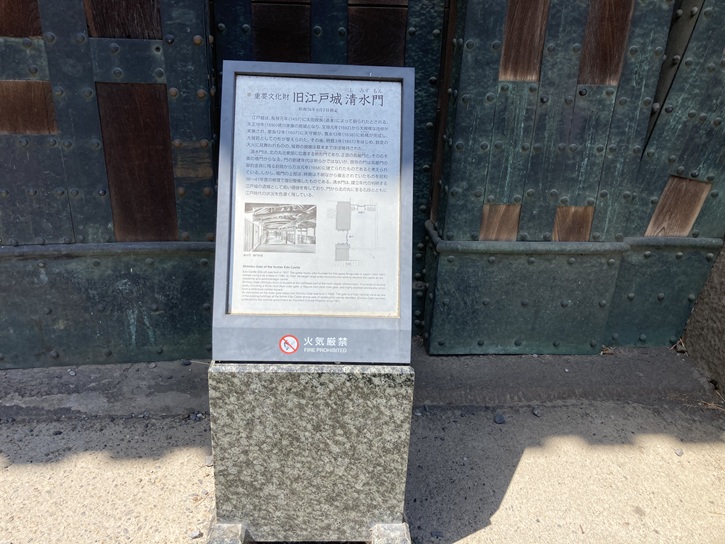
ポイント11 江戸時代の面影が残る 清水門
北の丸公園の北東に位置する清水門は、江戸城内郭の門のひとつ。広島藩の初代藩主浅野長晟らによって寛永元年(1624年)に築かれた。宝暦九年(1759年)、門内には、九代将軍家重の第2子が創設した清水家の屋敷が置かれた。重要文化財に指定されている。
 
ポイント12 現存する最古の江戸城門 田安門
北の丸公園北端の田安門は、寛永十三年(1636年)に福井藩初代藩主の松平忠昌らの造築。享保十五年(1730年)、門内には、八代将軍吉宗の第2子が創設した田安家が置かれた。幾度か改修をされたものの、現存する最古の城門。重要文 化財に指定されている。
 
ポイント13 江戸の水を確保するダム 千鳥ヶ淵
江戸開府当時の千鳥ヶ淵は、水を確保するためのダムとして機能していた。麹町から流れる小川をせき止めることで水源を確保したのだ。この水は、江戸城草創期には、本丸と西の丸の間を通って日比谷入江(現在の日比谷公園あたり)に流れ込んでいた。
 
ポイント14 服部半蔵が警固した 半蔵門
江戸城の西側、内堀通りに面する半蔵門は、江戸城の主要な出入口。江戸五口(*)のひとつで、甲州道の出発点でもある。元和六年(1620年)築造のこの門の名は、旗本服部半蔵正成が麹町に組屋敷を拝領し、警戒にあたったことに由来するともいわれている。

(*)江戸五口(えどごくち):江戸城外郭門のうち、江戸と諸国を結ぶ五街道の出入口となる主要な五門をさす。桜田門(小田原口)は東海道、半蔵門(甲州口)は甲州道中、田安門(上州口)は上州道、神田橋門(柴崎口)は中山道、常盤橋門(浅草口)は奥州道中につながっていた。
 
ポイント15 別名「千代田城」が区名の由来 江戸城跡石碑
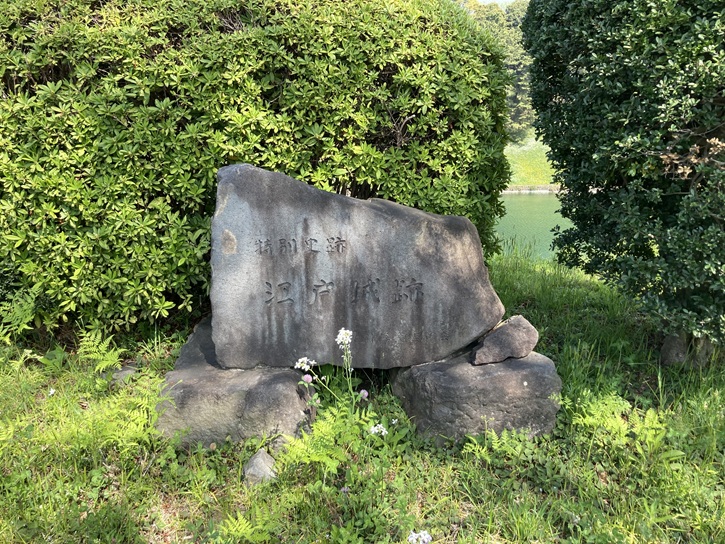
長禄元年(1457年)に太田道灌が築城。「千代田城」「江城」とも呼ばれた。天正十八年(1590年)には徳川家康が入城。その後300年近く、将軍の居城として政治の中心となったことの歴史的価値が認められ、特別史跡に指定されたことを示す。
 
ポイント16 桜田門間近に位置する 井伊掃部頭邸跡
憲政記念館一帯には、江戸時代初頭、熊本藩主加藤清正の屋敷があった。清正が掘ったと伝えられる「桜の井戸」も残る。その後、彦根藩井伊家の上屋敷となる。掃部頭は歴代の井伊家宗家の当主が名乗った官職で、幕末の藩主井伊直弼も掃部頭を名乗った。
 
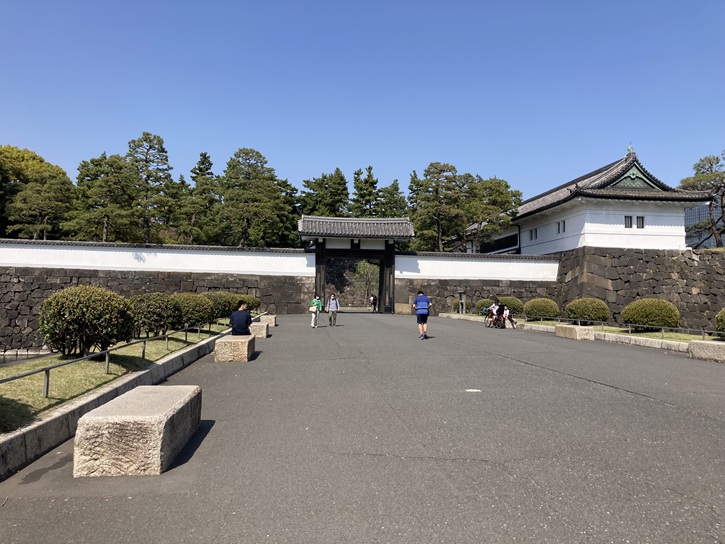
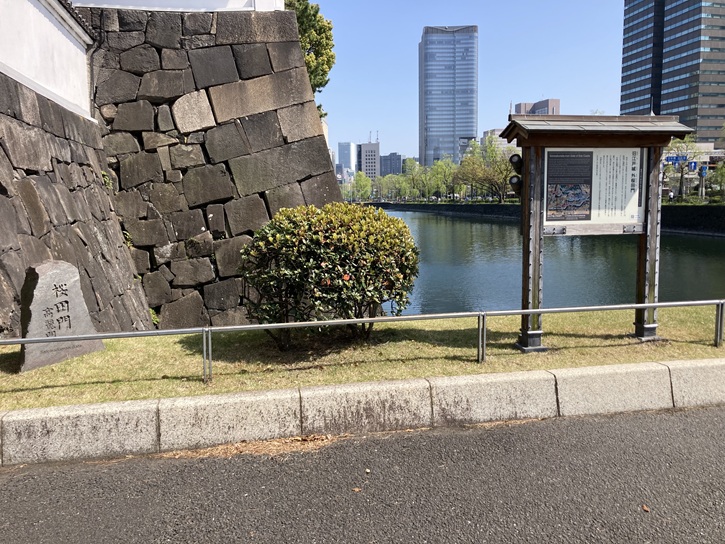
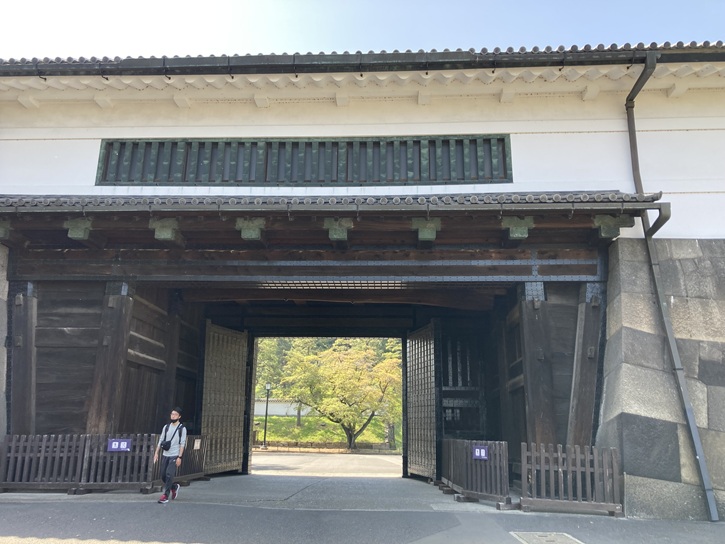
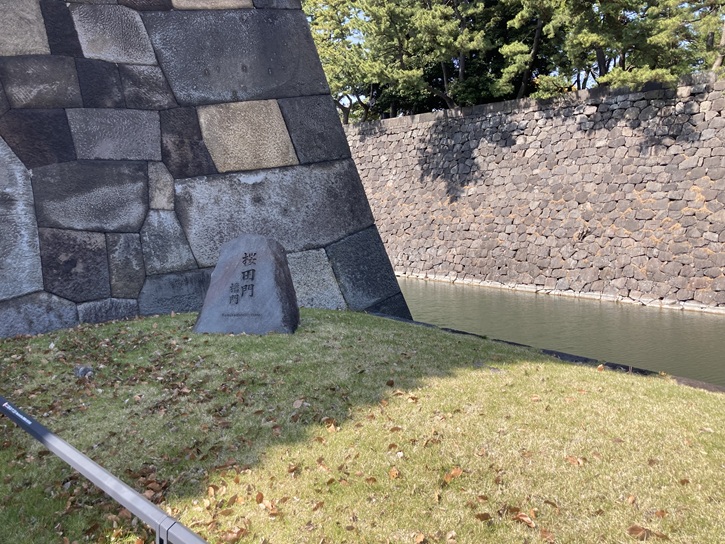
ポイント17 江戸城最大の枡形門 桜田門
江戸時代には「外桜田門」と呼ばれ、江戸五口のひとつだった。江戸城の枡形(*)門では最大規模を誇り、重要文化財に指定されている。安政七年(1860年)3月早暁、登城するため屋敷を出た大老井伊直弼が、水戸藩浪士らの襲撃を受けたのは、桜田門外の堀端だった。

(*)枡形(ますがた):虎口(城の入口)を石垣や土塁で囲んだ、四角形の小さな広場。攻撃に出る際の兵の集合場所になるとともに、敵の侵入を防ぐもので、形が四角いことから枡形と呼ぶ。広場の外側に高麗門、内側に櫓門を設けるのが一般的。
 
ポイント18 波瀾万丈だった上杉家の藩邸 米沢藩上杉家江戸藩邸跡
桜田門の正面は、米沢藩上杉家上屋敷だった。初代藩主景勝は会津若松120万石を領した大大名だったが、関ヶ原の戦いの際に西軍に与し、出羽米沢30万石までに減封。その後、さらに15万石に減封された。米沢藩を立て直したのが、九代藩主鷹山だった。
 
ポイント19 名奉行が暮らした場所 大岡越前守忠相屋敷跡
東京メトロ霞ケ関駅前の弁護士会館には、大岡越前守忠相の屋敷があった。八代将軍吉宗に抜擢され、江戸町奉行となった忠相の公正で人情味ある裁きは、講談や落語で広く伝わる。町火消制度や小石川養成所の創設にも尽力し、大名にまで栄進した。
 
ポイント20 吉田松陰も出入りした 長州藩上屋敷跡
江戸時代初期には日比谷公園一帯は、入江だった。公園内の心字池は、その名残だといわれる。慶長年間(1596年〜1615年)に埋め立てられ、長州藩など有力大名の屋敷となった。案内板はないが、「東都桜田長州屋敷図」などにも描かれている。
 
ポイント21 セレモニーと縁の深い 馬場先門跡
広島藩の初代藩主浅野長晟らによって寛永六年(1629年)に創建された。門名は、三代将軍家光が、朝鮮から派遣された外交使節団の曲馬を門内の馬場で上覧したことに由来。日露戦争大勝の祝賀行列が行なわれた際、死傷者が出たため、門は撤去された。
 
ポイント22 復元した橋と濠の景観が見事 和田倉門跡
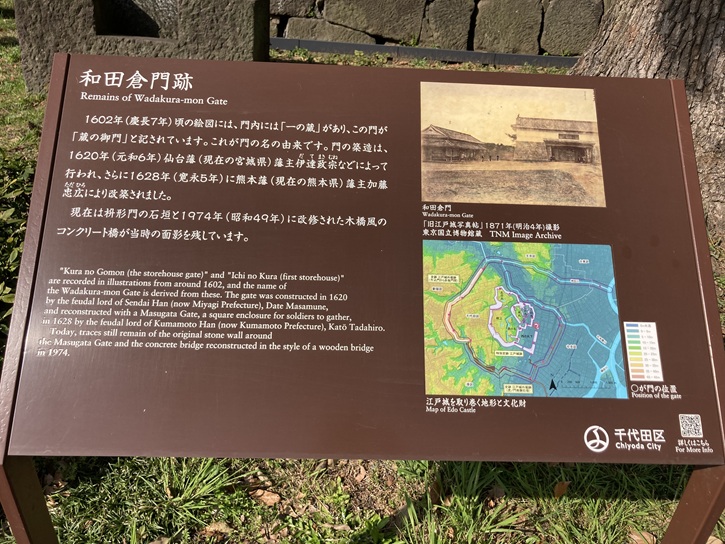
東京駅正面から皇居外苑に通じる行幸通りの北側に位置する和田倉門は、元和六年(1620年)に仙台藩主伊達政宗らによってつくられた。現在の復元された橋は木橋を模したコンクリート造だが、まわりの濠などと調和した美しい景観は、江戸情緒を感じさせる。

ゴール地点:大手町交差点


スタート地点の大手町交差点から歩き始めます。


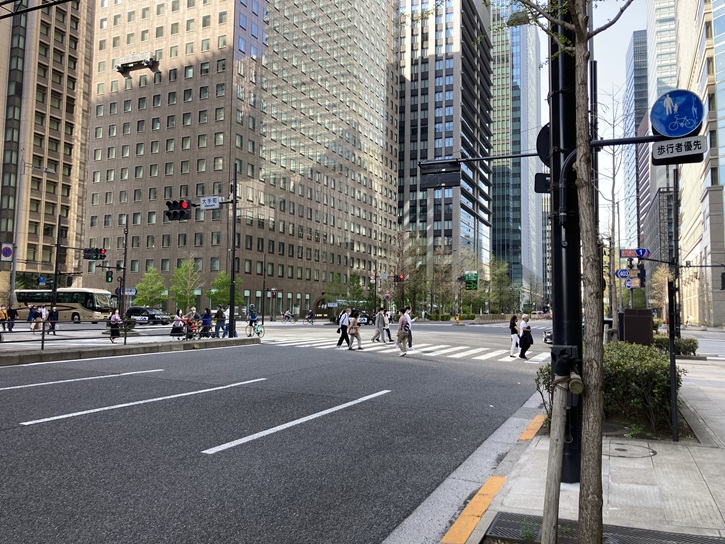
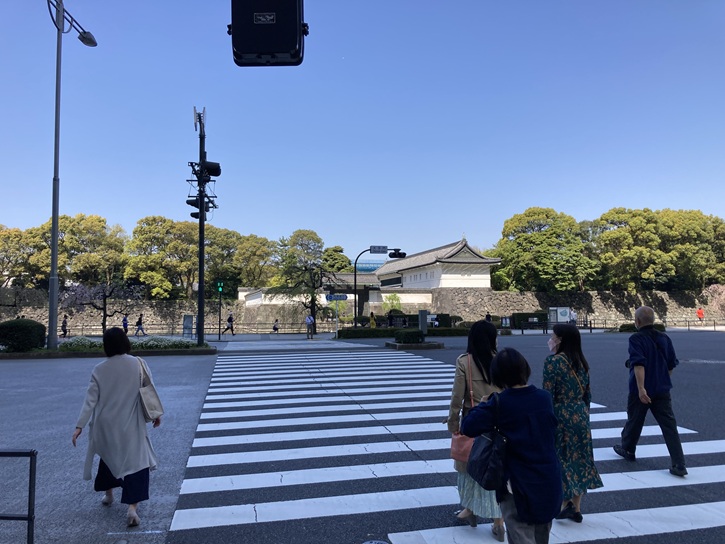
大手町交差点から永代通りを西に向かい、内堀通りを横断して皇居東御苑に向かいます。


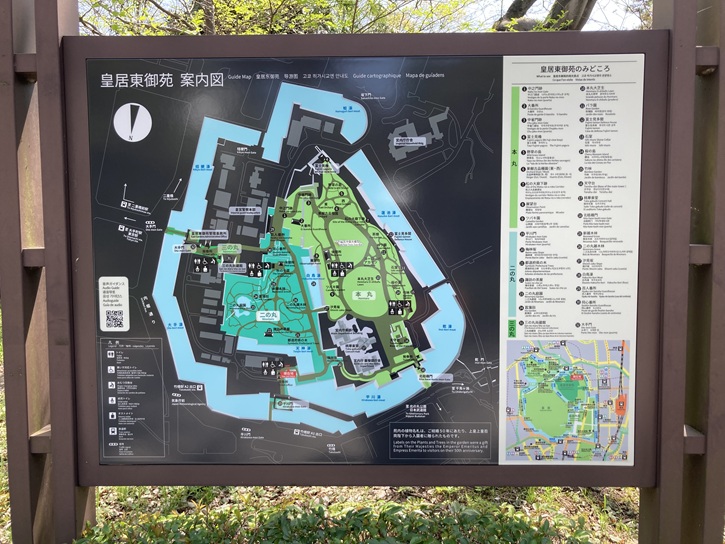
皇居東御苑は、かつて江戸城の本丸・二の丸・三の丸があったところに位置しています。本丸には江戸幕府将軍の住居である本丸御殿や天守閣があり、城の中枢でした。全域を宮内庁が管轄し、昭和四十三年(1968年)10月1日から宮中行事に支障のない限り一般に公開されています。苑内は自然が豊かで、昭和天皇の発意により武蔵野の自然を再現した二の丸雑木林や、果樹の古品種園、明仁上皇の所望によりヒレナガニシキゴイが放流されている池などがあります。この他、日本庭園や皇室関連の施設・江戸城の遺構など歴史的な史跡も見ることができ、国内のみならず海外からの旅行者も多く訪れます。苑内には宮内庁関係の施設があるため、立ち入り禁止の区域があります。平成三十年(2018年)3月27日に開園以来の来場者数が3000万人に達しました。見学は無料で、大手門・平川門・北桔橋門の各門から出入りします。公開日は、原則として月曜日と金曜日以外の各日になっています。
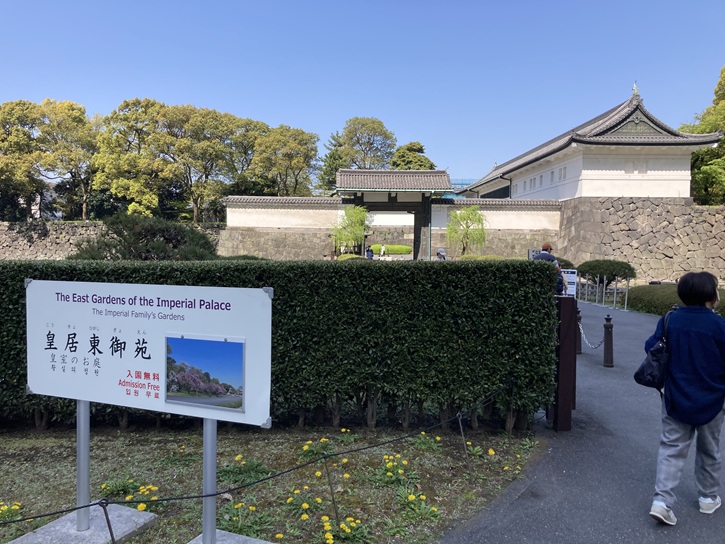
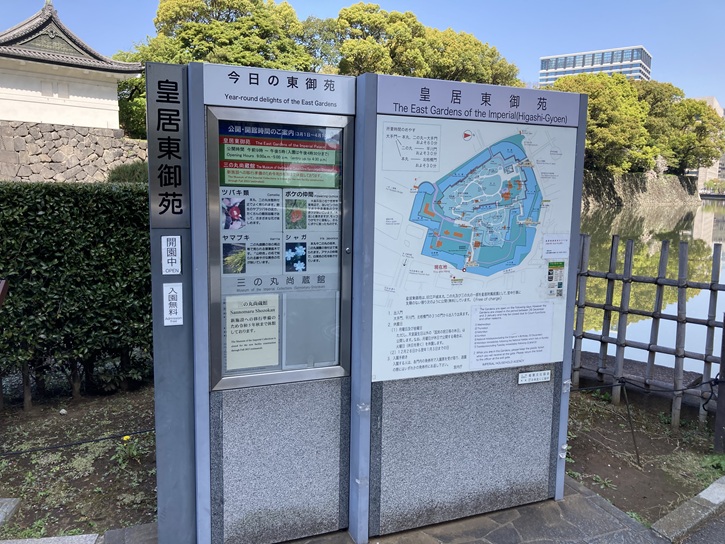

ポイント1 江戸城の正門 大手門

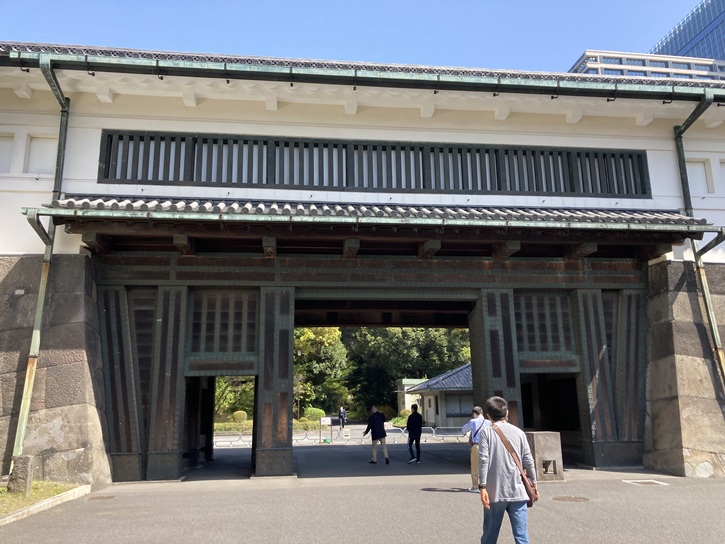
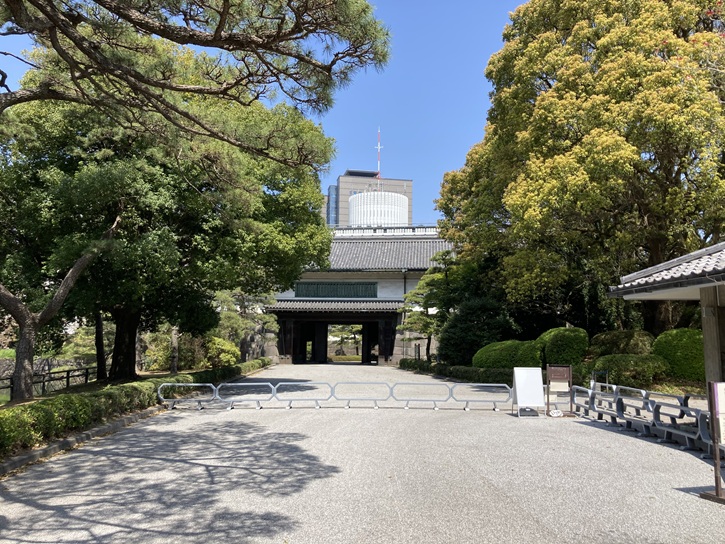
今日は、最も利用者の多い大手門から入場します。大手門は、慶長十二年(1607年)に築城の名手であった藤堂高虎によって1年3ヶ月ほどかけて築かれました。元和六年(1620年)の江戸城修復に際して、伊達政宗(石垣を担当)や酒井忠世によって再建され、現在のような桝形門になりました。
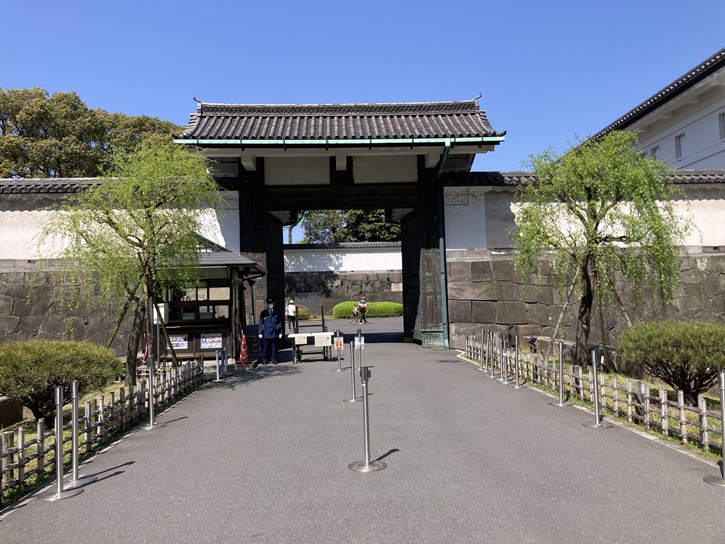
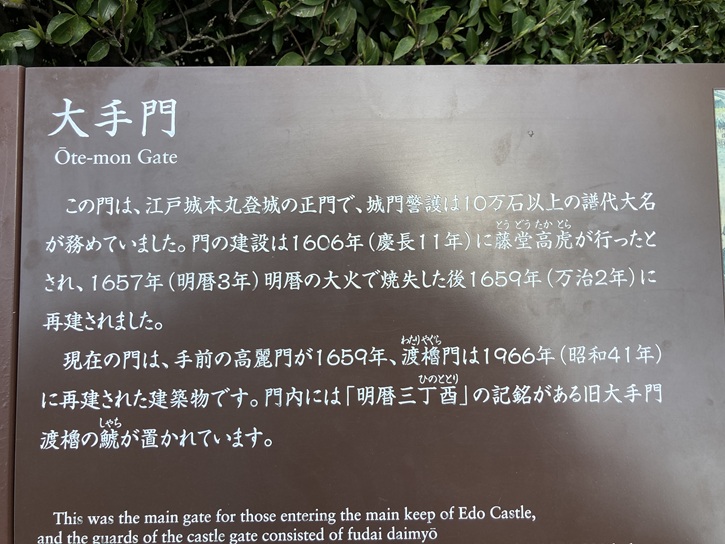
大手門

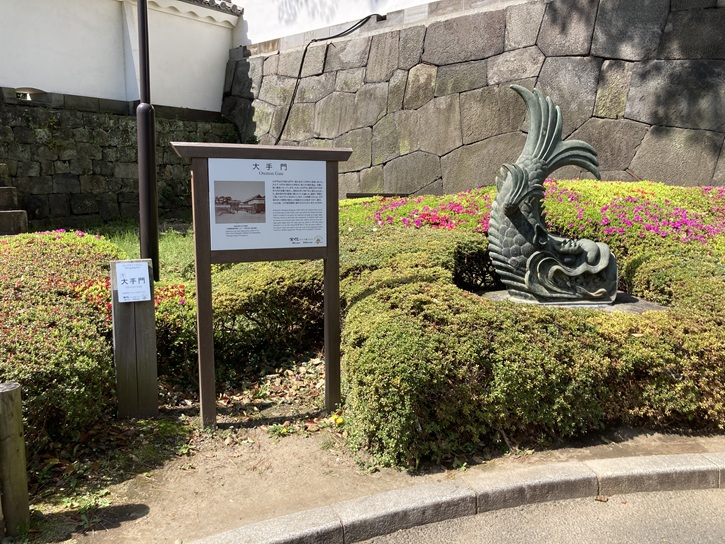
この門は、江戸城本丸登城の正門で、城門警護は10万石以上の譜代大名が務めていました。門の建設は慶長十一年(1606年)に藤堂高虎が行ったとされ、明暦三年(1657年)明暦の大火で焼失した後万治二年(1659年)に再建されました。現在の門は、手前の高麗門が1659年、渡櫓門は昭和四十一年(1966年)に再建された建築物です。門内には「明暦三丁酉」の記銘がある旧大手門渡櫓の鯱が置かれています。

Ote-mon Gate

This was the main gate for those entering the main keep of Edo Castle, and the guards of the castle gate consisted of fudai daimyo (feudal lords who had supported the ruling Tokugawa house) with at least 100,000 koku (land was measured by the amount of rice produced; one koku was around 150kg of rice, enough to feed one man for a year). The construction of the gate was carried out by Todo Takatora in 1606, and it was reconstructed in 1659 after it was destroyed in the great Meireki Fire (1657). The present Korai Gate (a small, three-roofed gate) in front of you dates to 1659, and the Watariyagura Gate (a two-story gate, with a tower or room on the upper story) was rebuilt in 1966.There is a shachihoko (a mythical tiger-headed carp) inside the gate from the former Watariyagura Gate, with the inscription "Meireki 3, year of the rooster"


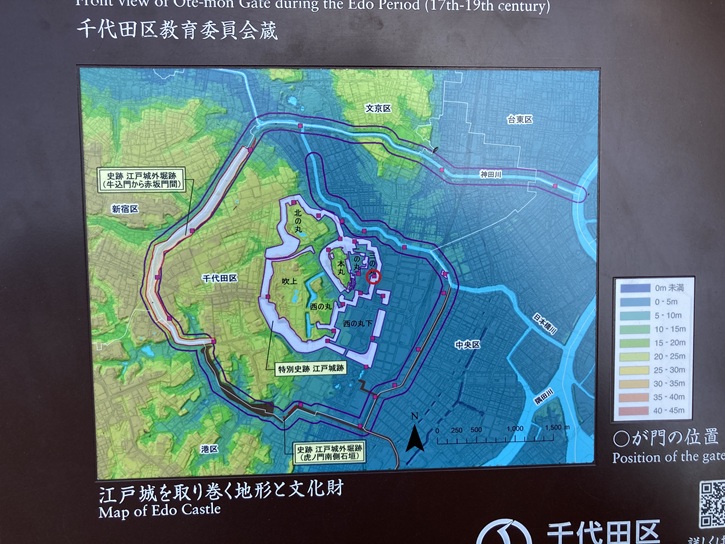
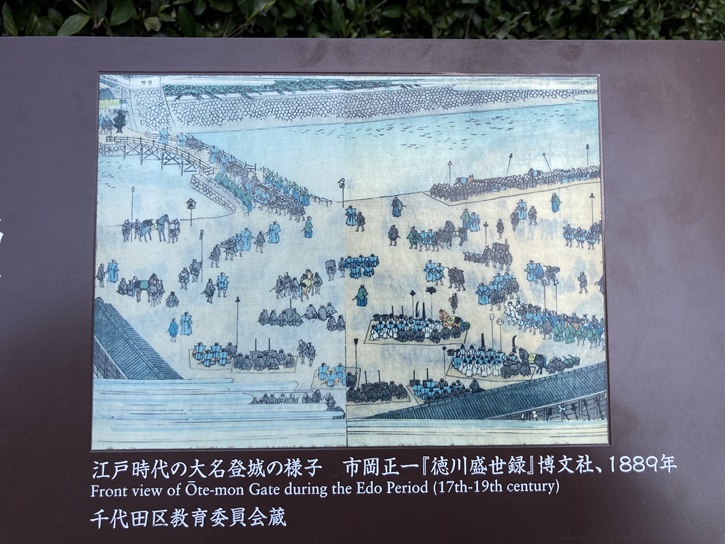
当時の江戸城の地形と、大名登城の様子が挿絵で添えられています。


大手門に向かって右側(北側)は桔梗濠(ききょうぼり)で、左側(南側)は大手濠です。


江戸城大手門は、高麗門と渡櫓型の櫓門で構成された典型的な枡形門の形式(石垣を四角く巡らして直進できない通路を設けた門)で、渡櫓の櫓門は桁行22間(40m)・梁間4間2尺(7.9m)という大規模なものでした。渡櫓門には長大な武器庫である建物を載せていました。大手門の警備を担ったのは10万石以上の譜代大名2名です。現存する高麗門は、明暦三年(1657年)の明暦の大火(振袖火事)後の万治二年(1659年)に再建されたものです。江戸時代の渡櫓門は、残念ながら昭和二十年の戦災で焼失しました。昭和四十一年の東御苑開園に伴い、昭和四十年から復元工事が行なわれ、高麗門なども修復され、往時の雰囲気が再現されました。


枡形内に渡櫓の屋根を飾っていた鯱が展示されています。刻印に「明暦三丁酉」(丁酉=ひのととり)とあり、明暦三年(1657年)の明暦の大火(振袖火事)で焼失した後、万治二年(1659年)に大手門が再建されたときのものと推定されます。昭和二十年の空襲で門は焼け落ちましたが、鯱だけは現存しています。

大手門

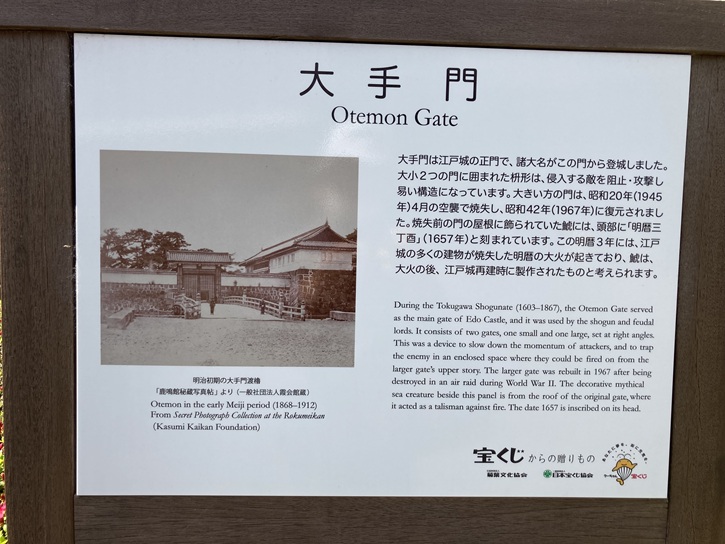
大手門は江戸城の正門で、諸大名がこの門から登城しました。大小2つの門に囲まれた枡形は、侵入する敵を阻止・攻撃し易い構造になっています。大きい方の門は、昭和二十年(1945年)4月の空襲で焼失し、昭和四十二年(1967年)に復元されました。焼失前の門の屋根に飾られていた鯱には、頭部に「明暦三丁酉」(1657年)と刻まれています。この明暦三年には、江戸城の多くの建物が焼失した明暦の大火が起きており、鯱は、大火の後、江戸城再建時に製作されたものと考えられます。

Otemon Gate

During the Tokugawa Shogunate (1603-1867), the Otemon Gate served as the main gate of Edo Castle, and it was used by the shogun and feudal lords. It consists of two gates, one small and one large, set at right angles. This was a device to slow down the momentum of attackers, and to trap the enemy in an enclosed space where they could be fired on from the larger gate's upper story. The larger gate was rebuilt in 1967 after being destroyed in an air raid during World War II. The decorative mythical sea creature beside this panel is from the roof of the original gate, where it acted as a talisman against fire. The date 1657 is inscribed on its head.


復元された櫓門です。


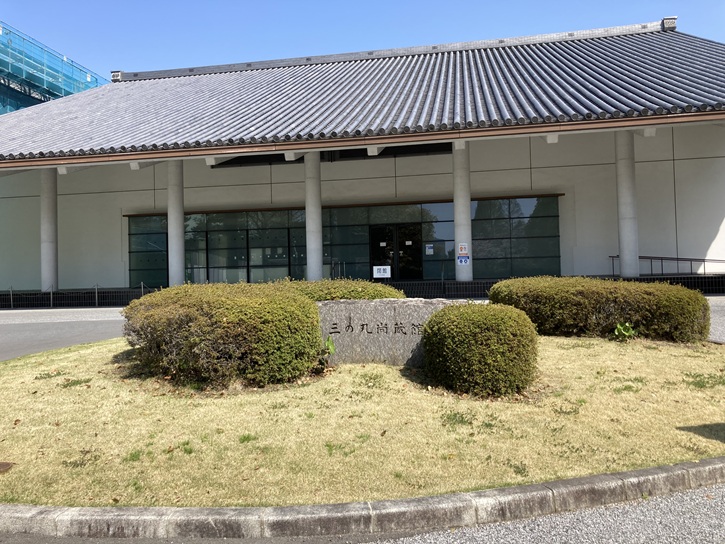
三の丸尚蔵館は、宮内庁所管の美術品や絵画など貴重な品々を展示しています。平成五年(1993年)に開館しました。入館料は無料です。


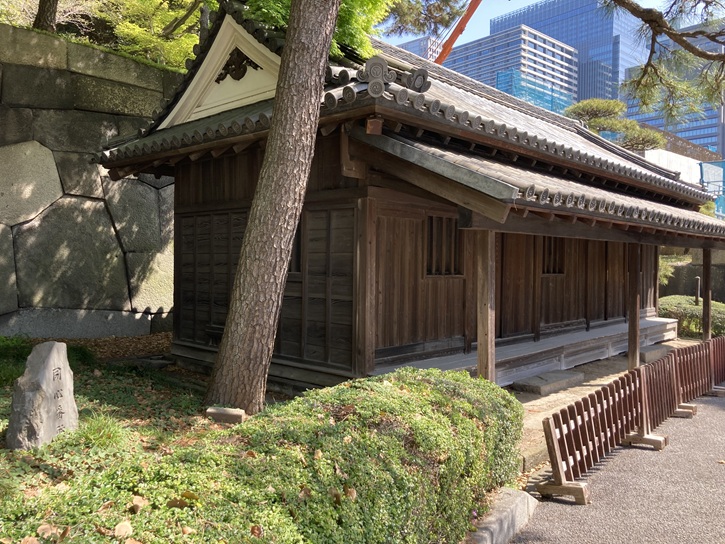
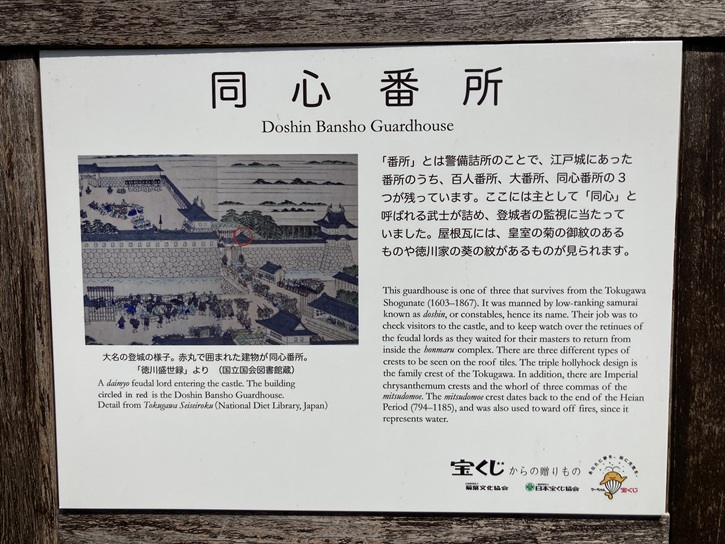
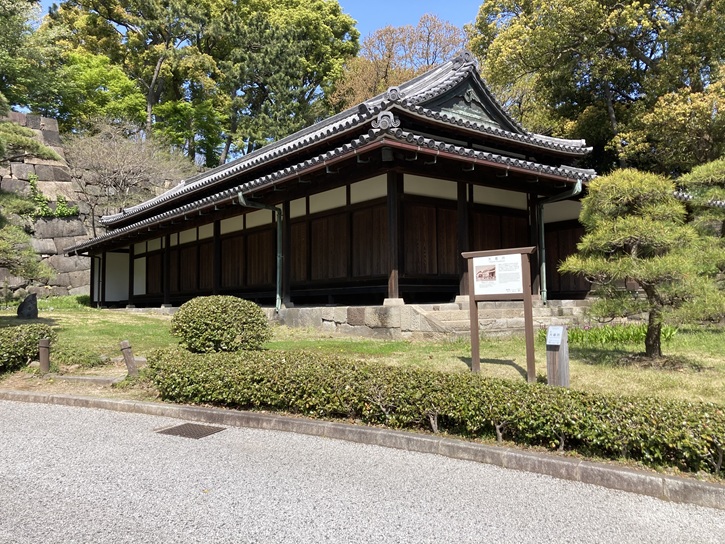
同心番所は、同心が江戸城へ登城する大名の供を監視したところです。以前はこの番所の前に橋があり、御三家を除く全ての大名と役人はここで乗り物から降りて徒歩で本丸へ登っていました。

同心番所

「番所」とは警備詰所のことで、江戸城にあった番所のうち、百人番所、大番所、同心番所の3つが残っています。ここには主として「同心」と呼ばれる武士が詰め、登城者の監視に当たっていました。屋根瓦には、皇室の菊の御紋のあるものや徳川家の葵の紋があるものが見られます。

Doshin Bansho Guardhouse

This guardhouse is one of three that survives from the Tokugawa Shogunate (1603-1867). It was manned by low-ranking samurai known as doshin, or constables, hence its name. Their job was to check visitors to the castle, and to keep watch over the retinues of the feudal lords as they waited for their masters to return from inside the honmaru complex. There are three different types of crests to be seen on the roof tiles. The triple hollyhock design is the family crest of the Tokugawa. In addition, there are Imperial chrysanthemum crests and the whorl of three commas of the mitsudomoe. The mitsudomoe crest dates back to the end of the Heian Period (794-1185), and was also used to ward off fires, since it represents water.


ポイント2 江戸城最大の検問所 百人番所

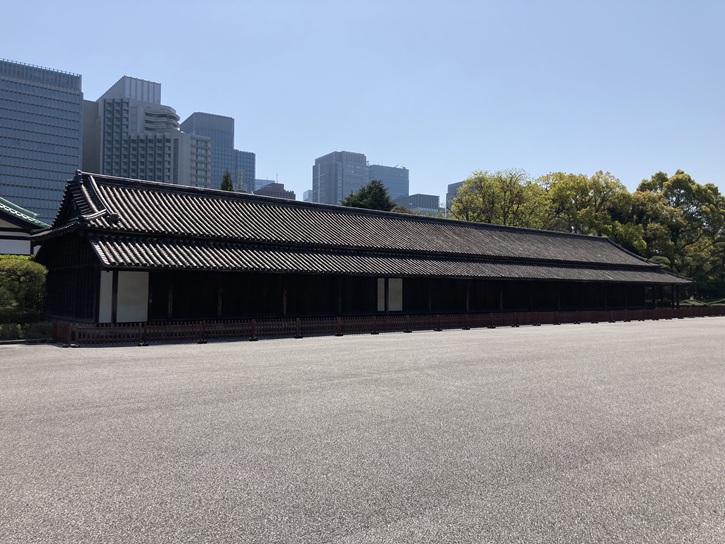
百人番所は、本丸と二の丸へ続く大手三之門を警護していた門です。鉄砲百人組と呼ばれる甲賀組・伊賀組・根来組・二十五騎組の同心100人が昼夜交代で警護に当たっていました。

百人番所

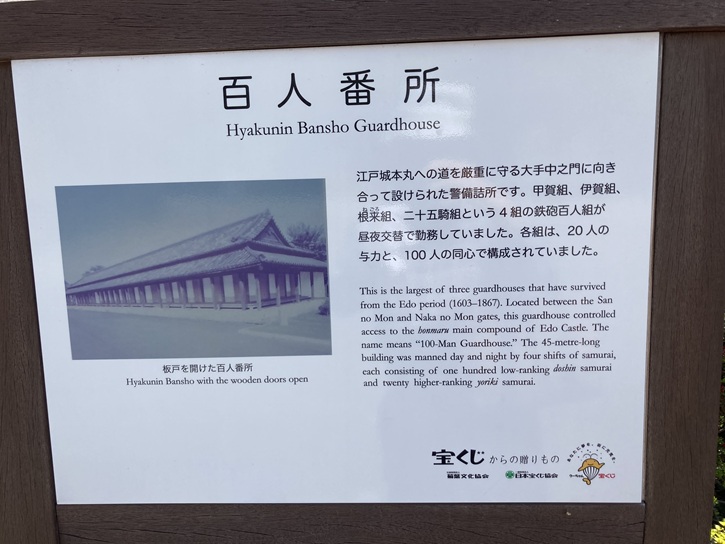
江戸城本丸への道を厳重に守る大手中之門に向き合って設けられた警備詰所です。甲賀組、伊賀組、根来組、二十五騎組という4組の鉄砲百人組が昼夜交替で勤務していました。各組は、20人の与力と、100人の同心で構成されていました。

Hyakunin Bansho Guardhouse

This is the largest of three guardhouses that have survived from the Edo period (1603-1867). Located between the San no Mon and Naka no Mon gates, this guardhouse controlled access to the honmaru main compound of Edo Castle. The name means "100-Man Guardhouse." The 45-metre-long building was manned day and night by four shifts of samurai, each consisting of one hundred low-ranking doshin samurai and twenty higher-ranking yoriki samurai.


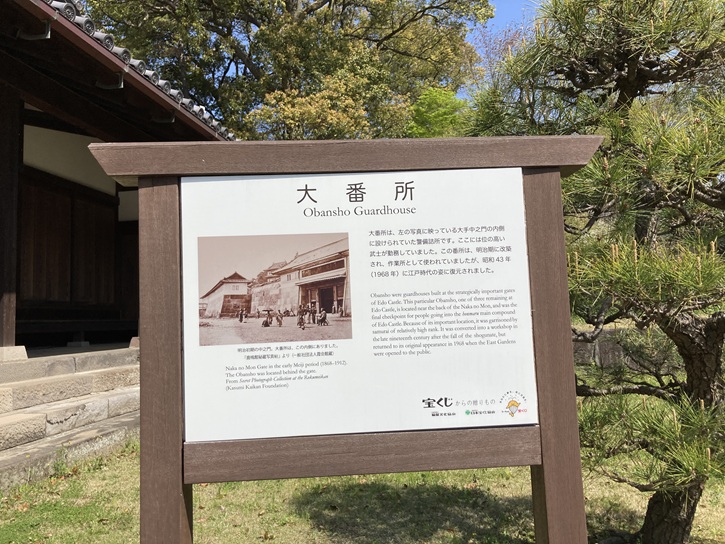
大番所は、本丸に通じる中之門警備のための詰所で、最後の番所であり、位の高い与力・同心によって警護されていました。

大番所

大番所は、左の写真に映っている大手中之門の内側に設けられていた警備詰所です。ここには位の高い武士が勤務していました。この番所は、明治期に改築され、作業所として使われていましたが、昭和四十三年(1968年)に江戸時代の姿に復元されました。

Obansho Guardhouse

Obansho were guardhouses built at the strategically important gates of Edo Castle. This particular Obansho, one of three remaining at Edo Castle, is located near the back of the Naka no Mon, and was the final checkpoint for people going into the honmaru main compound of Edo Castle. Because of its important location, it was garrisoned by samurai of relatively high rank. It was converted into a workshop in the late nineteenth century after the fall of the shogunate, but returned to its original appearance in 1968 when the East Gardens were opened to the public.


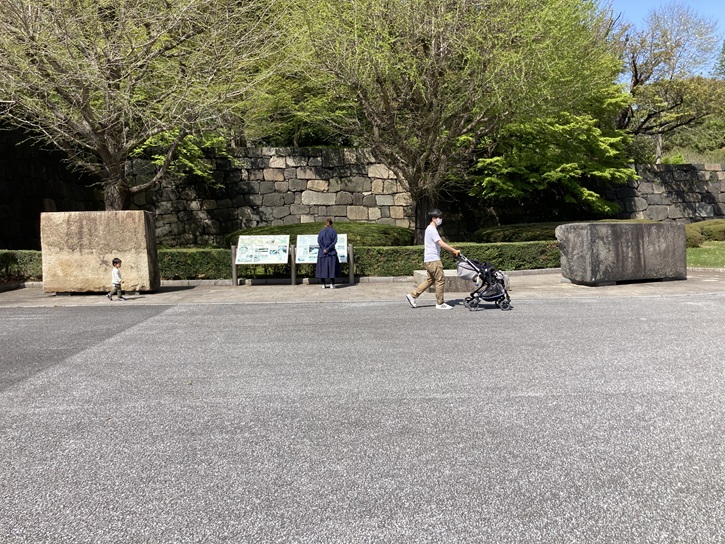
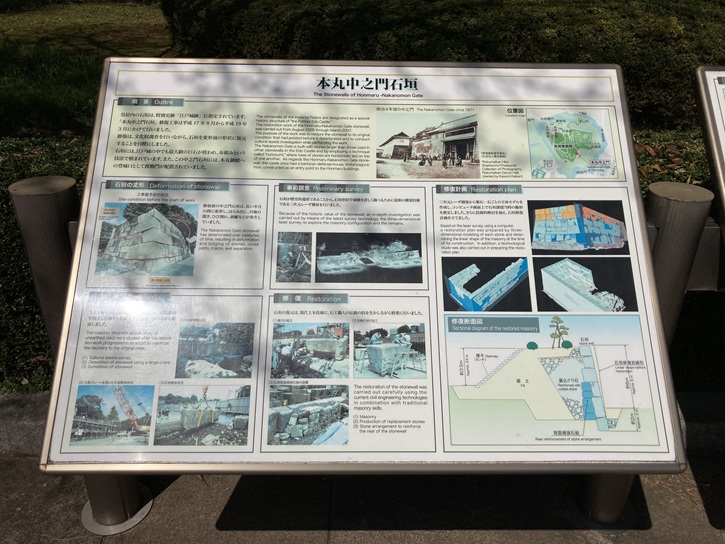
本丸中之門石垣の修復の経緯がパネルで解説されています。

本丸中之門石垣 − 概要

皇居内の石垣は、特別史跡「江戸城跡」に指定されています。「本丸中之門石垣」修復工事は平成十七年8月から平成十九年3月にかけて行いました。修復は、文化財調査を行いながら、石垣を変形前の形状に復元することを目標にしました。石垣には、江戸城の中でも最大級の巨石が使われ、布積みという技法で積まれています。また、この中之門石垣には、本丸御殿への登城口としての渡櫓門が配置されていました。

The Stonewalls of Honmaru-Nakanomon Gate - Outline

The stonewalls of the Imperial Palace are designated as a special historic structure of "the Former Edo Castle." The restoration work of the Honmaru-Nakanomon Gate stonewall, was carried out from August 2005 through March 2007. The purpose of the work was to restore the stonewall to its original condition that had existed before it deteriorated and to conduct cultural assets investigation while performing the work. The Nakanomon Gate is built with stones larger than those used in other stonewalls in the Edo Castle and by employing a technique called "nunozumi," where rows of stones are horizontally laid on top of one another. As regards the Honmaru-Nakanomon Gate stonewall, the castle once had a barbican defense-house, Watariyagura-mon, constructed as an entry point to the Honmaru buildings.


ポイント3 天守の代用とされた櫓 富士見櫓

現在の富士見櫓は、明暦の大火の後(1659年)に再建されたものです。江戸城の天守は明暦の大火で焼失した後に再建されることはなかったので、それ以後は江戸城のほぼ中央に位置していたこの富士見櫓を天守の代わりにしました。

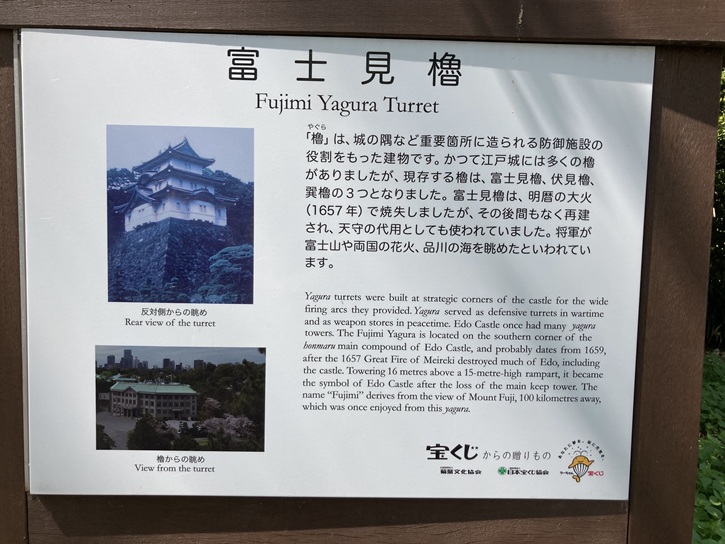
富士見櫓

「櫓」は、城の隅など重要箇所に造られる防御施設の役割をもった建物です。かつて江戸城には多くの櫓がありましたが、現存する櫓は、富士見櫓、伏見櫓、巽櫓の3つとなりました。富士見櫓は、明暦の大火(1657年)で焼失しましたが、その後間もなく再建され、天守の代用としても使われていました。将軍が富士山や両国の花火、品川の海を眺めたといわれています。

Fujimi Yagura Turret

Yagura turrets were built at strategic corners of the castle for the wide firing arcs they provided. Yagura served as defensive turrets in wartime and as weapon stores in peacetime. Edo Castle once had many yagura towers. The Fujimi Yagura is located on the southern corner of the honmaru main compound of Edo Castle, and probably dates from 1659, after the 1657 Great Fire of Meireki destroyed much of Edo, including the castle. Towering 16 metres above a 15-metre-high rampart, it became the symbol of Edo Castle after the loss of the main keep tower. The name "Fujimi" derives from the view of Mount Fuji, 100 kilometres away, which was once enjoyed from this yagura.


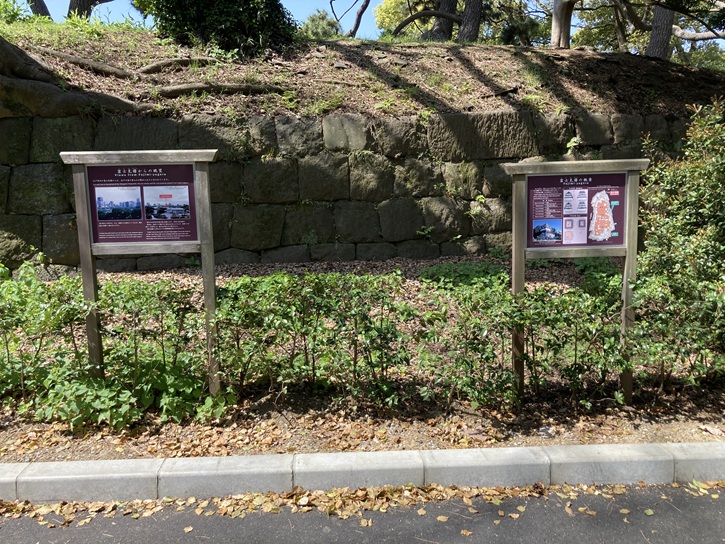
「富士見櫓の概要」と「富士見櫓からの眺望」について解説した案内板が立っています。


富士見櫓の概要です。

富士見櫓の概要

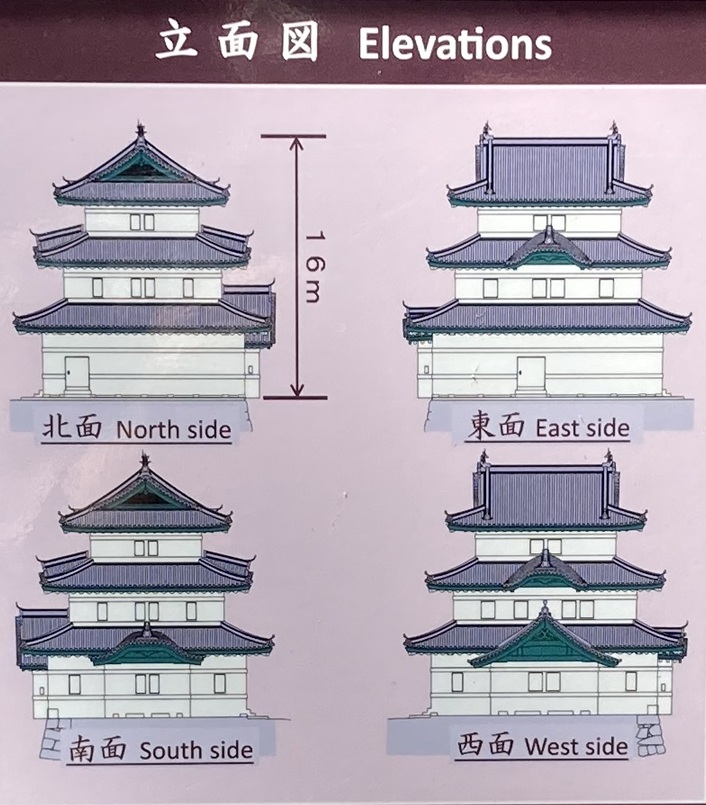
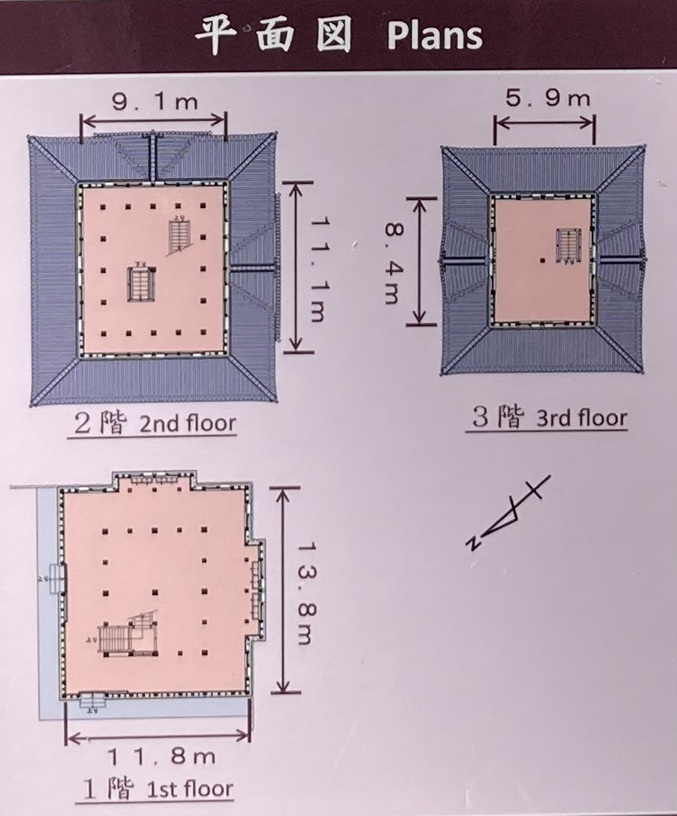
富士見櫓は、現存する江戸城の櫓のうち唯一の三重櫓です。どの方角から見ても美しく、「八方正面の櫓」とも呼ばれていました。

沿革出来事
慶長十一年頃創建
明暦三年明暦の大火で焼失創建
万治二年再建
大正十二年関東大震災で破損
大正十四年震災修復
昭和四十二年外壁等の修理


Fujimi-yagura

Fujimi-yagura, the only remaining three story tower of Edo Castle, has been beautifully formulated on all sides.

HistoryEvent
1606Built around this time
1657Destroyed by the great fire
1659Rebuilt
1923Damaged by the major earthquake
1925Restored
1967Outer walls repaired


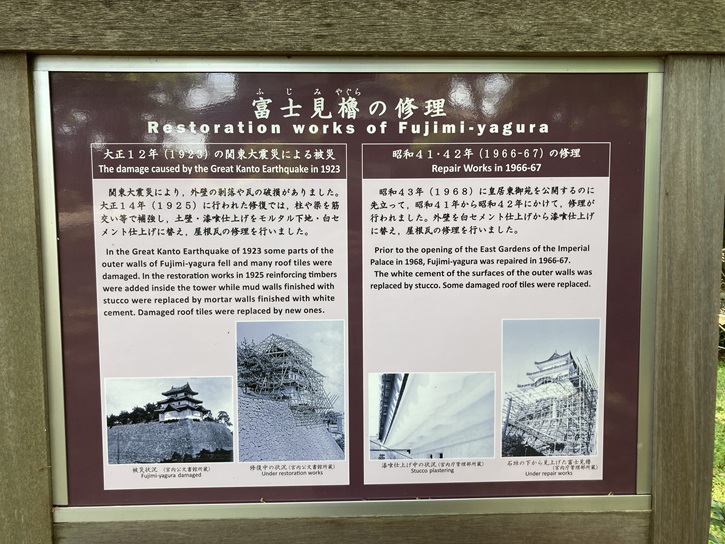
富士見櫓の修理について、大正期と昭和期の内容が解説してあります。

富士見櫓の修理


大正十二年(1923年)の関東大震災による被災

関東大震災により、外壁の剥落や瓦の破損がありました。大正十四年(1925年)に行われた修復では、柱や梁を筋交い等で補強し、土壁・漆喰仕上げをモルタル下地・白セメント仕上げに替え、屋根瓦の修理を行いました。

昭和四十一・四十二年(1966年〜1967年)の修理

昭和四十三年(1968年)に皇居東御苑を公開するのに先立って、昭和四十一年から昭和四十二年にかけて、修理が行われました。外壁を白セメント仕上げから漆喰仕上げに替え、屋根瓦の修理を行いました。

Restoration works of Fujimi-yagura


The damage caused by the Great Kanto Earthquake in 1923

In the Great Kanto Earthquake of 1923 some parts of the outer walls of Fujimi-yagura fell and many roof tiles were damaged. In the restoration works in 1925 reinforcing timbers were added inside the tower while mud walls finished with stucco were replaced by mortar walls finished with white cement. Damaged roof tiles were replaced by new ones.

Repair Works in 1966-67

Prior to the opening of the East Gardens of the Imperial Palace in 1968, Fujimi-yagura was repaired in 1966-67. The white cement of the surfaces of the outer walls was replaced by stucco. Some damaged roof tiles were replaced.


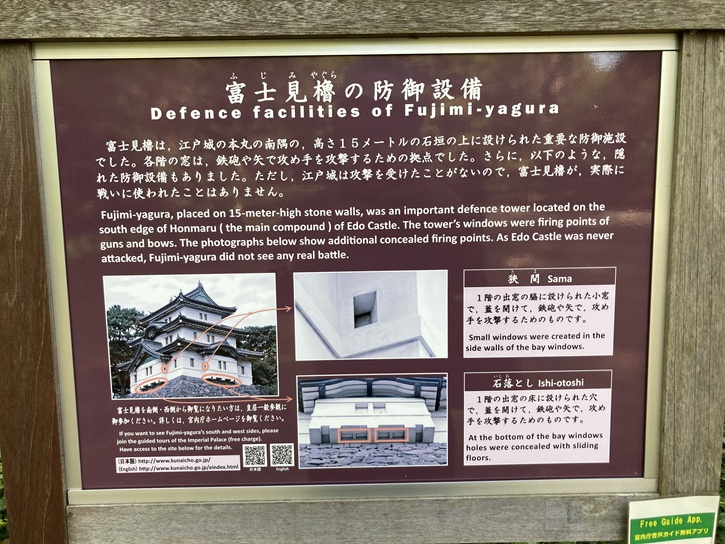
富士見櫓の防御設備について解説してあります。

富士見櫓の防御設備

富士見櫓は、江戸城の本丸の南隅の、高さ15メートルの石垣の上に設けられた重要な防御施設でした。各階の窓は、鉄砲や矢で攻め手を攻撃するための拠点でした。さらに、以下のような、隠れた防御設備もありました。ただし、江戸城は攻撃を受けたことがないので、富士見櫓が、実際に戦いに使われたことはありません。

狭間
1階の出窓の脇に設けられた小窓で、蓋を開けて、鉄砲や矢で、攻め手を攻撃するためのものです。

石落とし
1階の出窓の床に設けられた穴で、蓋を開けて、鉄砲や矢で、攻め手を攻撃するためのものです。

Defence facilities of Fujimi-yagura

Fujimi-yagura, placed on 15-meter-high stone walls, was an important defence tower located on the south edge of Honmaru (the main compound) of Edo Castle. The tower's windows were firing points of guns and bows. The photographs below show additional concealed firing points. As Edo Castle was never attacked, Fujimi-yagura did not see any real battle.

Sama
Small windows were created in the side walls of the bay windows.

Ishi-otoshi
At the bottom of the bay windows holes were concealed with sliding floors.


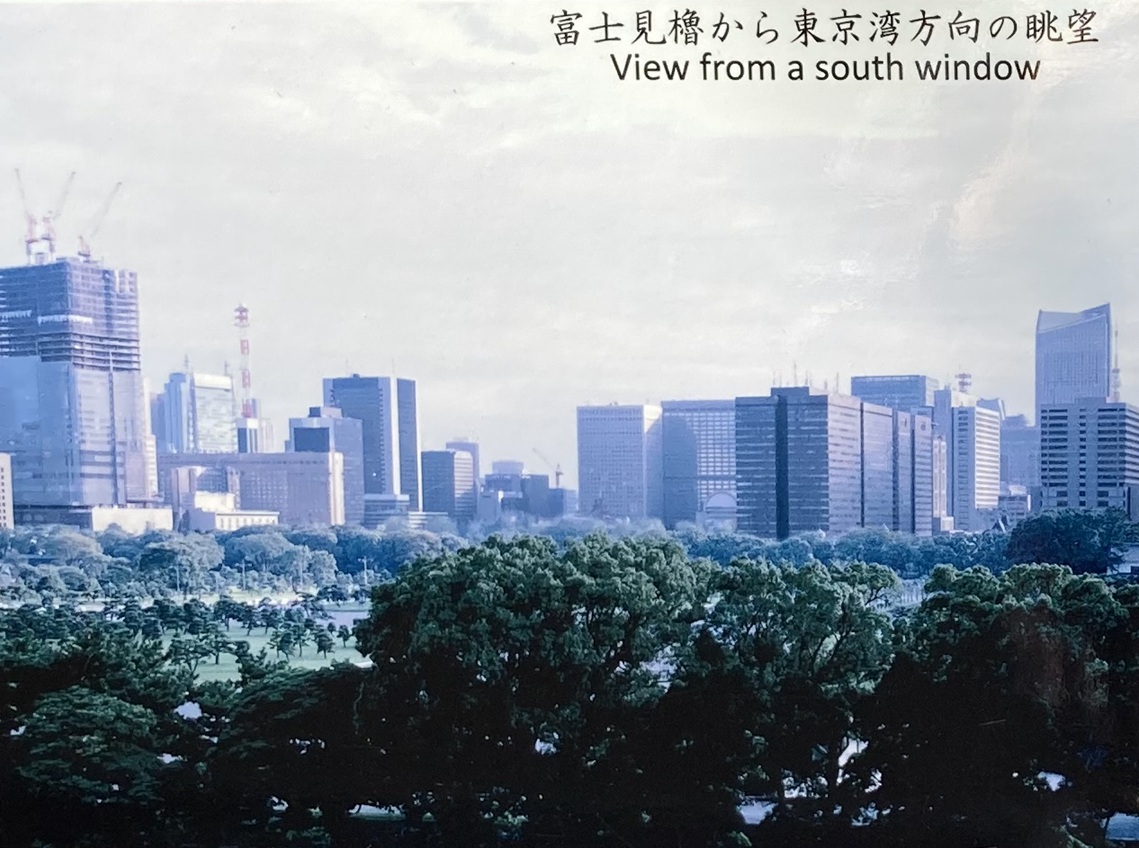
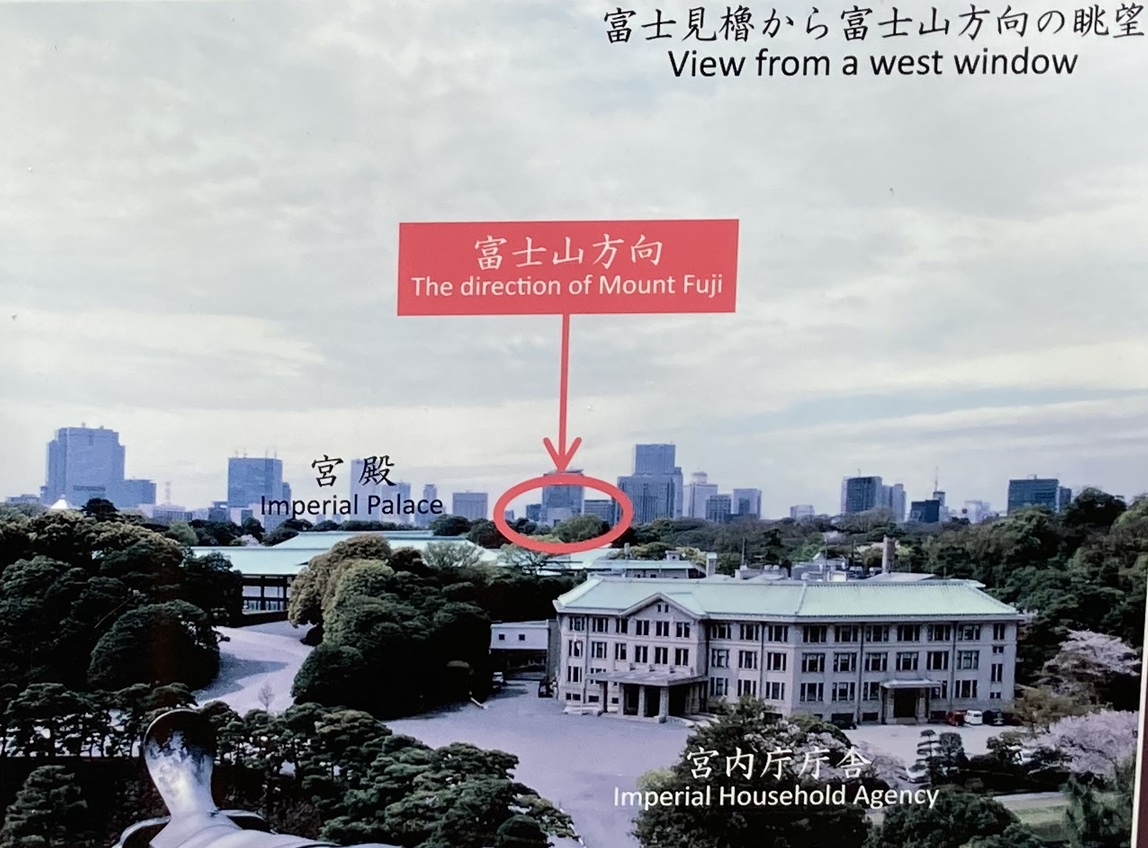
富士見櫓からの眺望です。

富士見櫓からの眺望

江戸時代の富士見櫓からは、品川の海や富士山が眺められたと言われています。

【左の写真:富士見櫓から東京湾方向の眺望】
海の埋立てが行われ、また、高層ビルが林立しているため、現在は富士見櫓から海は見えません。

【右の写真:富士見櫓から富士山方向の眺望】
富士山は宮内庁庁舎の先に位置します(写真の赤丸部分)。現在は、高層ビルの陰になり富士山は見えませんが、高層ビルが無かった時代には、富士山が見えたと思われます。富士見櫓から富士山までの直線距離は約100kmです。

Views from Fujimi-yagura

It is said that in the period of the Tokugawa Shogunate, the sea nearby and Mt. Fuji could be viewed from Fujimi-yagura.

【Left: View from a south window】
In those days Edo Castle was very close to the sea. However, due to extensive reclamations and the emergence of high rising modern buildings it is impossible now to see the sea from Fujimi-yagura.

【Right: View from a west window】
'Fujimi' means viewing Mt. Fuji and 'Fujimi-yagura' means the tower to see Mt. Fuji. Today, high rising buildings block the view of Mt. Fuji, which, located 100km away from here, must have been seen in those days in the direction indicated by the red oval.


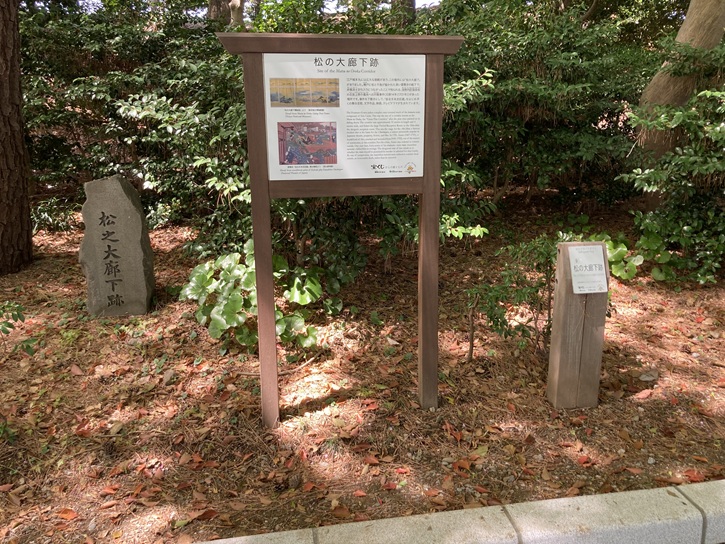
本丸跡左手の現在は木立となっているところに、本丸大広間と白書院(将軍との対面所)を結ぶL字形の廊下がありました。「忠臣蔵」で有名な「松の大廊下」です。元禄十四年(1701年)3月14日、赤穂藩主の浅野匠頭長矩が高家衆筆頭の吉良上野介義央に斬りかかる刃傷事件が起きた場所です。上野介は軽傷でしたが、殿中での刃傷はご法度であったため、内匠頭はその日のうちに切腹となりました。その後、赤穂藩は取り潰しとなり、家臣たちは浪士となりました。一方、上野介には御咎めがなかったため、お家の再興も退けられた浪士が大石内蔵助の頭に亡君の仇討を計り、元禄十五年(1702年)12月15日に吉良邸に討ち入り本懐を遂げました。この事件の発端となった松の廊下は、本丸で二番目に長い廊下といわれ、西へ約19メートル・北へ約31メートル・幅は約5メートルであったと伝えられています。障壁画に「松」を主題にした絵が描かれていたことから、「松の大廊下」と呼ばれていました。

松の大廊下跡

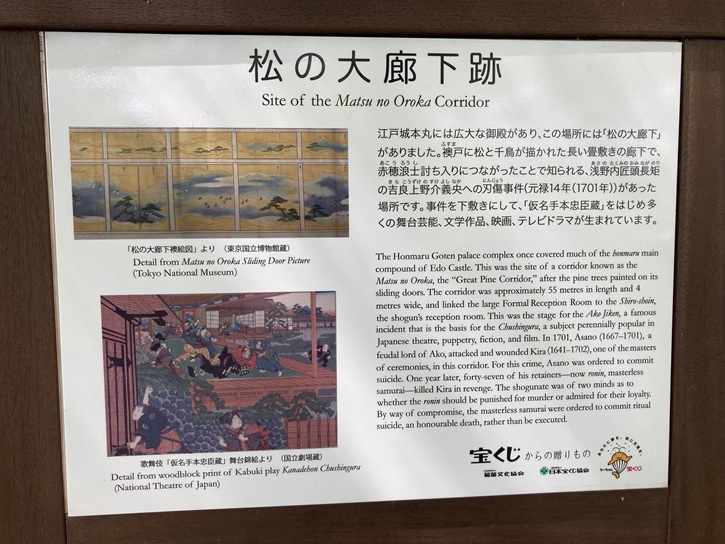
江戸城本丸には広大な御殿があり、この場所には「松の大廊下」がありました。襖戸に松と千鳥が描かれた長い畳敷きの廊下で、赤穂浪士討ち入りにつながったことで知られる、浅野内匠頭長矩の吉良上野介義央への刃傷事件(元禄十四年【1701年】)があった場所です。事件を下敷きにして、「仮名手本忠臣蔵」をはじめ多くの舞台芸能、文学作品、映画、テレビドラマが生まれています。

Site of the Matsu no Oroka Corridor

The Honmaru Goten palace complex once covered much of the bonmaru main compound of Edo Castle. This was the site of a corridor known as the Matsu no Oroka, the "Great Pine Corridor," after the pine trees painted on its sliding doors. The corridor was approximately 55 metres in length and 4 metres wide, and linked the large Formal Reception Room to the Shiro-shoin, the shogun's reception room. This was the stage for the Ako Jiken, a famous incident that is the basis for the Chushingura, a subject perennially popular in Japanese theatre, puppetry, fiction, and film. In 1701, Asano (1667-1701), a feudal lord of Ako, attacked and wounded Kira (1641-1702), one of the masters of ceremonies, in this corridor. For this crime, Asano was ordered to commit suicide. One year later, forty-seven of his retainers now ronin, masterless samurai-killed Kira in revenge. The shogunate was of two minds as to whether the ronin should be punished for murder or admired for their loyalty. By way of compromise, the masterless samurai were ordered to commit ritual suicide, an honourable death, rather than be executed.


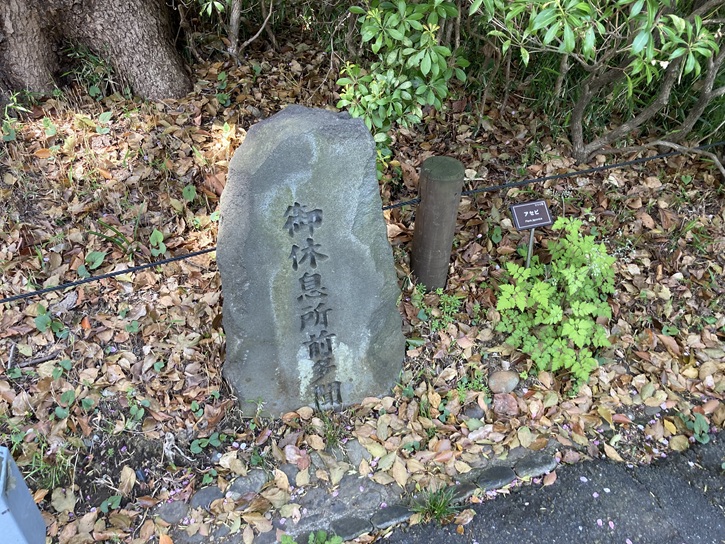
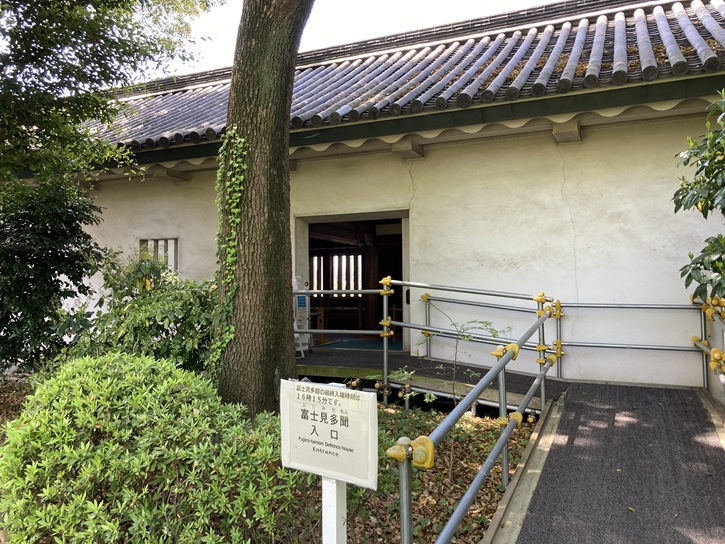
「多聞」とは、城郭の石垣上に建てられた長屋のことで、城壁よりも強固な防御施設でした。江戸時代の江戸城本丸にはこのような多聞が各所に築かれていましたが、現存するのは、この富士見多聞だけです。今は見られませんが、かつてはこの富士見多聞から実際に富士山を望むことができたと考えられています。

富士見多聞

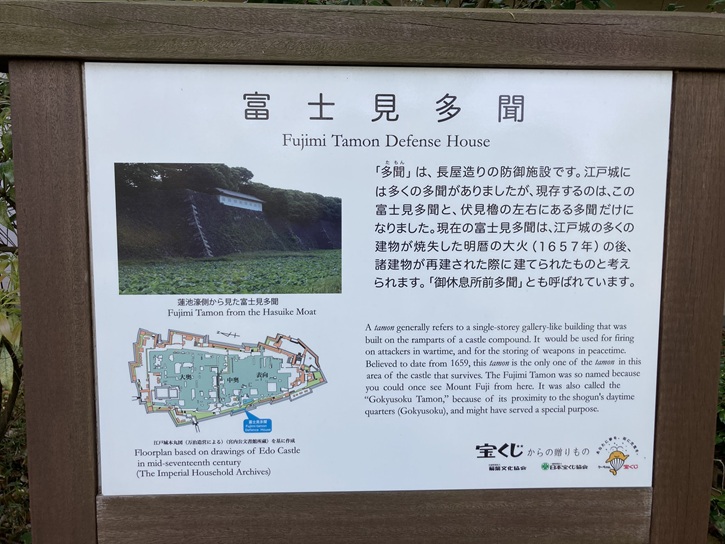
「多聞」は、長屋造りの防御施設です。江戸城には多くの多聞がありましたが、現存するのは、この富士見多聞と、伏見櫓の左右にある多聞だけになりました。現在の富士見多聞は、江戸城の多くの建物が焼失した明暦の大火(1657年)の後、諸建物が再建された際に建てられたものと考えられます。「御休息所前多聞」とも呼ばれています。

Fujimi Tamon Defense House

A tamon generally refers to a single-storey gallery-like building that was built on the ramparts of a castle compound. It would be used for firing on attackers in wartime, and for the storing of weapons in peacetime. Believed to date from 1659, this tamon is the only one of the tamon in this area of the castle that survives. The Fujimi Tamon was so named because you could once see Mount Fuji from here. It was also called the "Gokyusoku Tamon," because of its proximity to the shogun's daytime quarters (Gokyusoku), and might have served a special purpose.


多聞は、各地の城に遺されています。

多聞とは

多聞は、戦国時代末期から城郭に採用された長屋型の施設で、塀よりも強固な防御機能を持っていました。平時には、武器、諸道具、文書等の収蔵庫、女中の住居など、多様な用途に使用されていたようです。「多門」、「多聞櫓」、「渡櫓」、「続櫓」、「長屋」、「廊下」などと呼ばれた例もあります。

富士見多聞の用途

富士見多聞が築かれた頃は、徳川将軍の地位は安定しており、江戸城本丸が攻撃に備える必要性はあまりありませんでした。富士見多聞は、本丸御殿内の将軍の日常生活の場である、「御休息」の近くに位置しており、「御休息所前多聞」という名前も残っています。はっきりした用途は不明ながら、襖が備えられていた形跡があるなど、倉庫以外の用途に使われていた可能性も考えられます。

On Tamon (Defence House)

The tamon began to appear in Japanese castles from the late 16th century. As the base of firing points it was more effective in fending off attackers than a simple defence wall. In many castles tamons were used for various purposes in peacetime, such as warehouse for weapons, tools or documents, and dormitory for female servants.

The function of Fujimi-tamon

By the time this tamon was built the rule of the Tokugawa Shogunate had become stable and there was no acute need to fortify heavily Honmaru (the main compound) of Edo Castle. The tamon was close to Gokyusoku, the Tokugawa Shogun's living room of Honmaru Palace. Although its precise function is unknown, in view of the lintels and sills for fusumas (sliding doors) Fujimi-tamon might have been used for certain purposes other than simply storing goods.


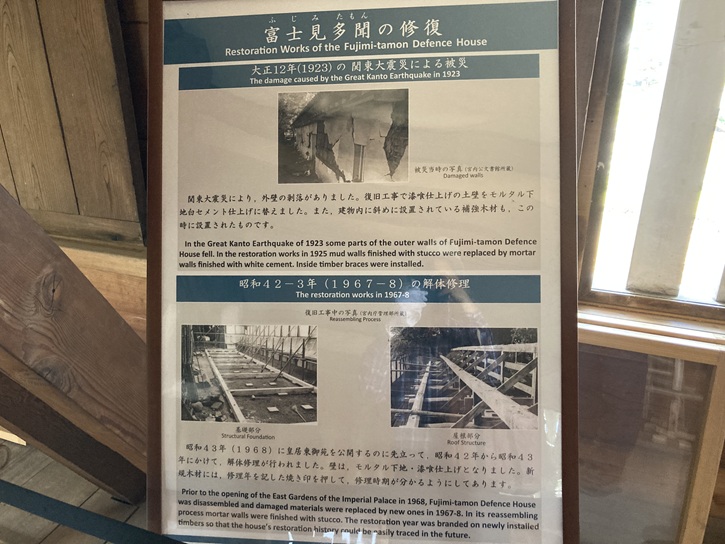
富士見多聞は、関東大震災によって被災した後と、戦後に解体修理されています。

富士見多聞の修復

大正十二年(1923年)の関東大震災による被災

関東大震災により、外壁の剥落がありました。復旧工事で漆喰仕上げの土壁をモルタル下地白セメント仕上げに替えました。また、建物内に斜めに設置されている補強木材も、この時に設置されたものです。

昭和四十二年〜昭和四十三年(1967年〜1968年)の解体修理

昭和四十三年(1968年)に皇居東御苑を公開するのに先立って、昭和四十二年から昭和四十三年にかけて、解体修理が行われました。壁は、モルタル下地・漆喰仕上げとなりました。新規木材には、修理年を記した焼き印を押して、修理時期が分かるようにしてあります。

Restoration Works of the Fujimi-tamon Defence House

The damage caused by the Great Kanto Earthquake in 1923

In the Great Kanto Earthquake of 1923 some parts of the outer walls of Fujimi-tamon Defence House fell. In the restoration works in 1925 mud walls finished with stucco were replaced by mortar walls finished with white cement. Inside timber braces were installed.

The restoration works in 1967-8

Prior to the opening of the East Gardens of the Imperial Palace in 1968, Fujimi-tamon Defence House was disassembled and damaged materials were replaced by new ones in 1967-8. In its reassembling process mortar walls were finished with stucco. The restoration year was branded on newly installed timbers so that the house's restoration history could be easily traced in the future.


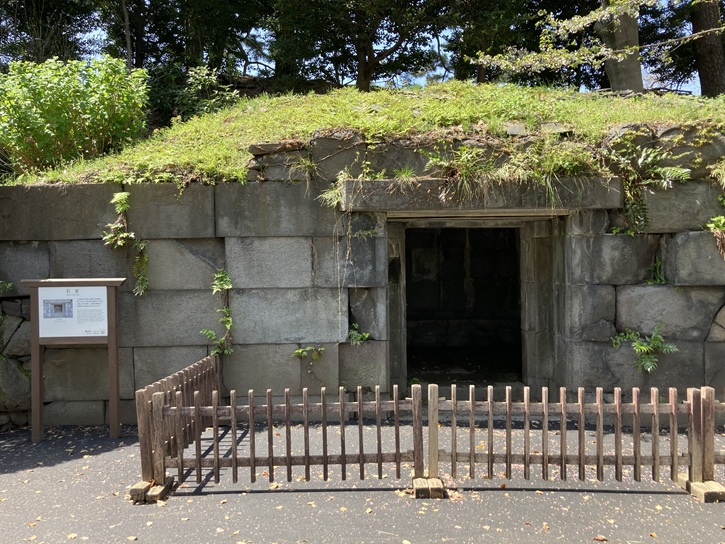
「石室」は、富士見多聞北側の蓮池濠沿いにある石作りの蔵です。江戸城の遺構の中では比較的小さなもので、表の石組には焼けたような痕があり、多少ずれています。入口には扉を取り付けた穴があり、内部は20平方メートルほどの広さとなっています。伊豆半島産の安山岩(伊豆石)の切石で、隙間もないほどキッチリと壁が造られています。江戸城の抜け穴や御金蔵との説もありますが、場所柄から火災などの際に貴重品などを避難させた蔵と考えられます。 

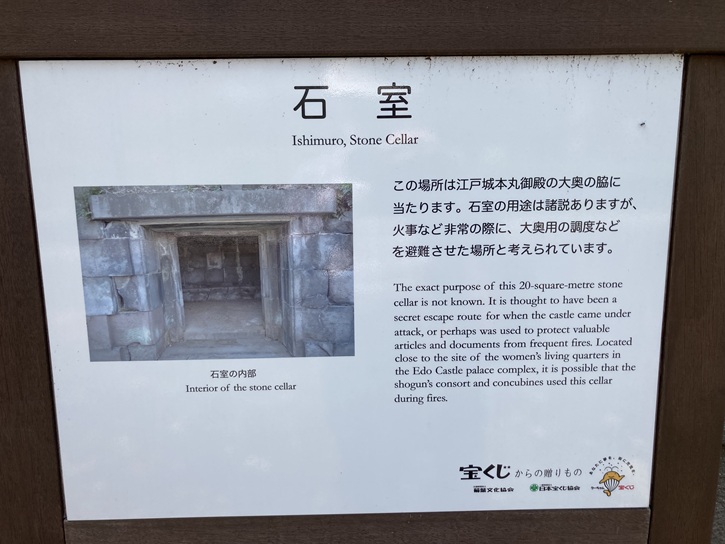
石室

この場所は江戸城本丸御殿の大奥の脇に当たります。石室の用途は諸説ありますが、火事など非常の際に、大奥用の調度などを避難させた場所と考えられています。

Ishimuro, Stone Cellar

The exact purpose of this 20-square-metre stone cellar is not known. It is thought to have been asecret escape route for when the castle came under attack, or perhaps was used to protect valuable articles and documents from frequent fires. Located close to the site of the women's living quarters in the Edo Castle palace complex, it is possible that the shogun's consort and concubines used this cellar during fires.


ポイント4 巨石の石積みに圧倒される 天守台

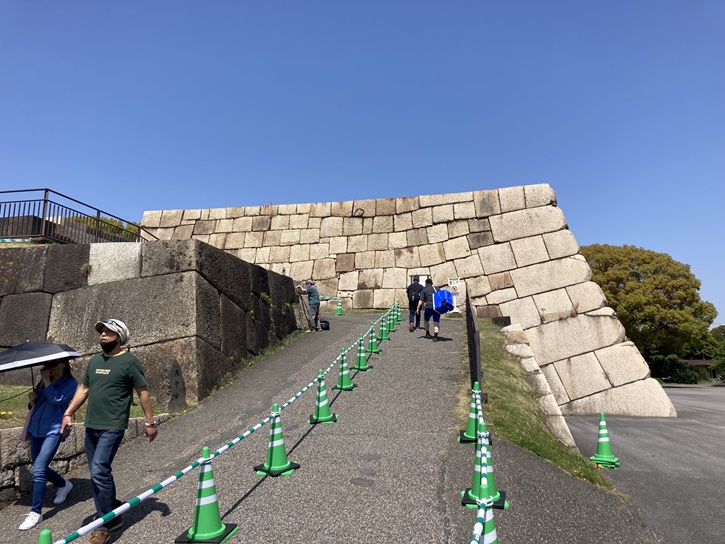
天守台(江戸城天守跡)は、本丸の北端に位置しています。最初の天守は慶長十二年(1607年)に完成し、現在の位置から少し南に位置していました。三代将軍家光が大改修を行い、最終的な完成をみたのは寛永十五年(1638年)でした。この時に現在の天守台ができました。天守は、外観5層・内部6階建てで、天守台を含めた高さが58mあり、天気が良ければ房総半島からでも見ることができたといわれています。しかし、明暦の大火で天守は焼失してしまい、再建する案もありましたが、家光の弟である保科正之(会津松平家藩主)の反対により再建は延期され、それ以後天守が建設されることはありませんでした。

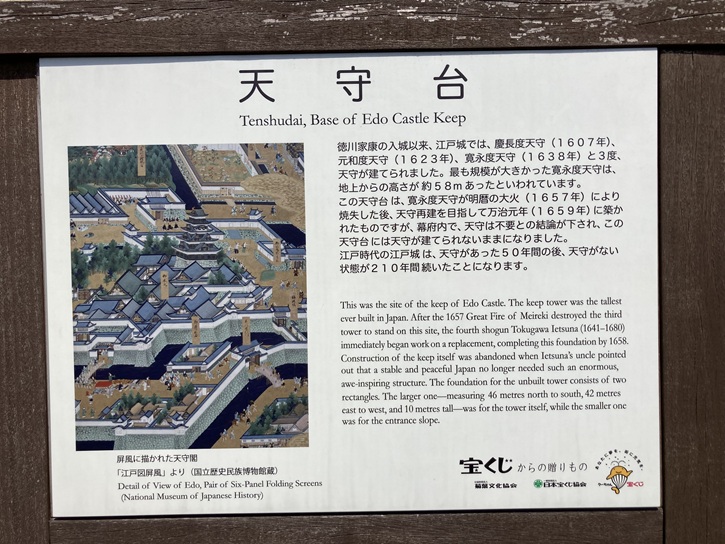
天守台

徳川家康の入城以来、江戸城では、慶長度天守(1607年)、元和度天守(1623年)、寛永度天守(1638年)と3度、天守が建てられました。最も規模が大きかった寛永度天守は、地上からの高さが約58mあったといわれています。この天守台は、寛永度天守が明暦の大火(1657年)により焼失した後、天守再建を目指して万治元年(1659年)に築かれたものですが、幕府内で、天守は不要との結論が下され、この天守台には天守が建てられないままになりました。江戸時代の江戸城は、天守があった50年間の後、天守がない状態が210年間続いたことになります。

Tenshudai, Base of Edo Castle Keep

This was the site of the keep of Edo Castle. The keep tower was the tallest ever built in Japan. After the 1657 Great Fire of Meireki destroyed the third tower to stand on this site, the fourth shogun Tokugawa Ietsuna (1641-1680) immediately began work on a replacement, completing this foundation by 1658. Construction of the keep itself was abandoned when Ietsuna's uncle pointed out that a stable and peaceful Japan no longer needed such an enormous, awe-inspiring structure. The foundation for the unbuilt tower consists of two rectangles. The larger one-measuring 46 metres north to south, 42 metres east to west, and 10 metres tall-was for the tower itself, while the smaller one was for the entrance slope.


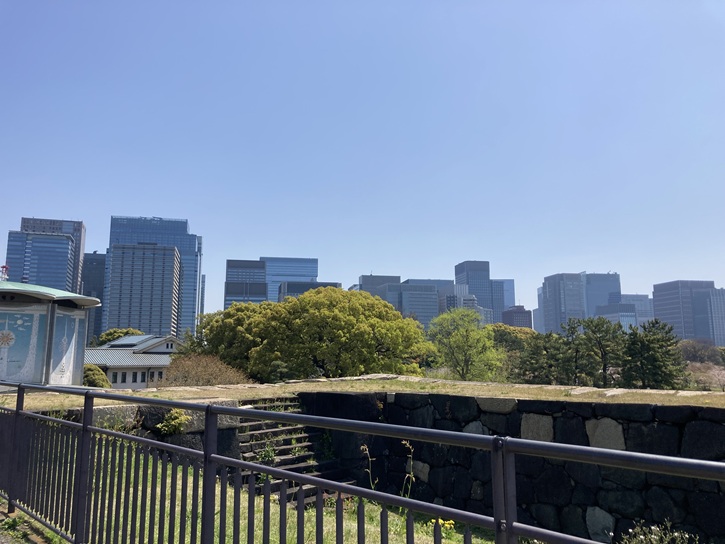
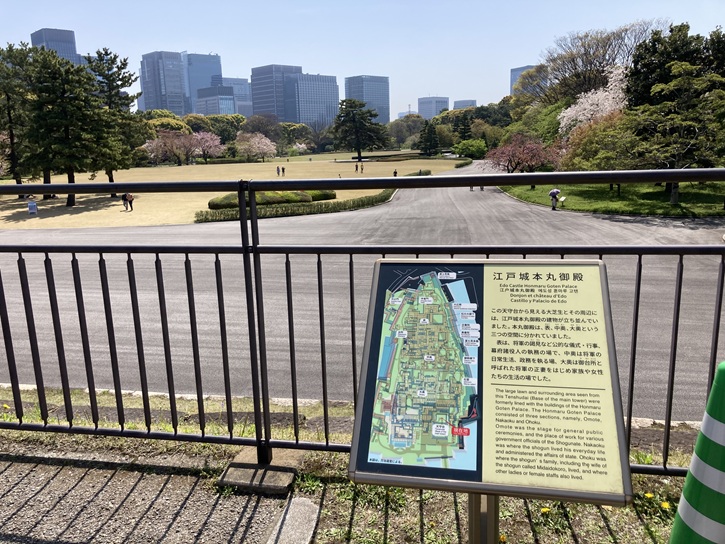
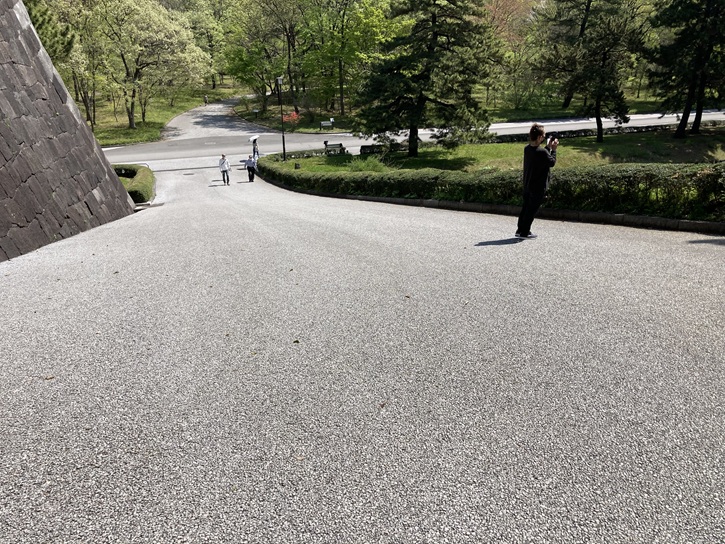
天守台は結構な高さにあり、長いスロープを登って土台部分に辿り着きます。今は周囲を高層ビルに囲まれて眺望はイマイチですが、平屋ばかりの江戸時代にはさぞかし良い眺めだったことでしょう。


模型でもいいので、ここに天守閣のミニチュアがあったらと思います。


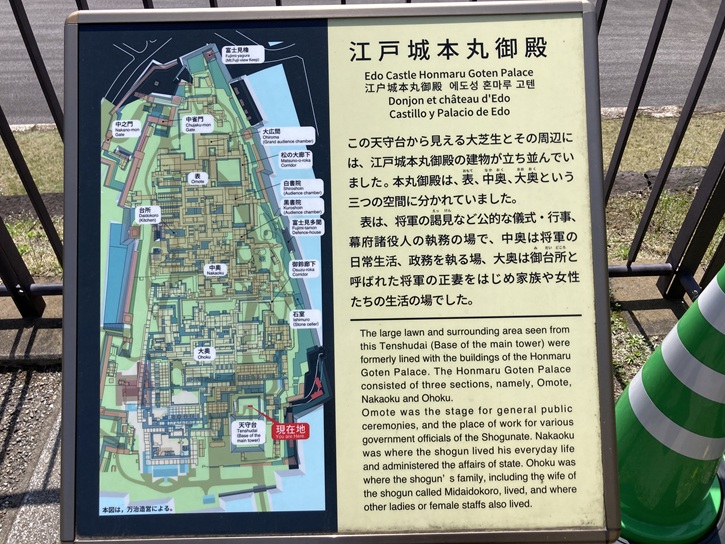
天守台の南側には、本丸御殿が連なっていました。本丸御殿には松の廊下の先まで含まれますので、いかに長大な建物だったかが見て取れます。

江戸城本丸御殿

この天守台から見える大芝生とその周辺には、江戸城本丸御殿の建物が立ち並んでいました。本丸御殿は、表、中奥、大奥という三つの空間に分かれていました。表は、将軍の謁見など公的な儀式・行事、幕府諸役人の執務の場で、中奥は将軍の日常生活、政務を執る場、大奥は御台所と呼ばれた将軍の正妻をはじめ家族や女性たちの生活の場でした。

Edo Castle Honmaru Goten Palace

The large lawn and surrounding area seen from this Tenshudai (Base of the main tower) were formerly lined with the buildings of the Honmaru Goten Palace. The Honmaru Goten Palace consisted of three sections, namely, Omote, Nakaoku and Ohoku. Omote was the stage for general public ceremonies, and the place of work for various government officials of the Shogunate. Nakaoku was where the shogun lived his everyday life and administered the affairs of state. Ohoku was where the shogun's family, including the wife of the shogun called Midaidokoro, lived, and where other ladies or female staffs also lived.


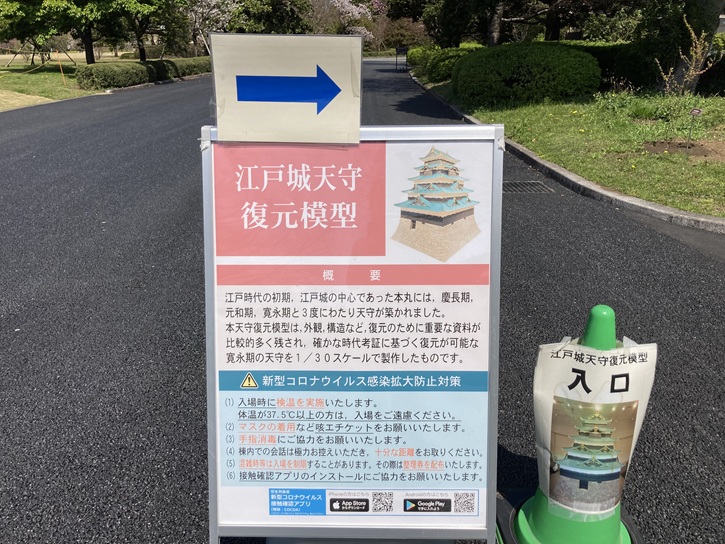
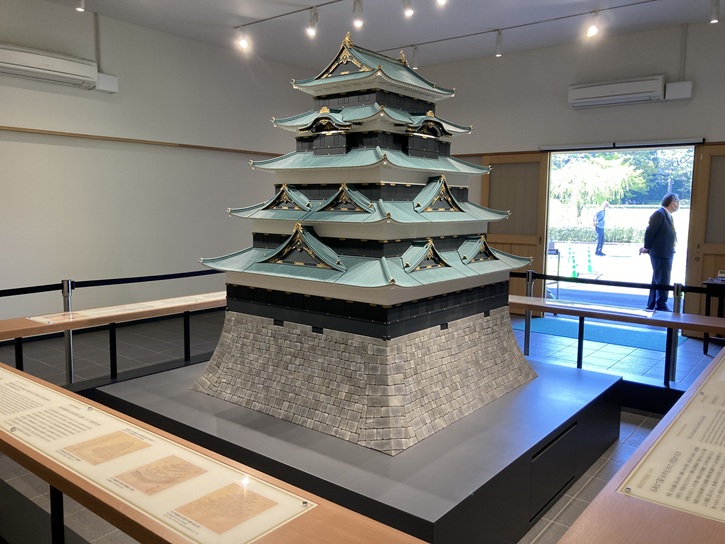
本丸休憩所増築棟には、寛永期の天守を1/30のスケールで再現した江戸城天守復元模型が公開されています。江戸時代の初期、江戸城の中心であった本丸には、慶長期・元和期・寛永期と3度にわたり天守が築かれました。本天守復元模型は、外観や構造など、復元のために重要な資料が比較的多く残され、確かな時代考証に基づく復元が可能な寛永期の天守を1/30のスケールで制作したものです。模型の周囲には解説文が並べられています。

江戸城寛永度天守復元模型(縮尺1/30)
日本一高層の天守

江戸時代、この場所が江戸城の中心、本丸でした。江戸時代の初期には、この本丸に3度、天守が築かれました。この模型は、そのうちの最後のもので、最も大きかった寛永期の天守を復元したものです。五重6階の建物と石垣の天守台を合わせた高さは約60m、20階建てのビルに相当し、この天守は日本にあったいろいろな城の天守の中で最も高いものでした。建物の壁は銅板と漆喰、破風には飾り金具が付き、屋根は銅瓦葺で、最上の棟に金色の鯱が輝いていたと思われます。南側の小天守台から石段を登り、天守内に入ったと考えられます。本丸の標高を入れると約80mになり、江戸の町にそびえ立つ豪壮な天守でした。

Scale Model of the Third Edo Castle Keep (Scale 1:30)
The Tallest Tenshu Ever Built (1638)

We are at the heart of the honmaru, the central part of Edo Castle, which embraced the palace of the shogunate and other buildings. The most fascinating construction was the castle keep, "tenshu." The initial castle keep was built in 1607 but completely refurbished twice in the early Edo period. This is a scale model of the last and the tallest castle keep built in 1638. The five-tiered-six-story keep with its stone base towered almost 60 metres above the ground, which is equivalent to a 20-story building, and is considered to be the tallest keep ever built in Japan. The walls were made of white shikkui plaster and copper sheets coated with black plaster, while the gables were decorated with metal ornaments. The roof was copper-tiled and had a pair of golden shachihoko, mythical sea creatures, at the very top. People would mount the castle keep by a flight of stone steps accessible from the small keep base on the south side. The total height including the elevation of the honmaru was approximately 80 metres, making the castle keep a lofty and magnificent building towering over the city of Edo.

江戸城天守の変遷
江戸時代初期の50年間に3度も建てられた

江戸城の天守は3度も建て直されています。模型は三代将軍徳川家光が建てた3度目の天守にあたります。寛永十五年(1638年)に竣工しましたが、明暦の大火で焼失するまで20年間しか存続しませんでした。4度目の天守の再建計画はありましたが、石垣の天守台のみ造られて中止となりました。明暦の大火で江戸の町の大部分が焼失し、軍事上無用な天守の再建より、町の復興を優先させた、と言われています。以降は、同じ本丸の南にある富士見櫓(現存)が天守の役割を果たしました。

Transition of the Edo Castle Keeps
Three Tenshu in the First 50 Years

The site of the honmaru saw three castle keeps-tenshu-in the beginning of the Edo period. The initial keep was constructed in 1607 (Keicho 12) by the order of Tokugawa Ieyasu, the founder of the Edo Shogunate. The keep was subsequently rebuilt on two occasions: firstly, by the second shogun Tokugawa Hidetada in 1623 (Genna 9); secondly, by the third shogun Tokugawa Iemitsu in 1638 (Kan'ei 15). By then, the purpose of the castle keep had gradually shifted from military use to a symbol of authority. The third keep only lasted for 20 years until it was burnt down in the Great Fire of Meireki which ravaged the city of Edo. Afterwards, the 16-metre Fujimi Yagura turret, which still stands above a 15-metre-high rampart on the southern corner of the honmaru, served as the symbol of Edo Castle.

現在の天守石垣について
石垣まで造られ中止された4代目の天守

現在、本丸北隅に残る石垣は、明暦の大火の翌年、万治元年(1658年)に加賀藩が担当して再建された天守台です。建物は計画図面まで描かれましたが、再建は中止されました。天守が無い状態が210年間続き、江戸時代は終わりました。再建天守台は寛永期天守と同規模の建物が乗る面積ですが、高さは寛永期のものより1間低く造られました。寛永期天守の天守台には、伊豆石という黒い石材が用いられましたが、再建天守台の外周の石材は、寛永期とは異なる白い安山岩が用いられました。再建天守台の内側などの一部には黒い石材が用いられていますが、寛永期のものを再利用したと考えられています。

The Base of Edo Castle Keep Today
The Lost Tenshu, the Fourth Castle Keep

The existing stone wall on the northern corner of the honmaru known as "tenshudai," the base of the castle keep, was built in 1658, a year after the Great Fire of Meireki. The construction was directed by a daimyo, a feudal lord called Maeda Tsunanori of Kaga-Kanazawa domain. The fourth shogun Tokugawa Ietsuna immediately began work on the fourth castle keep, but after completing the foundation, the construction of the keep itself was aborted when Ietsuna's uncle Hoshina Masayuki (stepbrother of Tokugawa Iemitsu) pointed out that stable and peaceful Japan no longer needed such a fortification. The priority was given to reconstructing the city. Since then, Edo Castle had not seen any tenshu for 210 years until the Edo period came to an end. The rebuilt base was mounted approximately 1.8 metres lower than the previous one, but it covers an area in which a building of the same scale as the preceding keep would fit. White andesite stones brought from Seto islands were used for the outer surface of the base. The previous base had black granite stones known as Izu-ishi stones. We can still find some black Izu-ishi stones within the interior of e rebuilt base; it is considered that previous stones were reused.

天守模型復元にあたって
幕府の大棟梁関係図面、江戸図屏風等を参考

模型の設計にあたって、建築構造は「甲良家文書」(東京都立中央図書館所蔵)の図面を基にしました。屋根、壁、金具類等の材質や色彩は「江戸図屏風」(国立歴史民俗博物館所蔵)の天守の絵を参考にしました。細部の形状は、名古屋城や姫路城など建設時期や規模の近い天守、家光が関わった日光東照宮の建物、さらに江戸城の現存する櫓や門を参考に推定しました。石垣の積み方は、建設時期が近く、徳川幕府によって築かれた大坂城と二条城の天守石垣を、色彩は江戸城内に残っている寛永期のものと思われる石垣を参考に、模式的に表現しました。

Making of the Scale Model
Referring to Drawings Related to Master Carpenters of the Shogunate, etc.

In designing the building structure, "Koura-shi Bunsho," the Koura clan's document (owned by the Tokyo Metropolitan Library), was used as a reference. The Koura clan was a family of master carpenters. In choosing the materials and the colours of the roof, walls, and metal fittings, drawings of the castle keep on "Edozu-byobu," a folding screen map of Edo (owned by the National Museum of Japanese History), was used as a reference. Shapes of detailed parts were estimated from the Nagoya Castle and Himeji Castle keeps, which were similar in terms of the construction period and scale; the Nikko-Toshogu Shrine, which Tokugawa Iemitsu was involved in the construction; and the existing turrets and gates of Edo Castle. The stacking of the stones was referred to the stone walls of Osaka Castle and Nijo Castle, which were built by the Tokugawa Shogunate around the same period. The colouring of the stones was referred to the colours of a stone wall considered to be from the Kan'ei era (1624-1645), which still stands on the Edo Castle grounds.


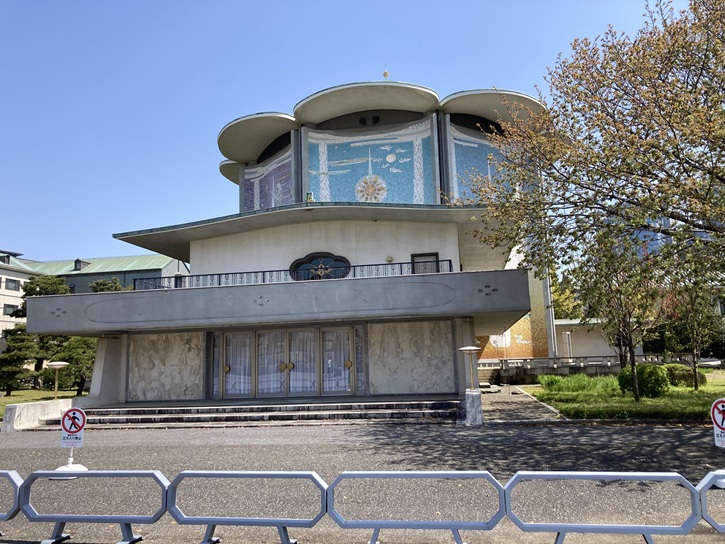
桃華楽堂は、香淳皇后(昭和天皇の皇后)の還暦をお祝いして、昭和四十一年に建設された音楽堂です。

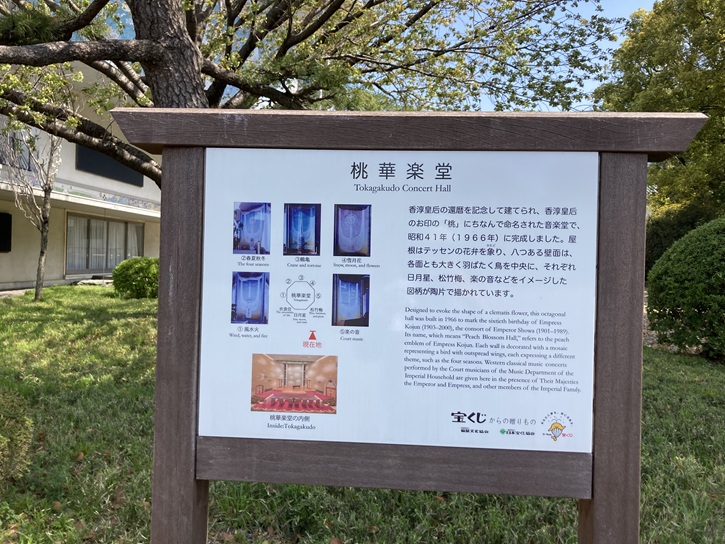
桃華楽堂

香淳皇后の還暦を記念して建てられ、香淳皇后のお印の「桃」にちなんで命名された音楽堂で、昭和四十一年(1966年)に完成しました。屋根はテッセンの花弁を象り、八つある壁面は、各面とも大きく羽ばたく鳥を中央に、それぞれ日月星、松竹梅、楽の音などをイメージした図柄が陶片で描かれています。

Tokagakudo Concert Hall

Designed to evoke the shape of a clematis flower, this octagonal hall was built in 1966 to mark the sixtieth birthday of Empress Kojun (1903-2000), the consort of Emperor Showa (1901-1989). Its name, which means "Peach Blossom Hall," refers to the peach emblem of Empress Kojun. Each wall is decorated with a mosaic representing a bird with outspread wings, each expressing a different theme, such as the four seasons. Western classical music concerts performed by the Court musicians of the Music Department of the Imperial Household are given here in the presence of Their Majesties the Emperor and Empress, and other members of the Imperial Family.


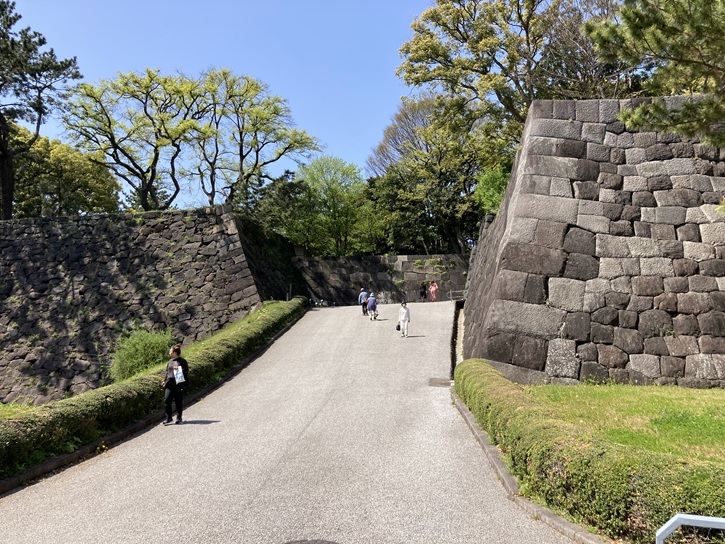
本丸から二の丸に急坂が下っています。


坂は汐見坂と呼ばれています。

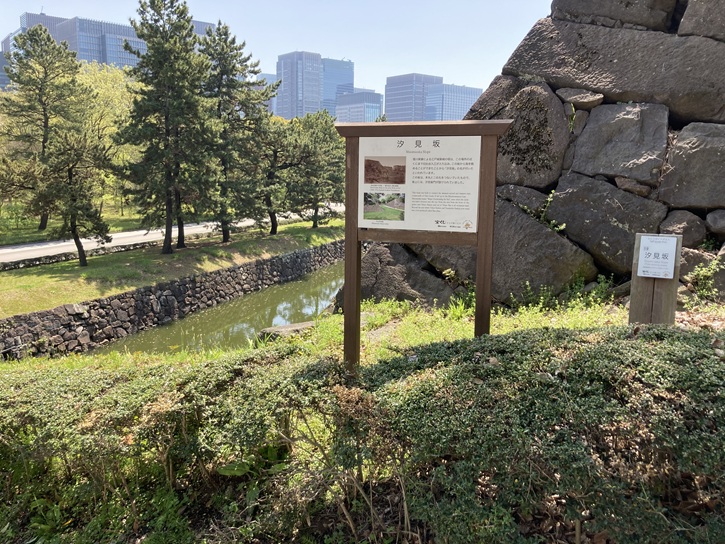
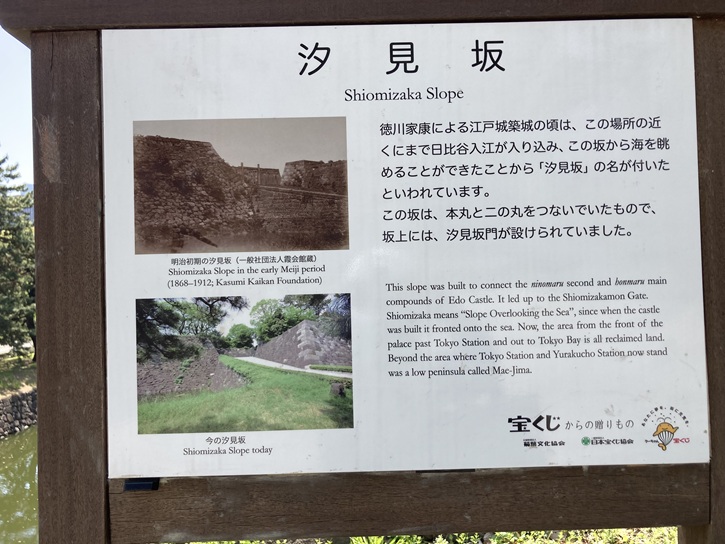
汐見坂

徳川家康による江戸城築城の頃は、この場所の近くにまで日比谷入江が入り込み、この坂から海を眺めることができたことから「汐見坂」の名が付いたといわれています。この坂は、本丸と二の丸をつないでいたもので、坂上には、汐見坂門が設けられていました。

Shiomizaka Slope

This slope was built to connect the ninomaru second and honmaru main compounds of Edo Castle. It led up to the Shiomizakamon Gate. Shiomizaka means "Slope Overlooking the Sea", since when the castle was built it fronted onto the sea. Now, the area from the front of the palace past Tokyo Station and out to Tokyo Bay is all reclaimed land. Beyond the area where Tokyo Station and Yurakucho Station now stand was a low peninsula called Mae-Jima.


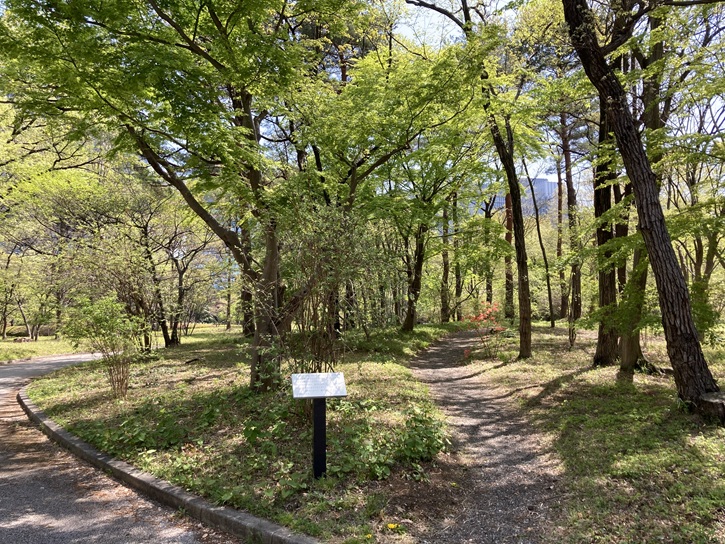
二の丸雑木林は、昭和天皇の発意により、都市近郊で失われていく武蔵野の面影を持つ雑木林を復元しようと昭和五十七年から昭和六十年までの4か年かけて整備されました。樹木や野草を始め、鳥や昆虫も楽しめる自然の林として育てられています。また、上皇陛下の意向を受けて、平成十四年に拡張された新雑木林には流れも造られました。


ポイント5 小堀遠州が作庭した 二の丸庭園

二の丸庭園は、九代将軍家重の時代の庭園図面を元に、池泉回遊式庭園として復元された日本庭園です。

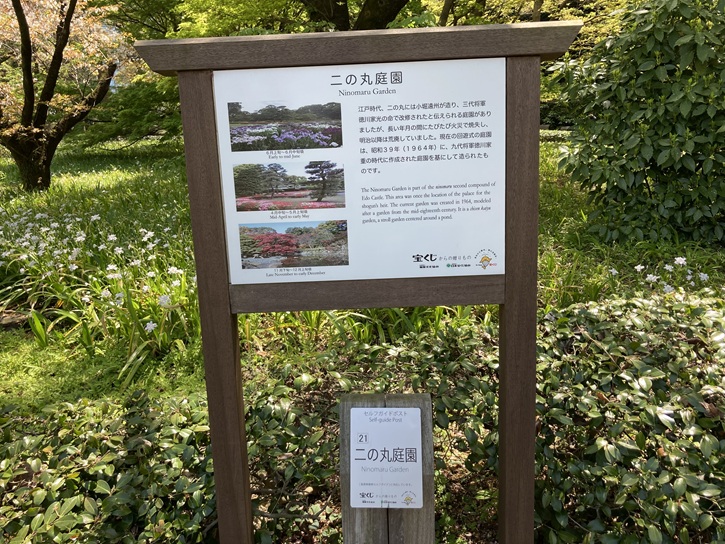
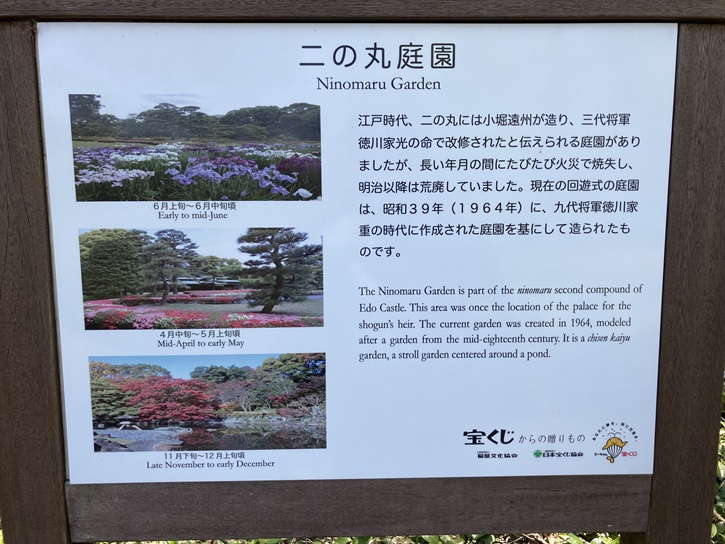
二の丸庭園

江戸時代、二の丸には小堀遠州が造り、三代将軍徳川家光の命で改修されたと伝えられる庭園がありましたが、長い年月の間にたびたび火災で焼失し、明治以降は荒廃していました。現在の回遊式の庭園は、昭和三十九年(1964年)に、九代将軍徳川家重の時代に作成された庭園を基にして造られたものです。

Ninomaru Garden

The Ninomaru Garden is part of the ninomaru second compound of Edo Castle. This area was once the location of the palace for the shogun's heir. The current garden was created in 1964, modeled after a garden from the mid-eighteenth century. It is a chisen kaiyu garden, a stroll garden centered around a pond.


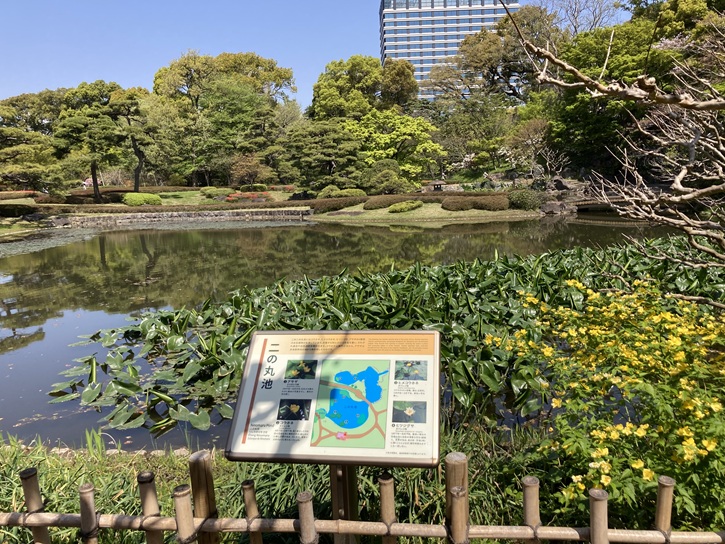
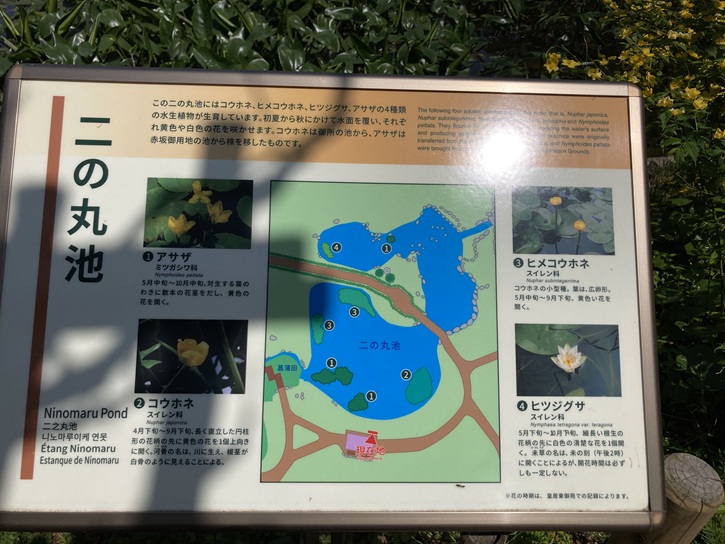
二の丸池は、小堀遠州作といわれる庭園の池水とほぼ同じ位置にあります。

二の丸池

この二の丸池にはコウホネ、ヒメコウホネ、ヒツジグサ、アサザの4種類の水生植物が生育しています。初夏から秋にかけて水面を覆い、それぞれ黄色や白色の花を咲かせます。コウホネは御所の池から、アサザは赤坂御用地の池から株を移したものです。

Ninomaru Pond

The following four aquatic species grow in this pond, that is, Nuphar japonica, Nuphar subintegerrima, Nymphaea tetragona var tetragona and Nymphoides peltata. They flourish from summer to autumn, covering the water's surface and producing yellow or white flowers. Nuphar japonica were originally transferred from the porid at the Imperial Residence, and Nymphoides peltata were brought from the pond on the Akasaka Imperial Palace Grounds.


二の丸庭園の一角にある菖蒲田には、明治神宮の菖蒲田から株分けされた84品種の花菖蒲が植えられています。

菖蒲田

この菖蒲田には、84品種のハナショウブが植えられています。皇居東御苑造成中の昭和四十一年(1966年)に明治神宮御苑の菖蒲田から株を譲り受けて以来、大切に守り育てているものです。

84 varieties of iris grow in this garden. These varieties have been carefully maintained since they were donated by the Iris Garden of Meiji Jingu Shrine in 1966 when the East Gardens of the Imperial Palace were being created.


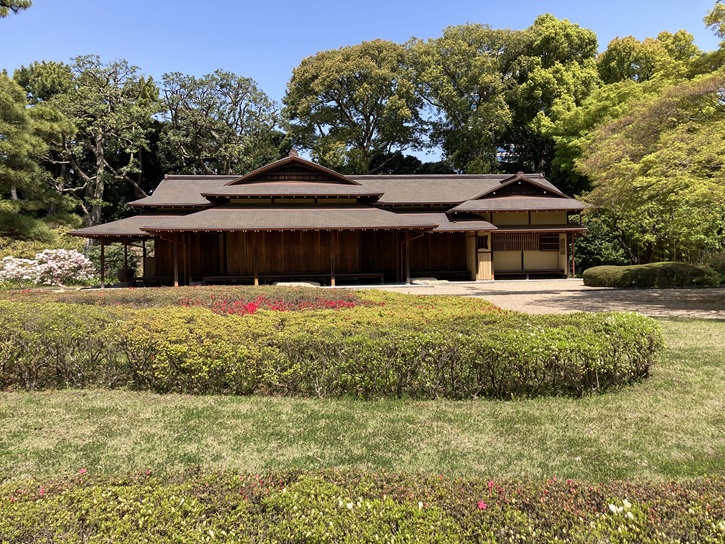
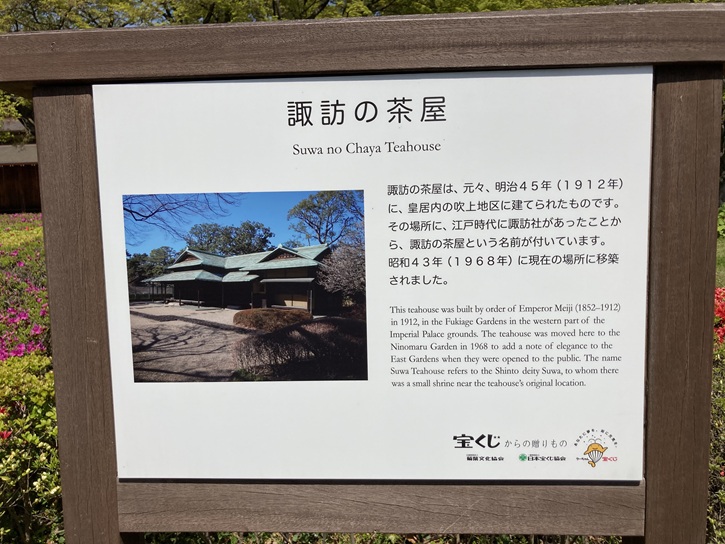
諏訪の茶屋は、明治時代に吹上御苑に建てられ、ご休所として使われていた茶屋を移築したものです。

諏訪の茶屋

諏訪の茶屋は、元々、明治四十五年(1912年)に、皇居内の吹上地区に建てられたものです。その場所に、江戸時代に諏訪社があったことから、諏訪の茶屋という名前が付いています。昭和四十三年(1968年)に現在の場所に移築されました。

Suwa no Chaya Teahouse

This teahouse was built by order of Emperor Meiji (1852-1912) in 1912, in the Fukiage Gardens in the western part of the Imperial Palace grounds. The teahouse was moved here to the Ninomaru Garden in 1968 to add a note of elegance to the East Gardens when they were opened to the public. The name Suwa Teahouse refers to the Shinto deity Suwa, to whom there was a small shrine near the teahouse's original location.


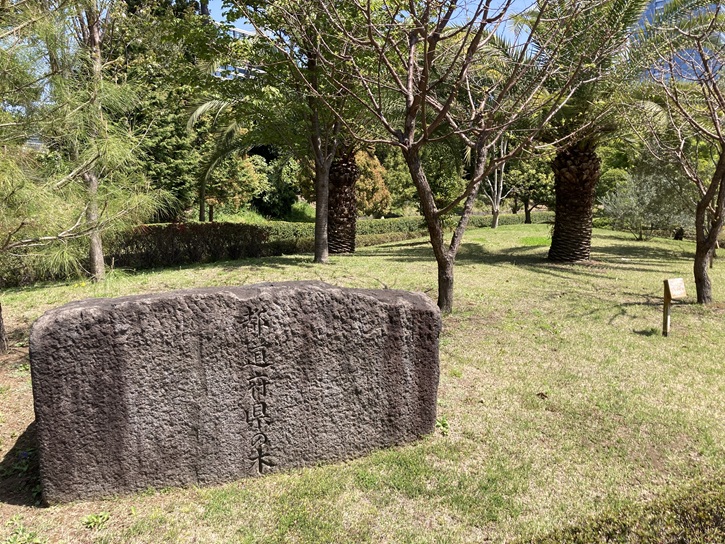
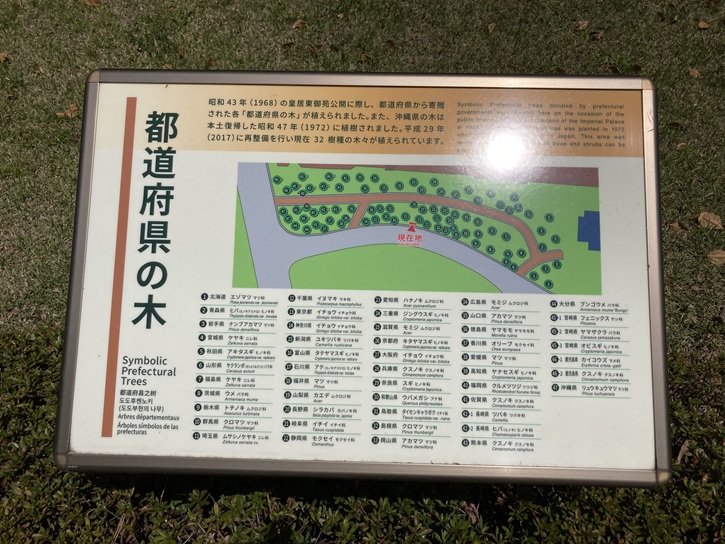
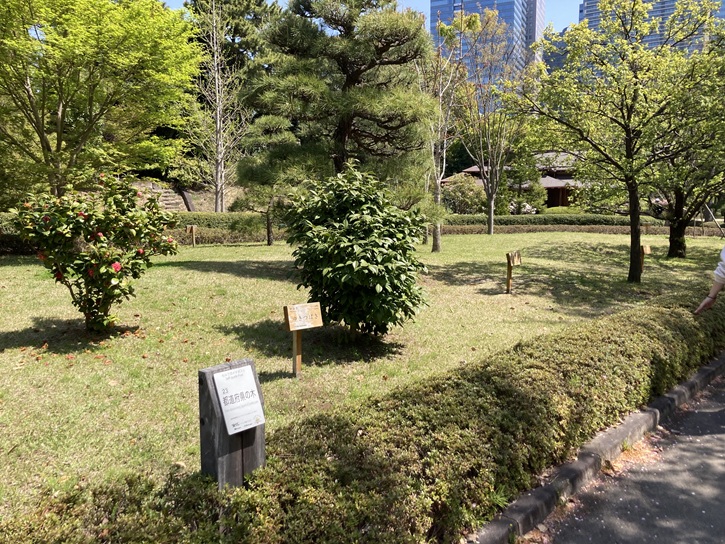
各都道府県から寄せられた都道府県の木が植樹されています。

都道府県の木

昭和四十三年(1968年)の皇居東御苑公開に際し、都道府県から寄贈された各「都道府県の木」が植えられました。また、沖縄県の木は本土復帰した昭和四十七年(1972年)に植樹されました。平成二十九年(2017年)に再整備を行い現在32樹種の木々が植えられています。

Symbolic Prefectural Trees

Symbolic Prefectural trees donated by prefectural governments were planted here on the occasion of the public opening of the East Gardens of the Imperial Palace in 1968. Okinawa's prefectural tree was planted in 1972 when Okinawa was returned to Japan. This area was renewed and 31 species of trees and shrubs can be seen here.


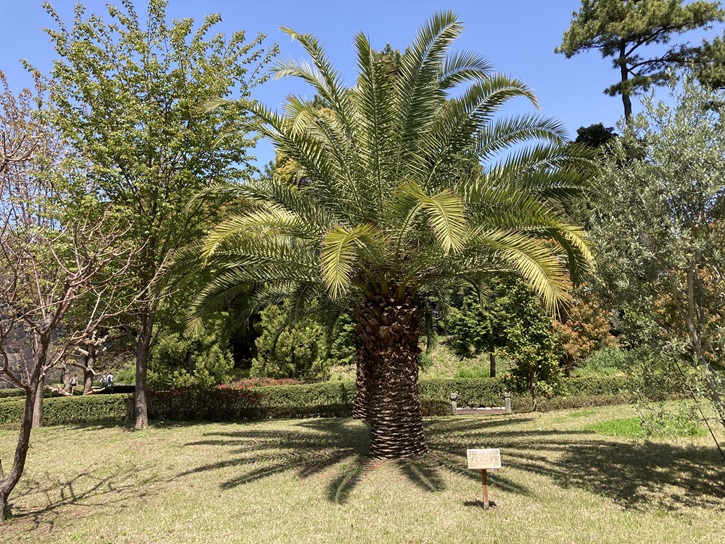
「ゆきつばき」は新潟県、「フェニックス」は宮崎県から移植されました。


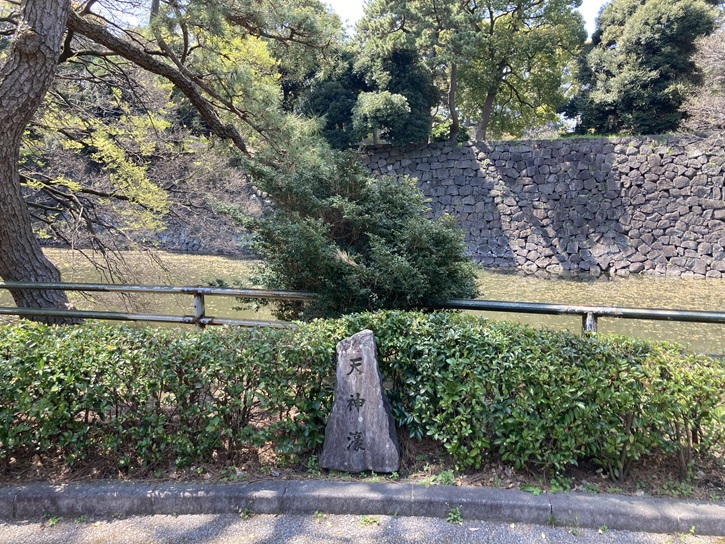
天神濠は江戸城の三の丸と二の丸を隔て、平川門に向かって右手にあります。今では土橋になっていますが、江戸城築城当初は跳ね橋で、いざという時には橋を落として防衛力を強化することが出来ました。天神濠という名は、太田道灌の菅原道真好きに由来しています。


ポイント6 大奥女中の通用門 平川門

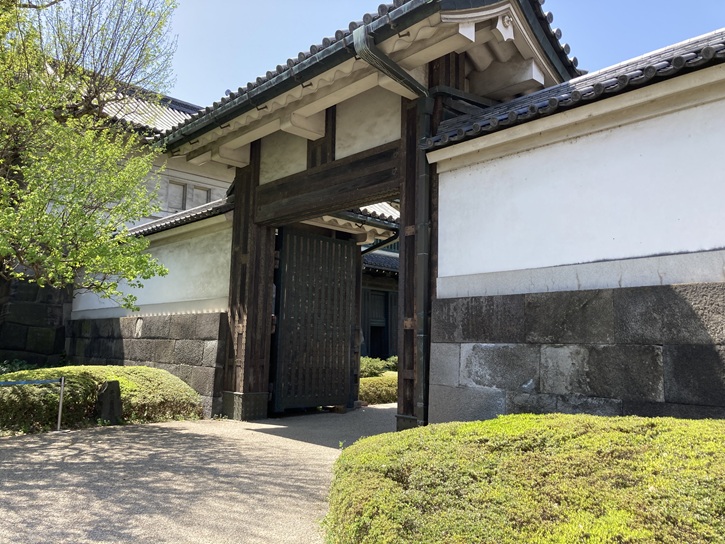
平川門は、第一の門・高麗門(こうらいもん)と第二の門・渡櫓門(わたりやぐらもん)の間に枡形の広場がある外枡形と内枡形の混合型の形式で、江戸城を防御する作りになっています。外枡形とは枡形が曲輪より外に突き出したものをいい、逆に内枡形は枡形が曲輪の中にあるものをいい、そして平川門の混合型は枡形の二辺が堀に面しているのをいいます。江戸湾に面した現在の平川門周辺には、上平川村と下平川村という村があったのが平川門の名前の由来です。

平川門

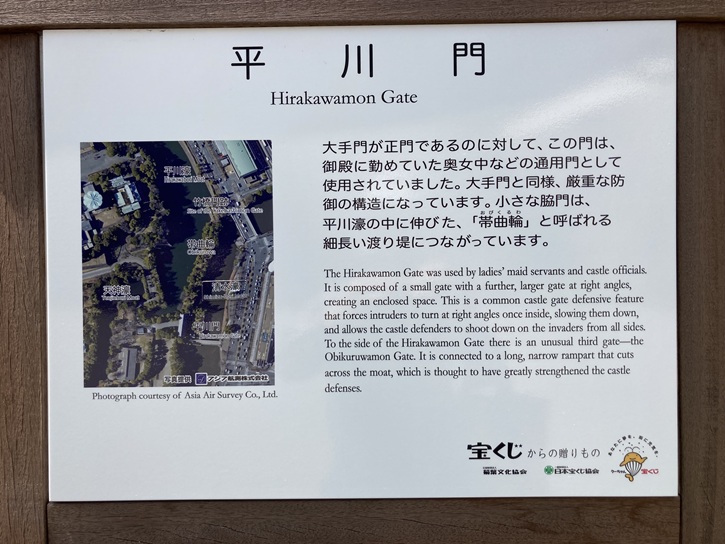
大手門が正門であるのに対して、この門は、御殿に勤めていた奥女中などの通用門として使用されていました。大手門と同様、厳重な防御の構造になっています。小さな脇門は平川濠の中に伸びた、「帯曲輪」と呼ばれる細長い渡り堤につながっています。

Hirakawamon Gate

The Hirakawamon Gate was used by ladies' maid servants and castle officials. It is composed of a small gate with a further, larger gate at right angles, creating an enclosed space. This is a common castle gate defensive feature that forces intruders to turn at right angles once inside, slowing them down, and allows the castle defenders to shoot down on the invaders from all sides. To the side of the Hirakawamon Gate there is an unusual third gate-the Obikuruwamon Gate. It is connected to a long, narrow rampart that cuts across the moat, which is thought to have greatly strengthened the castle defenses.


高麗門というのは、控え柱と開けた扉を保護する屋根を設けた薬医門よりも強固にした門のことです。名前の由来は諸説あり、豊臣秀吉が命じた朝鮮侵略戦争の軍を「高麗陣」と呼んでいて、激戦の最中に新しく開発した新兵器のことを「高麗門」といったそうです。


渡櫓門は、その高麗門の上に冠木を渡してさらに強固にし、屋根を乗せたものです。


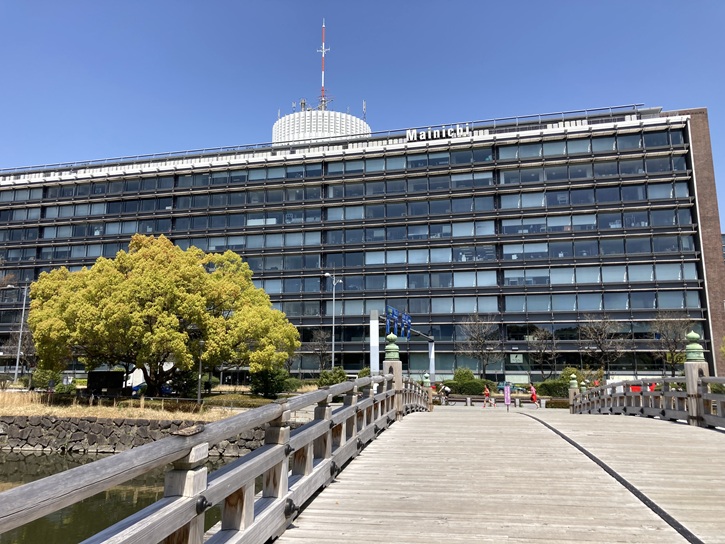
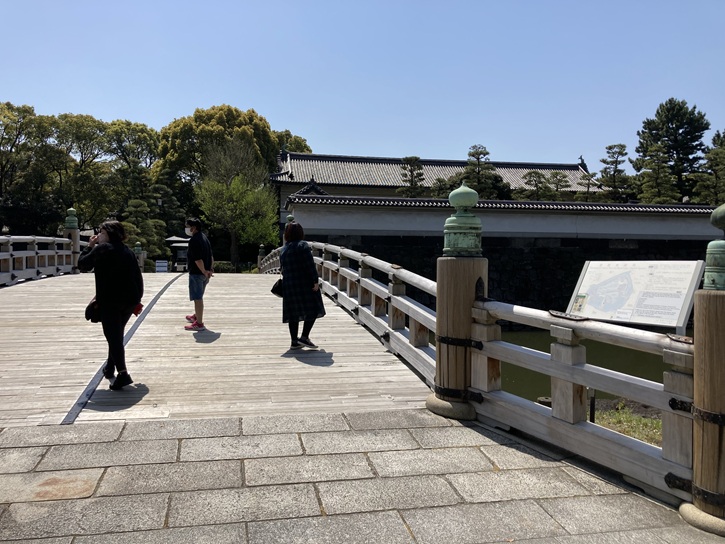
平川門の前の平川濠には時代劇に出てきそうな少し丸みを帯びた木の橋が架かっていますが、時が経った今でも以前のように残っているのは江戸城だけでもこの場所のみです。橋は全長29.7m・幅7.82mで、慶長十九年(1614年)に出来たものですが、しばしば改修工事が行われていて、現在は昭和六十三年に台湾産の檜材を使って再建されたものになります。親柱の伝統的なたまねぎのような装飾である擬宝珠(ぎぼし)には寛永や慶長時代の銘が彫刻されていて、当時のままであることが伺うことができます。元々は二重橋に備え付けられていたのですが、明治二十年に橋が架け替えられた際に平川橋に転用されました。江戸城関係最古の金石文と呼ばれています。


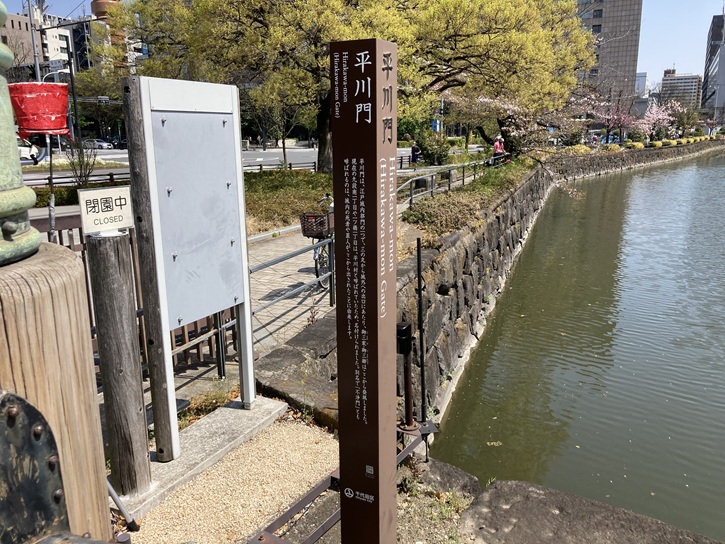
平川橋の入口に案内柱が立っています。

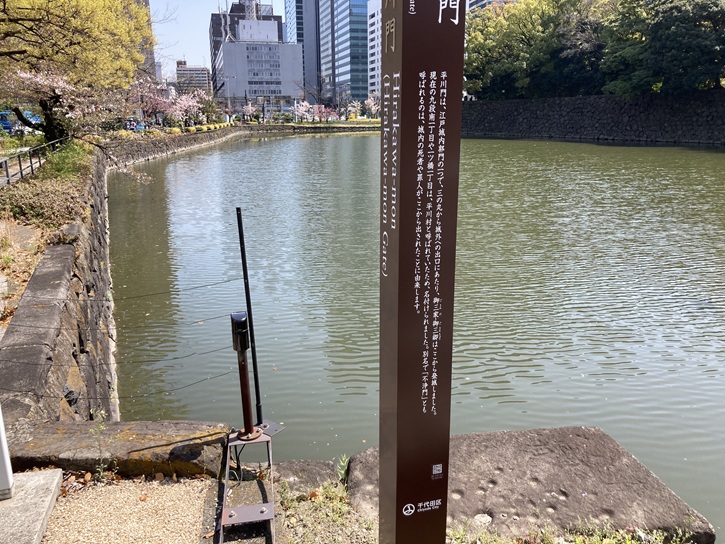
平川門

平川門は、江戸城内郭門の一つで、三の丸から城外への出口にあたり、御三家・御三卿はここから登城しました。現在の九段南一丁目や一ツ橋一丁目は、平川村と呼ばれていたため、名付けられました。別名で「不浄門」とも呼ばれるのは、城内の死者や罪人がここから出されたことに由来します。


ポイント7 江戸東京の基礎を築いた武将 太田道灌公追慕之碑

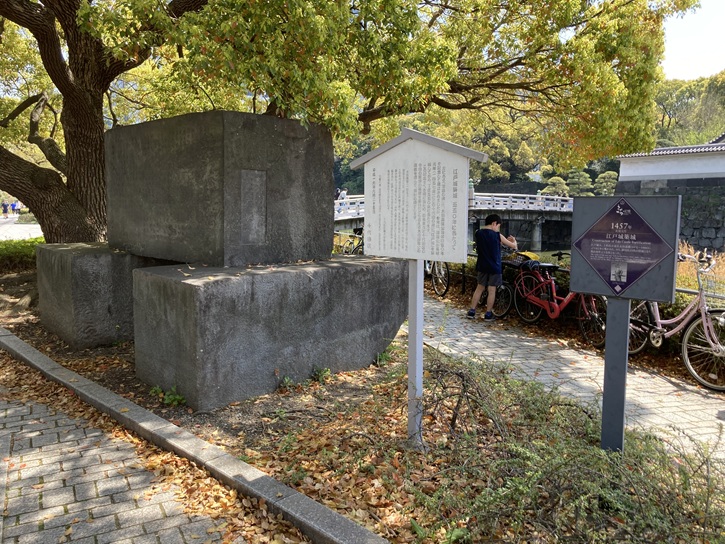
平川橋を渡った先の小さな広場に、巨石に刻まれた太田道灌公追慕之碑が建っています。その隣には、太田道灌が江戸城を築城したと書かれた案内板が立っています。

1457年
長禄元年
江戸城築城

江戸城は、上杉氏の家臣太田道灌(1432年〜1486年)によりはじめて築かれた。のち、徳川氏十五代の居城となり、明治初年より皇居となった。

Construction of Edo Castle Fortification

The castle of Edo was first built by Ota Dokan (1432-1486). Then it has been the shogun castle of the Tokugawa family for 15 generations, until the first year of the Meiji era, when it became the Imperial Palace.


石碑の碑文は以下の通りだそうです。

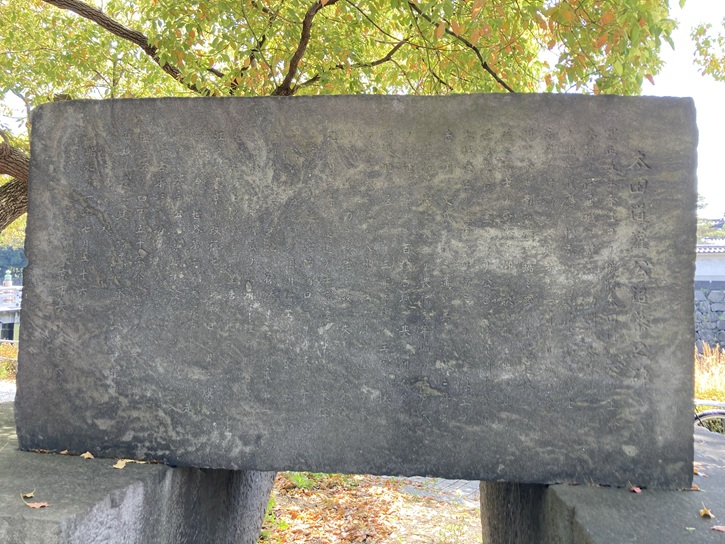
太田道灌公追慕之碑

寛正五年春、江戸ノ城将太田道灌公カ上洛参朝ノ際、居城ニ就キ、勅問ニ奉答シタル ノ歌ニ、我庵は松原つつき海ちかく富士の高嶺を軒端よそ見る、ノ一首アリ。城ハ東ニ川ヲ帯ビ、南ハ海ニ臨ミ、西ハ丘陵起伏シテ遥ニ富士ノ秀峰ヲ仰ク。歌ハ誠ニ能ク、其ノ景勝要害ヲ盡クセリ。公名ハ持資関東管領上杉定正ノ重臣タリ。幼ニシテ聰邁尊王ノ志ニ篤ク、文武ノ道ニ通シ、兵馬ノ技ニ精シク、築城ノ術ニ長セリ。長禄元年城ヲ江戸氏ノ館址ニ築キテ、百代名城ノ基ヲ創メタリ。爾来此ニ居ルコト三十年、能ク主家ヲ扶ケテ英名大ニ振ヒ、八州ノ群豪風ヲ望ンデ來リ従ウ。常ニ力ヲ民治ニ效シ、文事ヲ奨メ、徳化四周ニ普ク。遠近ノ士庶陸続トシテ來往シ、店舗軒ヲ連ネ、船舶河口ニ集ル。文明十八年、公ハ讒ニ遭ヒテ相州糟屋ノ主家ニ斃レタリト雖、其ノ城池ハ依然トシテ関東第一ノ形勝タリ。徳川氏ノ覇府ヲ経テ、明治ノ聖代ニ及ヒ、畏クモ皇居ヲ此ニ奠メラレ、江戸ハ東京ト改稱セラレテ、日ニ月ニ殷賑ヲ加ヘ、今ヤ世界第二ノ大都市トナレリ。是レ実ニ端ヲ公ノ築城ニ發シタルモノニシテ千古不朽ノ功業ナリト謂ウヘシ。茲ニ公ノ四百五十年祭ヲ行ウニ方リ、碑ヲ旧城ノ邊ニ建テ、市民ノ永ク遺徳ヲ追頌スルヲ資セントス。

 昭和十一年七月二十六日
 東京市長 牛塚虎太郎


案内板には次のように記されています。

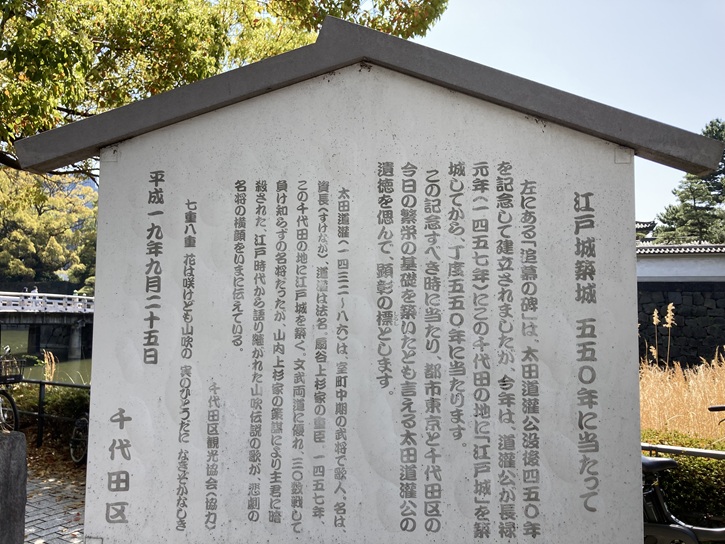
江戸城築城 五百五十年に当たって

左にある「追慕の碑」は、太田道灌公没後四百五十年を記念して建立されましたが、今年は、道灌公が長緑元年(1457年)にこの千代田の地に「江戸城」を築城してから、丁度五百五十年に当たります。この記念すべき時に当たり、都市東京と千代田区の今日の繁栄の基礎を築いたとも言える太田道灌公の遺徳を偲んで、顕彰の標とします。

太田道灌(1432年〜1486年)は、室町中期の武将で歌人。名は、資長(すけなが)、道灌は法名。扇谷上杉家の重臣。1457年、この千代田の地に江戸城を築く。文武両道に優れ、三十数戦して負け知らずの名将だったが、山内上杉家の策謀により主君に暗殺された。江戸時代から語り継がれた山吹伝説の歌が、悲劇の名将の横顔をいまに伝えている。

   七重八重 花は咲けども 山吹の 実のひとつだに なきぞかなしき


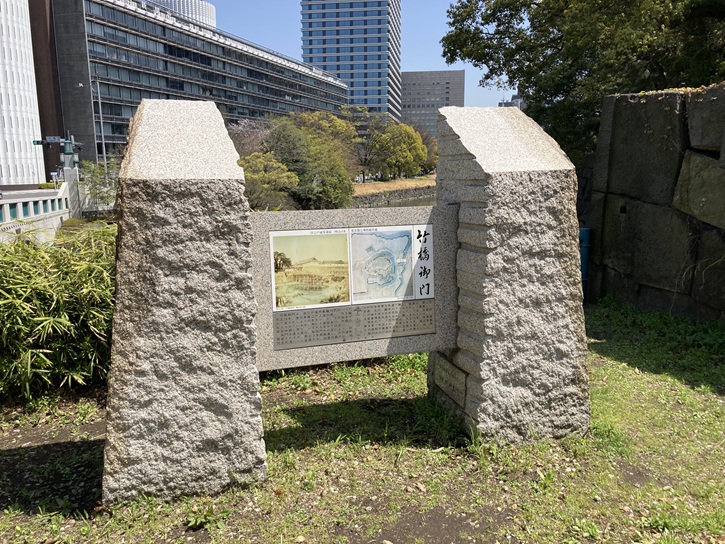
ポイント8 天下祭りの山車も通った 竹橋御門跡

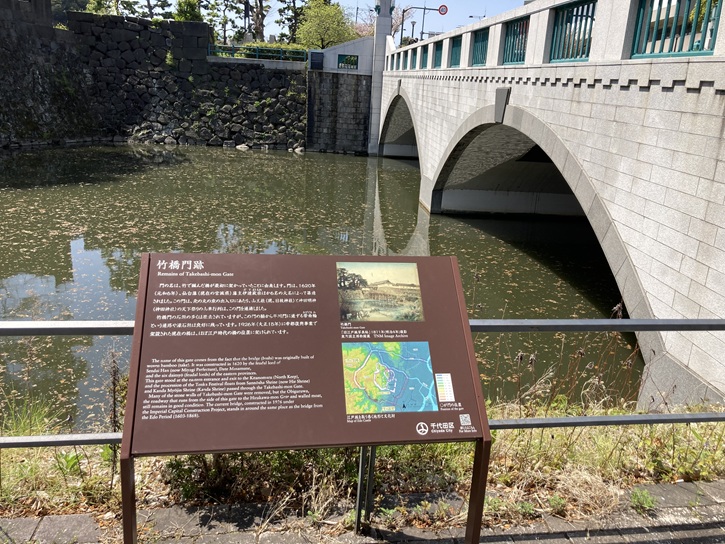
竹橋御門は、北の丸東の出入口で、元和六年(1620年)に平川門と同じく仙台藩主伊達政宗らによって築かれました。天下祭り(神田明神と日枝神社の例大祭)の山車行列が通過したのもこの門で、既に門は撤去されてしまいましたが、平川門へ繋がる細長い帯曲輪は健在です。御門を通る道は桜田門外の変によって一時閉鎖されましたが、明治三年に再開し、現在の代官町通りへと変遷しています。現在のアーチ型竹橋は、大正十五年に帝都復興事業で架設され、平成五年3月に周辺景観との調和や補強を目的に改修を受け、白・黒・桜のみかげ石の橋に装いを新たにしました。

竹橋門跡

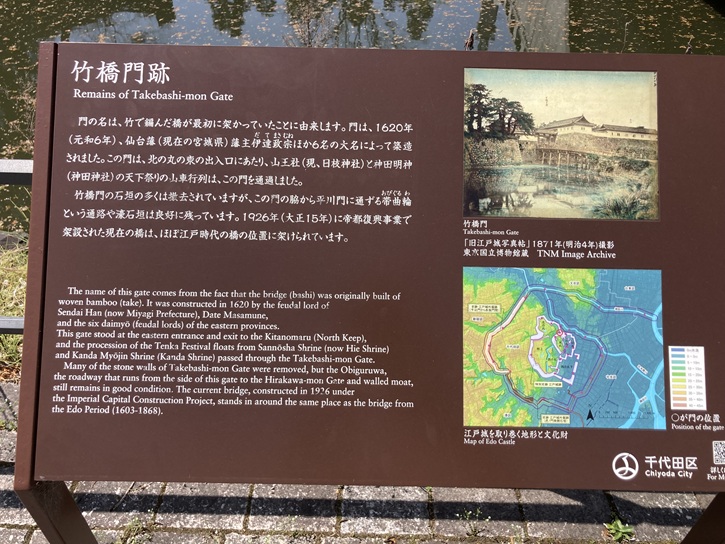
門の名は、竹で編んだ橋が最初に架かっていたことに由来します。門は、元和六年(1620年)、仙台藩(現在の宮城県)藩主伊達政宗ほか6名の大名によって築造されました。この門は、北の丸の東の出入口にあたり、山王社(現、日枝神社)と神田明神(神田神社)の天下祭りの山車行列は、この門を通過しました。竹橋門の石垣の多くは撤去されていますが、この門の脇から平川門に通ずる帯曲輪という通路や濠石垣は良好に残っています。大正拾五年(1926年)に帝都復興事業で架設された現在の橋は、ほぼ江戸時代の橋の位置に架けられています。

Remains of Takebashi-mon Gate

The name of this gate comes from the fact that the bridge (bashi) was originally built of woven bamboo (take). It was constructed in 1620 by the feudal lord of Sendai Han (now Miyagi Prefecture), Date Masamune, and the six daimyo (feudal lords) of the eastern provinces. This gate stood at the eastern entrance and exit to the Kitanomaru (North Keep), and the procession of the Tenka Festival floats from Sannosha Shrine (now Hie Shrine) and Kanda Myojin Shrine (Kanda Shrine) passed through the Takebashi-mon Gate. Many of the stone walls of Takebashi-mon Gate were removed, but the Obiguruwa, the roadway that runs from the side of this gate to the Hirakawa-mon Gate and walled moat, still remains in good condition. The current bridge, constructed in 1926 under the Imperial Capital Construction Project, stands in around the same place as the bridge from the Edo Period (1603-1868).


竹橋御門跡にも案内の石碑が建っています。随分と重厚ですね。

竹橋御門

竹橋御門は、旧江戸城内曲輪15門の一つで天正十八年、徳川家康江戸入国の頃、「竹を編みて渡されしよりの名なり」と、その由来が伝えられているが、他にも諸説あり、竹橋の架設時期と併せ、いずれも定かではない。御門を通る道は、桜田門外の変により一時閉鎖されるが、明治三年再開通し、今の通称代官町通りへと変遷する。遠藤の様子は、時々の社会情勢を色濃く映し、戦後は、都心の交通・文化・観光のアクセスとして発展し、この地を巡る皇居周回ジョギングは、全国的な健康増進気運を高め、親しまれている。現在のアーチ型竹橋は、大正十五年、帝都復興事業で架設され、平成五年3月、周辺景観との調和や補強を目的に改修を受け、白・黒・桜のみかげ石の橋に、装いを新たにした。


ポイント9 紀州徳川家に由来する 紀伊国坂

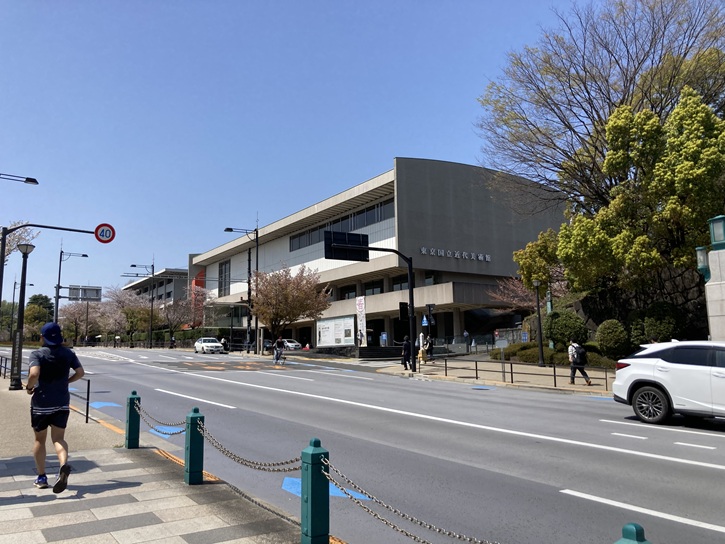
紀伊国坂は、竹橋付近から国立近代美術館の前を通り、皇居東御苑の北桔梗門辺りまで上がる坂で、長さが約310mほどあります。坂名は、かつてここに尾張紀伊邸あったことに由来します。


国立近代美術館の前に案内柱が立っています。

紀伊国坂

紀伊徳川家の屋敷があったことから名付けられました。坂道は竹橋門(現在の竹橋駅付近)に通じていました。明治時代になると北の丸に近衛師団司令部が置かれ、煉瓦造りの司令部や兵舎などが建設されました。現在も、司令部は東京国立近代美術館工芸館として保存・利用されています。


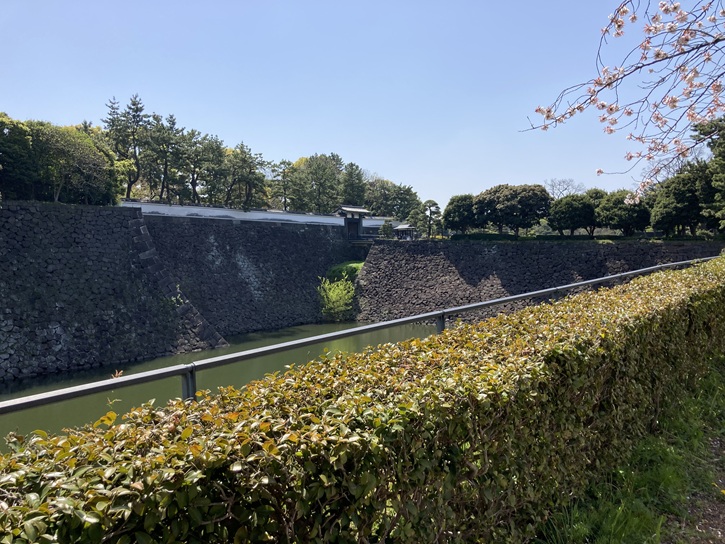
北桔橋門は、江戸城天守台北側と北の丸方面をつなぐ城門です。現在は高麗門のみが残っていますが、江戸時代は桝形門の形式をとっていました。ここは、東の平川濠と西の乾濠を分ける土橋になっている部分で、いわゆる橋になっているのは皇居東御苑の入口から僅か5〜6メートルの部分のみです。この門を入ったすぐ正面には江戸城の天守閣があり、この門は江戸城北側の守りの最重要地点でもありました。そのため橋の形状を「跳ね橋(橋の片方を跳ね上げて渡れなく出来る)としたことから、「北桔橋(きたはねばし)」と呼ばれました。江戸時代には有事の時以外は手前にある桔橋を高麗門側に跳ね上げ閉門していたそうです。現在でも門の柱には橋を跳ね上げるために滑車をつるしたと思われる金具が残っています。

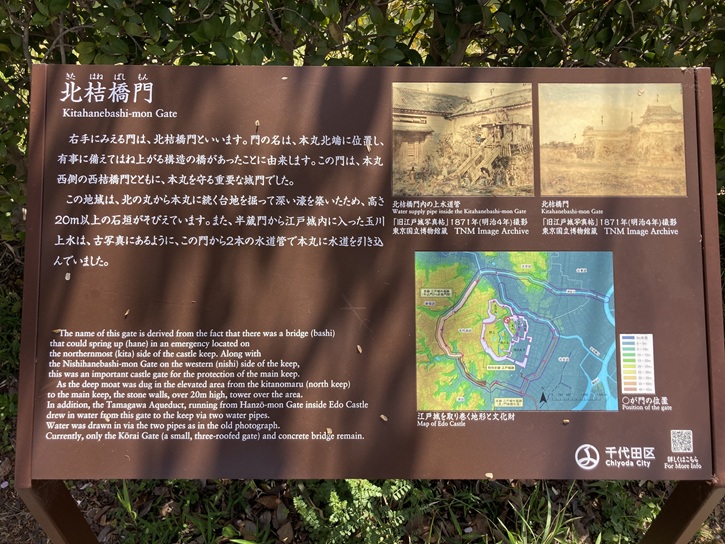
北桔橋門

右手にみえる門は、北桔橋門といいます。門の名は、本丸北端に位置し、有事に備えてはね上がる構造の橋があったことに由来します。この門は、本丸西側の西桔橋門とともに、本丸を守る重要な城門でした。この地域は、北の丸から本丸に続く台地を掘って深い濠を築いたため、高さ20m以上の石垣がそびえています。また、半蔵門から江戸城内に入った玉川上水は、古写真にあるように、この門から2本の水道管で本丸に水道を引き込んでいました。

Kitahanebashi-mon Gate

The name of this gate is derived from the fact that there was a bridge (bashi) that could spring up (hane) in an emergency located on the northernmost (kita) side of the castle keep. Along with the Nishihanebashi-mon Gate on the western (nishi) side of the keep, this was an important castle gate for the protection of the main keep. As the deep moat was dug in the elevated area from the kitanomaru (north keep) to the main keep, the stone walls, over 20m high, tower over the area. In addition, the Tamagawa Aqueduct, running from Hanzo-mon Gate inside Edo Castle drew in water from this gate to the keep via two water pipes. Water was drawn in via the two pipes as in the old photograph. Currently, only the Korai Gate (a small, three-roofed gate) and concrete bridge remain.


ポイント10 春日局も暮らした場所 北の丸公園

北の丸公園は、名前の通り江戸城の北の丸に位置する公園で、園内には国立近代美術館・科学技術館・日本武道館など多くの文化施設があり、旧江戸城の遺構(田安門・清水門)も多く残っています。ビルが立ち並ぶ都心部にあって緑が豊かな場所であり、皇居外苑や日比谷公園などと並んで都会のオアシス的な公園となっています。園内には道路があるため、自動車での乗り入れもでき、有料駐車場も備えています。散策や森林浴・ジョギングやウォーキングを楽しむ人々も多く見られます。

北の丸公園

江戸時代のはじめ、このあたりは関東総奉行内藤清成らの屋敷となり、代官町と呼ばれるようになりました。その後、三代将軍家光の弟、駿河府中藩主徳川忠長や春日局、家光の次男松平長松(のちの甲斐甲府藩主徳川綱重)などの屋敷となりました。さらに享保十六年(1731年)に八代将軍吉宗の次男徳川宗武(御三卿田安家)、宝暦八年(1758年)には九代将軍家重の次男徳川重好(御三卿清水家)がそれぞれ上屋敷を与えられています。安政三年(1856年)には、この絵図にも見られるように田安家・清水家上屋敷のほかに御蔵地、植溜御用地、馬場などがありました。明治維新後、田安家・清水家の上屋敷は一時御用邸となり、その後は近衛歩兵営用地となりました。近衛歩兵営では明治十一年(1878年)、日本初の兵士反乱事件「竹橋事件」が起きています。明治八年(1875年)、ここは東代官町、西代官町となりました。そして明治十二年(1879年)、二つの町が合併して新たに代官町と改称しました。第二次世界大戦後は、森林公園として整備が進められ、昭和四十二年(1967年)、住居表示の実施により北の丸公園と改められました。名称はかつての江戸城北の丸にあたることに由来します。公園は、昭和天皇の還暦を記念して昭和四十四年(1969年)に開園し、園内には日本武道館や科学技術館、国立公文書館、国立近代美術館などがあります。また石垣には国指定天然記念物のヒカリゴケ生育地もあり、都心のオアシスとして親しまれています。

Kitanomarukoen

This area was once known as Daikancho, and was home to various members of the shogun family. After World War II, a new park was built here, which was given the name of Kitanomaru Park, as it was at the north corner of Edo Castle.


ポイント11 江戸時代の面影が残る 清水門

清水門は、寛永元年(1624年)に広島藩初代藩主 浅野長晟によって建てられた枡形の城門です。


門名は、昔この辺りに清水が湧き出ていたとか、古くはこの辺りに清水寺があったことからその名をとって清水門と称したともいわれています。北の丸は武家地として利用され、江戸時代中期以降は、御三卿のうち田安家(田安徳川家)と清水家(清水徳川家)の屋敷と蔵地に利用され、北の丸公園の東側一帯は清水家が、西側一帯は田安家がそれぞれ所有していました。

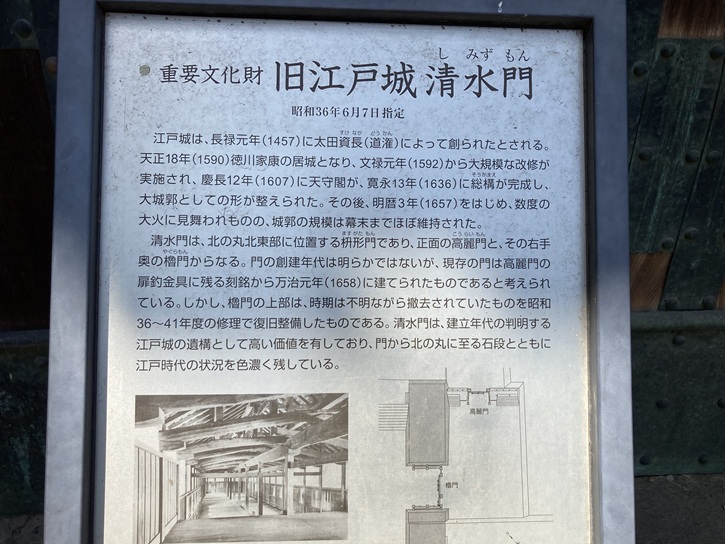
重要文化財 旧江戸城清水門

江戸城は、長禄元年(1457年)に太田資長(道潅)によって創られたとされる。天正十八年(1590年)徳川家康の居城となり、文禄元年(1592年)から大規模な改修が実施され、慶長十二年(1607年)に天守閣が、寛永十三年(1636年)に総構が完成し、大城郭としての形が整えられた。その後、明暦三年(1657年)をはじめ、数度の大火に見舞われものの、城郭の規模は幕末までほぼ維持された。清水門は、北の丸北東部に位置する枡形門であり、正面の高麗門と、その右手奥の櫓門からなる。門の創建年代は明らかではないが、現存の門は高麗門の扉釣金具に残る刻銘から万治元年(1658年)に建てられたものであると考えられている。しかし、櫓門の上部は、時期は不明ながら撤去されていたものを昭和三十六年〜昭和四十一年度の修理で復旧整備したものである。清水門は、建立年代の判明する江戸城の遺構として高い価値を有しており、門から北の丸に至る石段とともに江戸時代の状況を色濃く残している。

Shimizu Gate of the former Edo Castle

Edo Castle (Edo-jo) was built in 1457. Tokugawa leyasu who founded the Tokugawa Shogunate of Japan (1603-1867) started using it as a base in 1590. In 1592, he began large-scale reconstruction work to develop the castle as his residence and administration centre. Shimizu Gate (Shimizu-mon) is located at the northeast part of the north citadel (Kitanomaru). It consists of several parts, including a Korai-mon style outer gate, a Yagura-mon style inner gate, and highly-stacked stonewalls, which form a defensive narrow square. An inscription on the outer gate states that Shimizu Gate was built in 1658. The gate is of high national value as one of the existing buildings at the former Edo Castle whose year of construction can be identified. Shimizu Gate has been protected by the national government as Important Cultural Property since 1961.


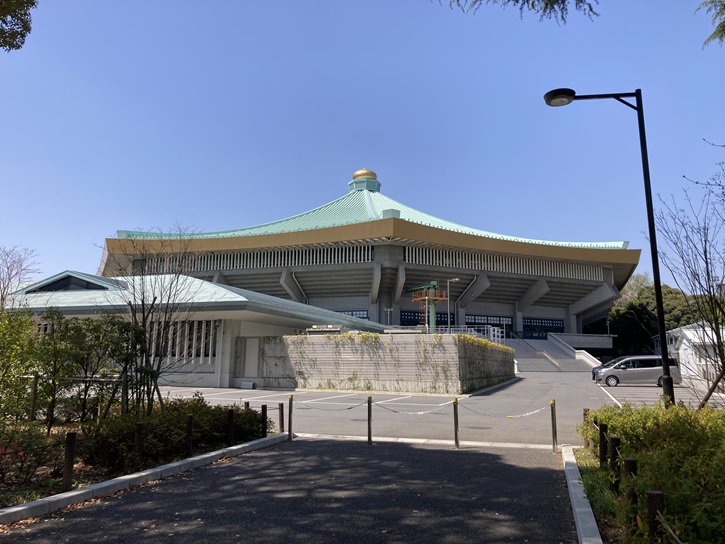
日本武道館は、1964年東京オリンピックの柔道競技会場として建設され、同年10月3日に開館しました。日本伝統の武道を普及奨励し、心身錬磨の大道場としての役割を担うことを設立趣旨としています。しかし、武道以外の屋内競技場や多目的ホールとしても利用されています。法隆寺夢殿をモデルにした八角形の意匠で、大屋根の稜線は富士山をイメージしています。


ポイント12 現存する最古の江戸城門 田安門

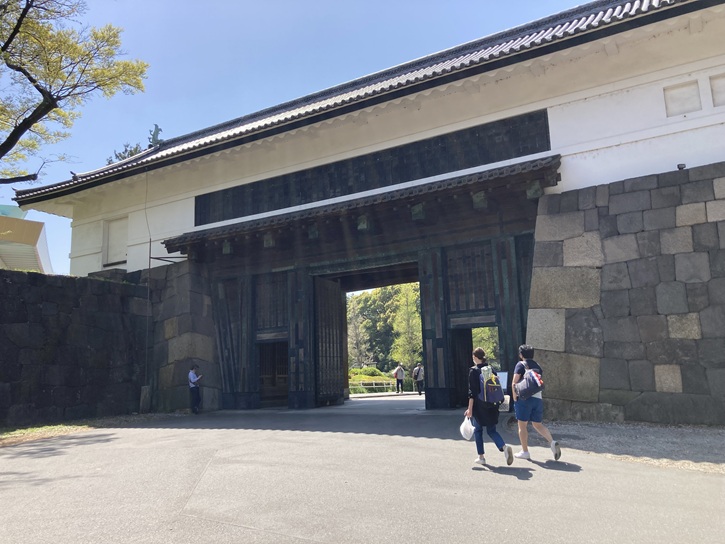
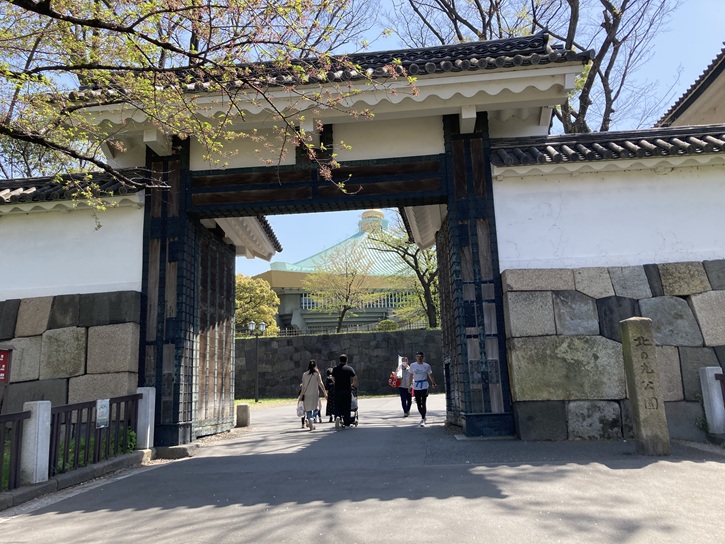
田安門は元和六年(1620年)に建築され、寛永十三年(1636年)に修繕されたものが現在に伝わっていると考えられ、昭和三十八年には解体修理が行われました。北面する高麗門とその西側に直交する渡櫓門からなる枡形門です。高麗門の扉の釣金具に製作に携わったと考えられる職人の銘文があります。


こんな感じの枡形門です。

重要文化財 旧江戸城田安門

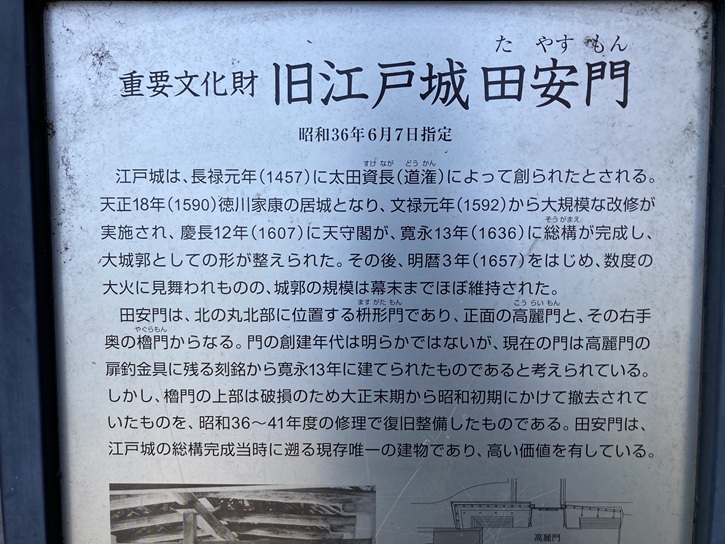
江戸城は長禄元年(1457年)に太田資長(道潅)によって創られたとされる。天正十八年(1590年)徳川家康の居城となり、文禄元年(1592年)から大規模な改修が実施され、慶長十二年(1607年)に天守閣が、寛永十三年(1636年)に総構が完成し、大城郭としての形が整えられた。その後、明暦三年(1657年)をはじめ、数度の大火に見舞われ(た)ものの、城郭の規模は幕末までほぼ維持された。田安門は、北の丸北部に位置する枡形門であり、正面の高麗門と、その右手奥の櫓門からなる。門の創建年代は明らかではないが、現在の門は高麗門の扉釣金具に残る刻銘から寛永十三年に建てられたものであると考えられている。しかし、櫓門の上部は破損のため大正末期から昭和初期にかけて撤去されていたものを、昭和三十六年〜昭和四十一年度の修理で復旧整備したものである。田安門は、江戸城の総構完成当時に遡る現存唯一の建物であり、高い価値を有している。

Tayasu Gate of the former Edo Castle

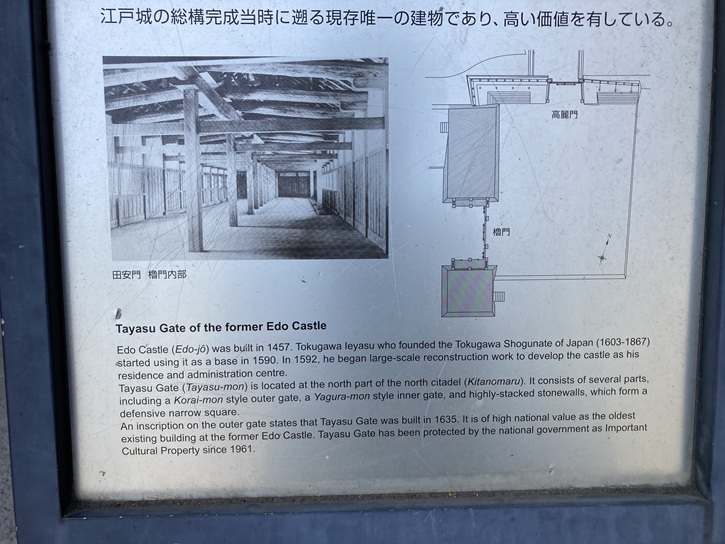
Edo Castle (Edo-jo) was built in 1457. Tokugawa leyasu who founded the Tokugawa Shogunate of Japan (1603-1867) started using it as a base in 1590. In 1592, he began large-scale reconstruction work to develop the castle as his residence and administration centre. Tayasu Gate (Tayasu-mon) is located at the north part of the north citadel (Kitanomaru). It consists of several parts, including a Korai-mon style outer gate, a Yagura-mon style inner gate, and highly-stacked stonewalls, which form a defensive narrow square. An inscription on the outer gate states that Tayasu Gate was built in 1635. It is of high national value as the oldest existing building at the former Edo Castle. Tayasu Gate has been protected by the national government as Important Cultural Property since 1961.


田安門の辺りは古くは「田安口」または「飯田口」ともいい、上州方面への道が通じていたといわれています。門名の由来は、門内は田安台といって、始め百姓地で、田安大明神があったので門名と称としたといわれています。江戸城造営後は北丸と称し、代官屋敷や大奥に仕えた女性の隠遁所となりました。有名な千姫や春日局、家康の側室で水戸頼房の准母英勝院の屋敷などもこの内にありました。享保十六年(1731年)八代将軍吉宗の第二子宗武はここに一家を創立して田安家を興しました。宗武は賀茂真淵に師事し、国学の造形には深いものがありました。宗武の子松平定信(白河楽翁)はここで生まれました。幾度かの改修が行われたものの、江戸城の中で現存する最古の城門です。

田安門

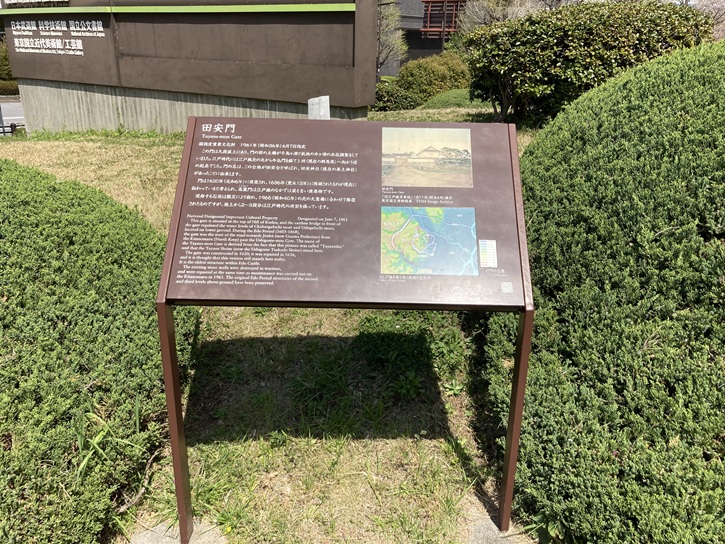
この門は九段坂上にあり、門の前の土橋が千鳥ヶ淵と低地の牛ヶ淵の水位調整をしていました。江戸時代には江戸城北の丸から牛込門を経て上州(現在の群馬県)へ向かう道の起点でした。門の名は、この台地が田安台と呼ばれ、田安神社(現在の築土神社)があったことに由来します。門は元和六年(1620年)に建築され、寛永十三年(1636年)に修繕されたものが現在に伝わっていると考えられ、高麗門は江戸城のなかでは最も古い建築物です。現存する石垣は戦災により崩れ、昭和四十年(1965年)の北の丸整備に合わせて修復されたものですが、地上から2〜3段分は江戸時代の原型を保っています。

Tayasu-mon Gate

This gate is situated at the top of Hill of Kudan, and the earthen bridge in front of the gate regulated the water levels of Chidorigafuchi moat and Ushigafuchi moat, located on lower ground. During the Edo Period (1603-1868), the gate was the start of the road towards Joshu (now Gunma Prefecture) from the Kitanomaru (North Keep) past the Ushigome-mon Gate. The name of the Tayasu-mon Gate is derived from the fact that this plateau was called "Tayasudai," and that the Tayasu Shrine (now the Ushigome Tsukudo Shrine) stood here. The gate was constructed in 1620; it was repaired in 1636, and it is thought that this version still stands here today. It is the oldest structure within Edo Castle. The existing stone walls were destroyed in wartime, and were repaired at the same time as maintenance was carried out on the Kitanomaru in 1965. The original Edo Period structures of the second and third levels above ground have been preserved.


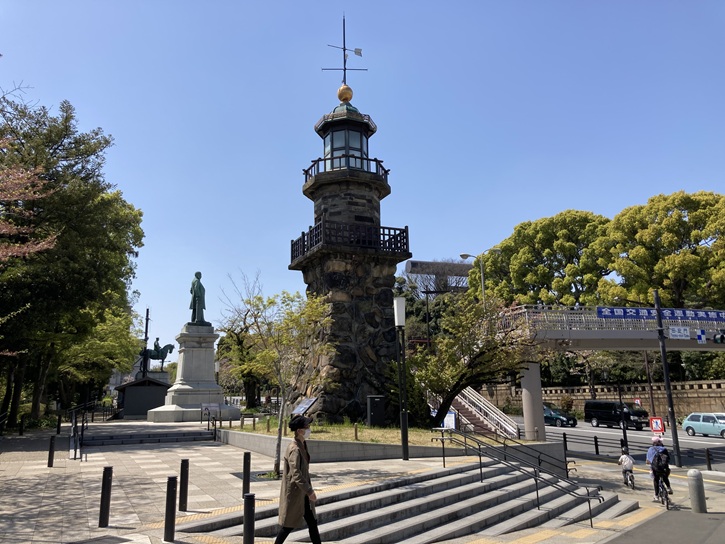
九段坂沿いにモニュメントが幾つか並んでいます。灯台のように見えるのは高燈籠です。元々は街灯の目的で設置したものではなく、靖国神社の灯籠を移築したとのことです。

高燈籠(常燈明台)

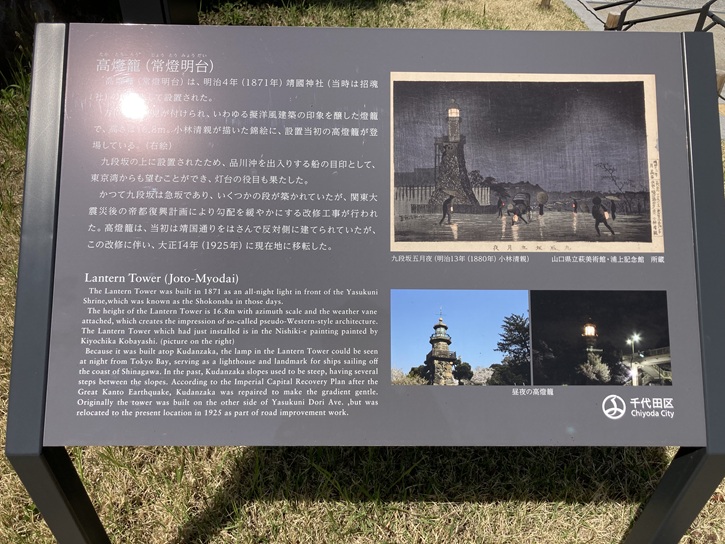
高燈籠(常燈明台)は、明治四年(1871年)靖國神社(当時は招魂社)の燈籠として設置された。方位盤や風見が付けられ、いわゆる擬洋風建築の印象を醸した燈籠で、高さは16.8m。小林清親が描いた錦絵に、設置当初の高燈籠が登場している(右絵)。九段坂の上に設置されたため、品川沖を出入りする船の目印として、東京湾からも望むことができ、灯台の役目も果たした。かつて九段坂は急坂であり、いくつかの段が築かれていたが、関東大震災後の帝都復興計画により勾配を緩やかにする改修工事が行われた。高燈籠は、当初は靖国通りをはさんで反対側に建てられていたが、この改修に伴い、大正十四年(1925年)に現在地に移転した。

Lantern Tower (Joto-Myodai)

The Lantern Tower was built in 1871 as an all-night light in front of the Yasukuni Shrine, which was known as the Shokonsha in those days. The height of the Lantern Tower is 16.8m with azimuth scale and the weather vane attached, which creates the impression of so-called pseudo-Western-style architecture. The Lantern Tower which had just installed is in the Nishiki-e painting painted by Kiyochika Kobayashi. (picture on the right) Because it was built atop Kudanzaka, the lamp in the Lantern Tower could be seen at night from Tokyo Bay, serving as a lighthouse and landmark for ships sailing off the coast of Shinagawa. In the past, Kudanzaka slopes used to be steep, having several steps between the slopes. According to the Imperial Capital Recovery Plan after the Great Kanto Earthquake, Kudanzaka was repaired to make the gradient gentle. Originally the tower was built on the other side of Yasukuni Dori Ave., but was relocated to the present location in 1925 as part of road improvement work.


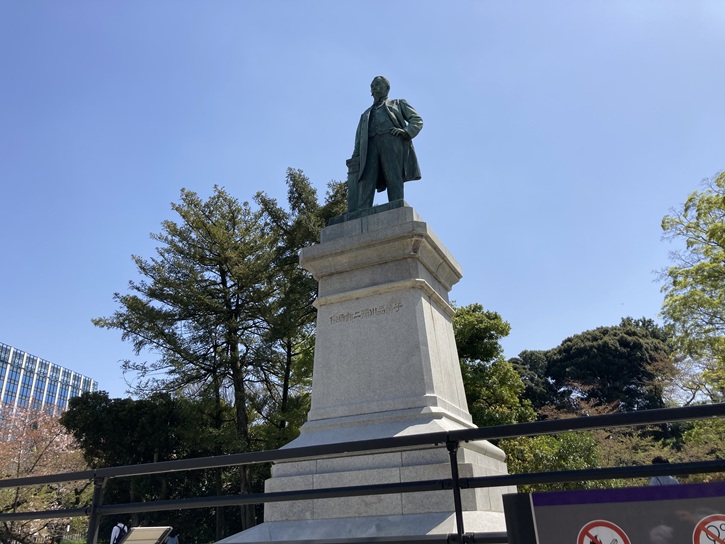
品川弥二郎って名前は聞いたことはありませんが、ここに銅像が建つ位なので偉人なのでしょう。

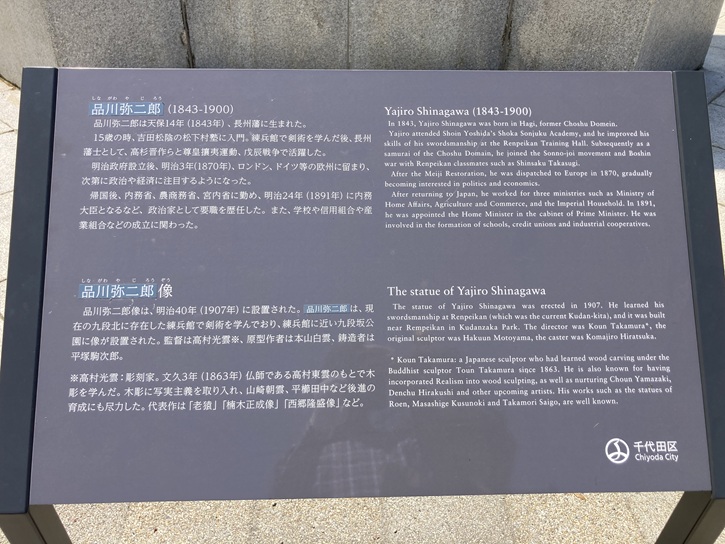
品川弥二郎(1843年〜1900年)

品川弥二郎は天保十四年(1843年)、長州藩に生まれた。15歳の時、吉田松陰の松下村塾に入門。練兵館で剣術を学んだ後、長州藩士として、高杉晋作らと尊皇攘夷運動、戊辰戦争で活躍した。明治政府設立後、明治三年(1870年)、ロンドン、ドイツ等の欧州に留まり、次第に政治や経済に注目するようになった。帰国後、内務省、農商務省、宮内省に勤め、明治二十四年(1891年)に内務大臣となるなど、政治家として要職を歴任した。また、学校や信用組合や産業組合などの成立に関わった。

Yajiro Shinagawa (1843-1900)

In 1843, Yajiro Shinagawa was born in Hagi, former Choshu Domein. Yajiro attended Shoin Yoshida's Shoka Sonjuku Academy, and he improved his skills of his swordsmanship at the Renpeikan Training Hall. Subsequently as a samurai of the Choshu Domain, he joined the Sonno-joi movement and Boshin war with Renpeikan classmates such as Shinsaku Takasugi. After the Meiji Restoration, he was dispatched to Europe in 1870, gradually becoming interested in politics and economics. After returning to Japan, he worked for three ministries such as Ministry of Home Affairs, Agriculture and Commerce, and the Imperial Household. In 1891, he was appointed the Home Minister in the cabinet of Prime Minister. He was involved in the formation of schools, credit unions and industrial cooperatives.

品川弥二郎像

品川弥二郎像は、明治四十年(1907年)に設置された。品川弥二郎は、現在の九段北に存在した練兵館で剣術を学んでおり、練兵館に近い九段坂公園に像が設置された。監督は高村光雲※、原型作者は本山白雲、鋳造者は平塚駒次郎。

※高村光雲:彫刻家。文久三年(1863年)仏師である高村東雲のもとで木彫を学んだ。木彫に写実主義を取り入れ、山崎朝雲、平櫛田中など後進の育成にも尽力した。代表作は「老猿」「楠木正成像」「西郷隆盛像」など。

The statue of Yajiro Shinagawa

The statue of Yajiro Shinagawa was erected in 1907. He learned his swordsmanship at Renpeikan (which was the current Kudan-kita), and it was built near Rempeikan in Kudanzaka Park. The director was Koun Takamura*, the original sculptor was Hakuun Motoyama, the caster was Komajiro Hiratsuka. *Koun Takamura: a Japanese sculptor who had learned wood carving under the Buddhist sculptor Toun Takamura since 1863. He is also known for having incorporated Realism into wood sculpting, as well as nurturing Choun Yamazaki, Denchu Hirakushi and other upcoming artists. His works such as the statues of Roen, Masashige Kusunoki and Takamori Saigo, are well known.


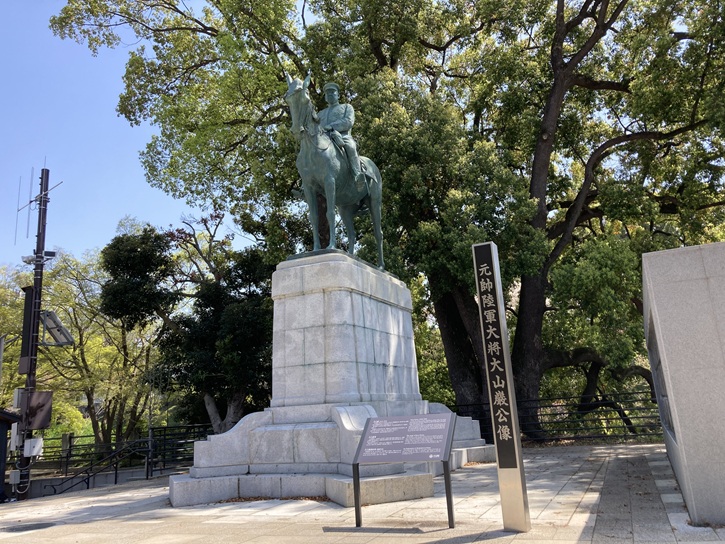
大山巌元帥の名前は聞いたことがあります。

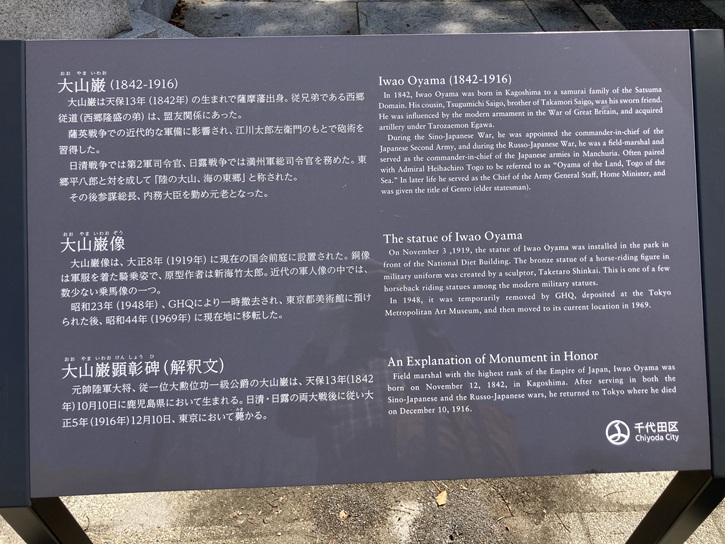
大山巌(1842年〜1916年)

大山巌は天保十三年(1842年)の生まれで薩摩藩出身。従兄弟である西郷従道(西郷隆盛の弟)は、盟友関係にあった。薩英戦争での近代的な軍備に影響され、江川太郎左衛門のもとで砲術を習得した。日清戦争では第2軍司令官、日露戦争では満州軍総司令官を務めた。東郷平八郎と対を成して「陸の大山、海の東郷」と称された。その後参謀総長、内務大臣を勤め元老となった。

Iwao Oyama (1842-1916)

In 1842, Iwao Oyama was born in Kagoshima to a samurai family of the Satsuma Domain. His cousin, Tsugumichi Saigo, brother of Takamori Saigo, was his sworn friend. He was influenced by the modern armament in the War of Great Britain, and acquired artillery under Tarozaemon Egawa. During the Sino-Japanese War, he was appointed the commander-in-chief of the Japanese Second Army, and during the Russo-Japanese War, he was a field-marshal and served as the commander-in-chief of the Japanese armies in Manchuria. Often paired with Admiral Heihachiro Togo to be referred to as "Oyama of the Land, Togo of the Sea." In later life he served as the Chief of the Army General Staff, Home Minister, and was given the title of Genro (elder statesman).

大山巌像

大山巌像は、大正八年(1919年)に現在の国会前庭に設置された。銅像は軍服を着た騎乗姿で、原型作者は新海竹太郎。近代の軍人像の中では、数少ない乗馬像の一つ。昭和二十三年(1948年)、GHQにより一時撤去され、東京都美術館に預けられた後、昭和四十四年(1969年)に現在地に移転した。

The statue of Iwao Oyama

On November 3,1919, the statue of Iwao Oyama was installed in the park in front of the National Diet Building. The bronze statue of a horse-riding figure in military uniform was created by a sculptor, Taketaro Shinkai. This is one of a few horseback riding statues among the modern military statues. In 1948, it was temporarily removed by GHQ, deposited at the Tokyo Metropolitan Art Museum, and then moved to its current location in 1969,

大山巌顕彰碑(解釈文)

元帥陸軍大将、従一位大勲位功一級公爵の大山巌は、天保十三年(1842年)10月10日に鹿児島県において生まれる。日清・日露の両大戦後に従い大正五年(1916年)12月10日、東京において薨かる。

An Explanation of Monument in Honor

Field marshal with the highest rank of the Empire of Japan, Iwao Oyama was born on November 12, 1842, in Kagoshima. After serving in both the Sino-Japanese and the Russo-Japanese wars, he returned to Tokyo where he died on December 10, 1916.


ポイント13 江戸の水を確保するダム 千鳥ヶ淵

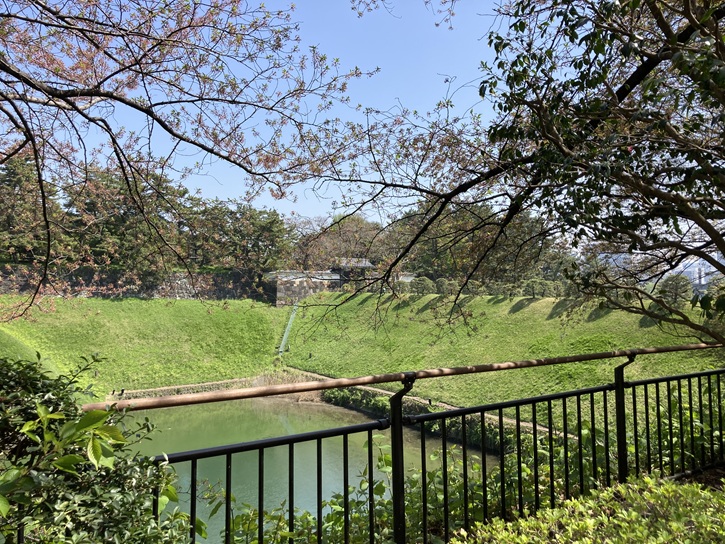
千鳥ヶ淵は、江戸開府後の江戸城拡張の際に局沢川と呼ばれていた川を半蔵門と田安門の土橋で塞き止めて造られたお堀です。代官町通りを境に接する半蔵濠とはかつて繋がっていましたが、明治三十三(1900年)に道路建設のため埋め立てられて別々のお堀となりました。半蔵濠には千鳥ヶ淵公園が隣接しています。

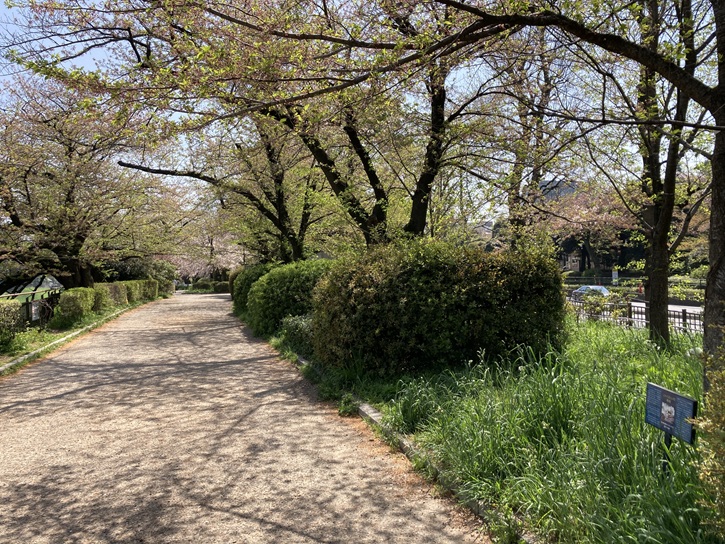
千鳥ヶ淵緑道と桜並木

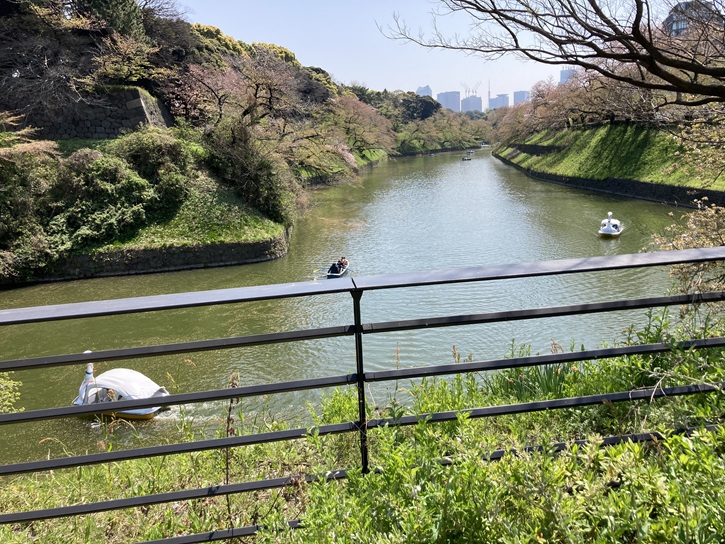
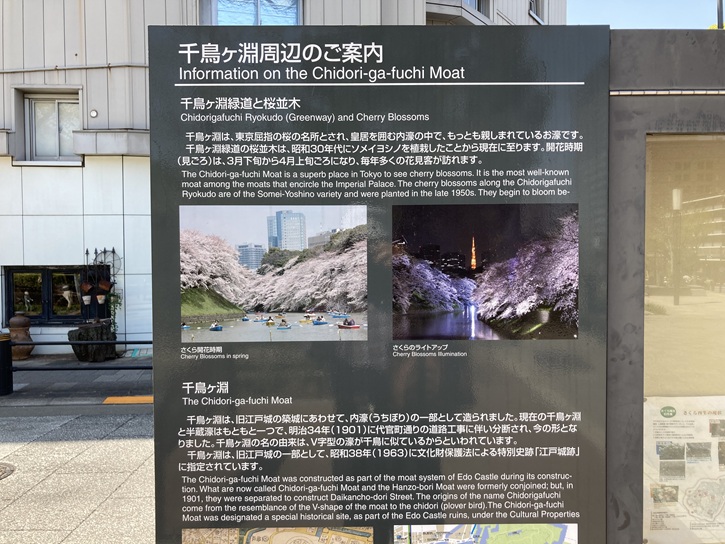
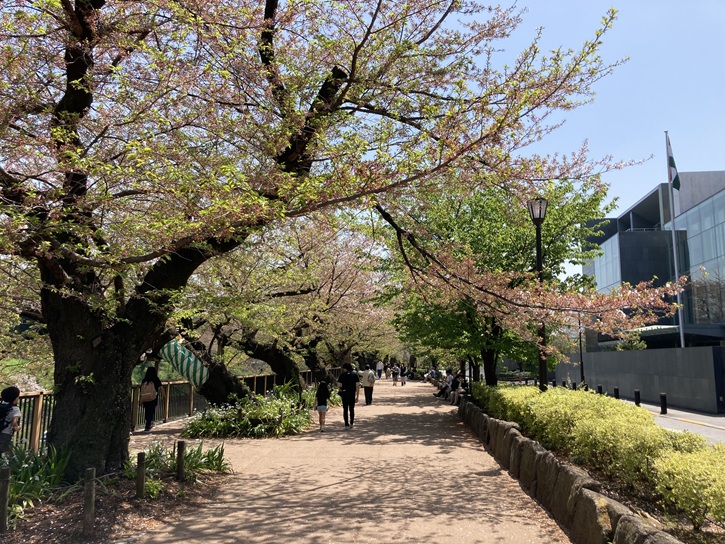
千鳥ヶ淵は、東京屈指の桜の名所とされ、皇居を囲む内濠の中で、もっとも親しまれているお濠です。千鳥ヶ淵緑道の桜並木は、昭和三十年代にソメイヨシノを植栽したことから現在に至ります。開花時期(見ごろ)は、3月下旬から4月上旬ごろになり、毎年多くの花見客が訪れます。

Chidorigafuchi Ryokudo (Greenway) and Cherry Blossoms

The Chidori-ga-fuchi Moat is a superb place in Tokyo to see cherry blossoms. It is the most well-known moat among the moats that encircle the Imperial Palace. The cherry blossoms along the Chidorigafuchi Ryokudo are of the Somei-Yoshino variety and were planted in the late 1950s. They begin to bloom between late March and early April and attract throngs of visitors every year.

千鳥ヶ淵

千鳥ヶ淵は、旧江戸城の築城にあわせて、内濠(うちぼり)の一部として造られました。現在の千鳥ヶ淵と半蔵濠はもともと一つで、明治三十四年(1901年)に代官町通りの道路工事に伴い分断され、今の形となりました。千鳥ヶ淵の名の由来は、V字型の濠が千鳥に似ているからといわれています。千鳥ヶ淵は、旧江戸城の一部として、昭和三十八年(1963年)に文化財保護法による特別史跡「江戸城跡」に指定されています。

The Chidori-ga-fuchi Moat

The Chidori-ga-fuchi Moat was constructed as part of the moat system of Edo Castle during its construction. What are now called Chidori-ga-fuchi Moat and the Hanzo-bori Moat were formerly conjoined; but, in 1901, they were separated to construct Daikan-cho-dori Street. The origins of the name Chidorigafuchi come from the resemblance of the V-shape of the moat to the chidori (plover bird). The Chidori-ga-fuchi Moat was designated a special historical site, as part of the Edo Castle ruins, under the Cultural Properties Protection Law in 1963.


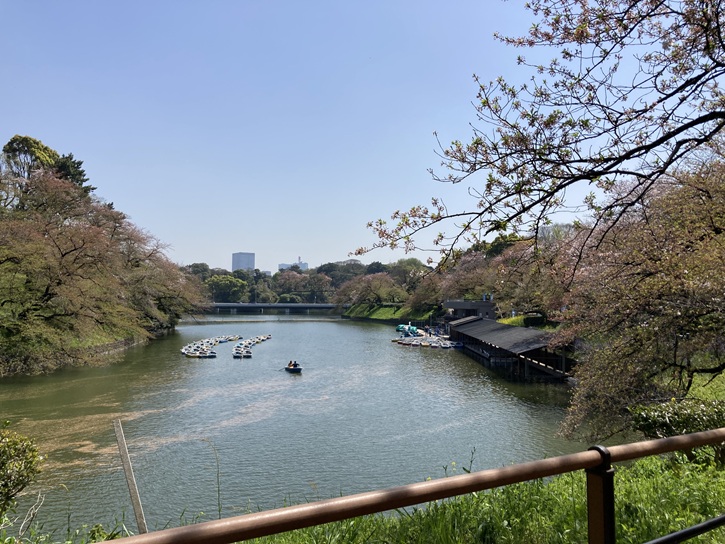
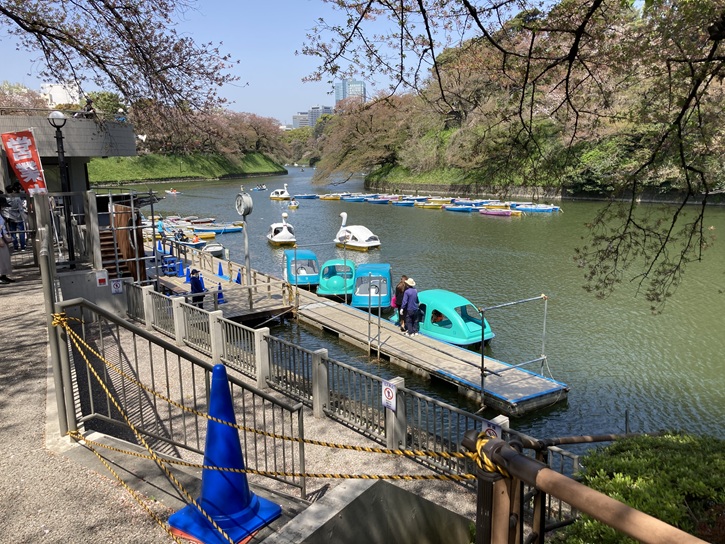
千鳥ヶ淵付近は桜の名所として有名で、桜の季節になると多くの人で賑わいます。開花期間中、千鳥ヶ淵沿いの千鳥ヶ淵緑道では夜になると桜のライトアップが行われ、千鳥ヶ淵緑道内にはボート場が設けられてお堀でボートを楽しむことができます。


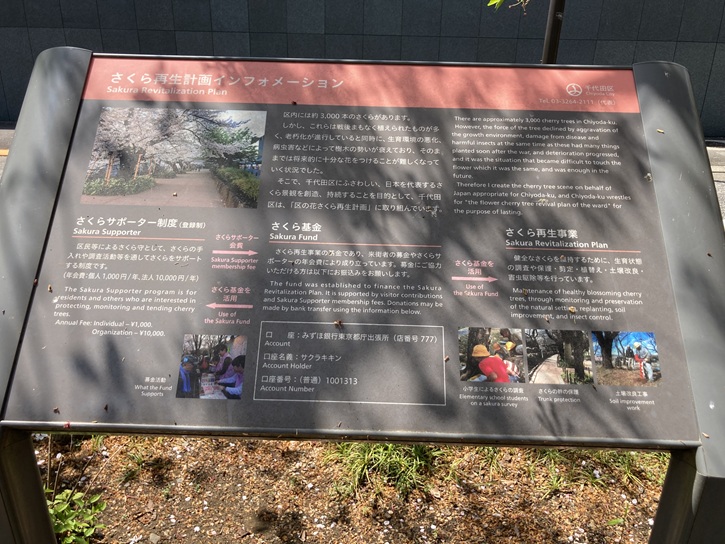
千鳥ヶ淵緑道に植えられている桜は春になると豪華絢爛に開花しますが、将来を見据えて「さくら再生計画」が進行中です。

さくら再生計画インフォメーション

区内には約3、000本のさくらがあります。しかし、これらは戦後まもなく植えられたものが多く、老朽化が進行していると同時に、生育環境の悪化、病虫害などによって樹木の勢いが衰えており、そのままでは将来的に十分な花をつけることが難しくなっていく状況でした。そこで、千代田区にふさわしい、日本を代表するさくら景観を創造、持続することを目的として、千代田区は、「区の花さくら再生計画」に取り組んでいます。

Sakura Revitalization Plan

There are approximately 3,000 cherry trees in Chiyoda-ku. However, the force of the tree declined by aggravation of the growth environment, damage from disease and harmful insects at the same time as these had many things planted soon after the war, and deterioration progressed, and it was the situation that became difficult to touch the flower which it was the same, and was enough in the future. Therefore I create the cherry tree scene on behalf of Japan appropriate for Chiyoda-ku, and Chiyoda-ku wrestles for "the flower cherry tree revival plan of the ward" for the purpose of lasting.


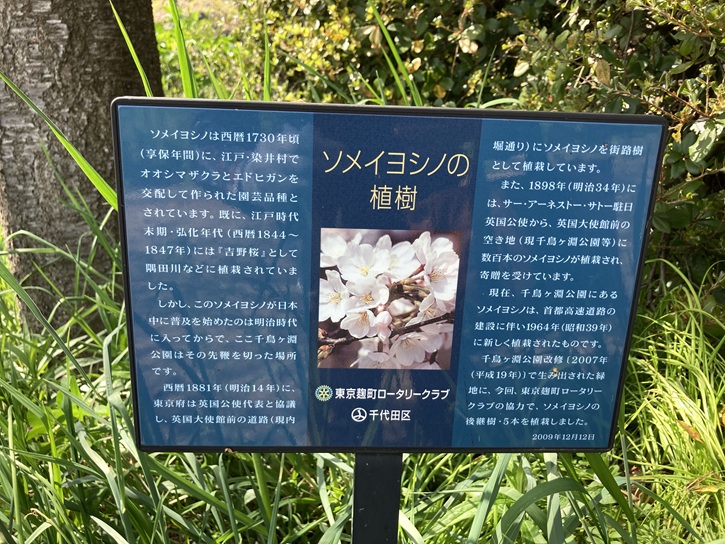
今では全国で見られますが、ソメイヨシノが普及し始めたのは千鳥ヶ淵公園が先鞭を付けたとのことです。

ソメイヨシノの植樹

ソメイヨシノは西暦1730年頃(享保年間)に、江戸・染井村でオオシマザクラとエドヒガンを交配して作られた園芸品種とされています。既に、江戸時代末期・弘化年代(西暦1844年〜1847年)には「吉野桜」として隅田川などに植栽されていました。しかし、このソメイヨシノが日本中に普及を始めたのは明治時代に入ってからで、ここ千鳥ヶ淵公園はその先鞭を切った場所です。明治十四年(西暦1881年)に、東京府は英国公使代表と協議し、英国大使館前の道路(現内堀通り)にソメイヨシノを街路樹として植栽しています。また、明治三十四年(1898年)には、サー・アーネストー・サトー駐日英国公使から、英国大使館前の空き地(現千鳥ヶ淵公園等)に数百本のソメイヨシノが植栽され、寄贈を受けています。現在、千鳥ヶ淵公園にあるソメイヨシノは、首都高速道路の建設に伴い昭和三十九年(1964年)に新しく植栽されたものです。千鳥ヶ淵公園改修(平成十九年【2007年】)で生み出された緑地に、今回、東京麹町ロータリークラブの協力で、ソメイヨシノの後継樹・5本を植栽しました。


桜など陸上植物の他にも、水中や水辺には水草・魚類・貝類・ヘイケボタル・トンボといった昆虫、オシドリなどの水鳥と、都心部では珍しく多様な生物が見られます。管理する環境省が景観と生物多様性、歴史性を保全するための「千鳥ヶ淵環境再生プラン」を進めています。この鯉は別の意味がありますが。

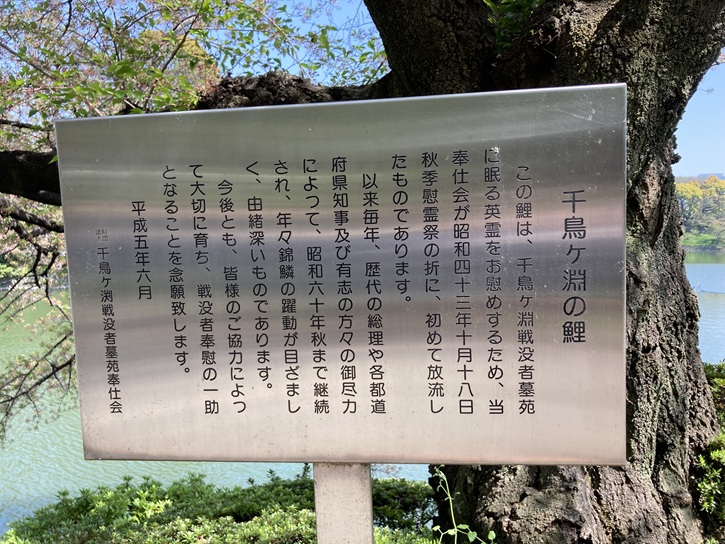
千鳥ヶ淵の鯉

この鯉は、千鳥ヶ淵戦没者墓苑に眠る英霊をお慰めするため、当奉仕会が昭和四十三年十月十八日秋季慰霊祭の折に、初めて放流したものであります。以来毎年、歴代の総理や各都道府県知事及び有志の方々の御尽力によって、昭和六十年秋まで継続され、年々錦鱗の躍動が目ざましく、由緒深いものであります。今後とも、皆様のご協力によって大切に育ち、戦没者奉慰の一助となることを念願致します。


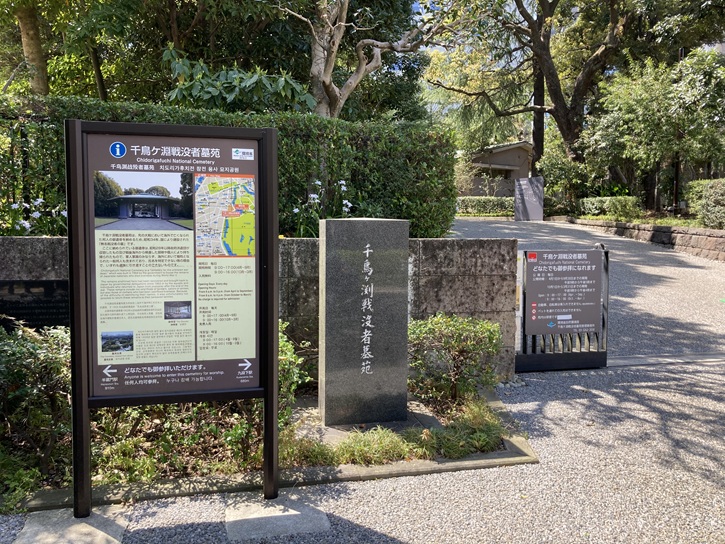
千鳥ヶ淵緑道を挟んだ先には、昭和三十四年(1959年)に千鳥ケ淵戦没者墓苑が造られ、第二次世界大戦の折に海外で死亡した身元不明の日本人の遺骨が安置されています。

千鳥ケ淵戦没者墓苑

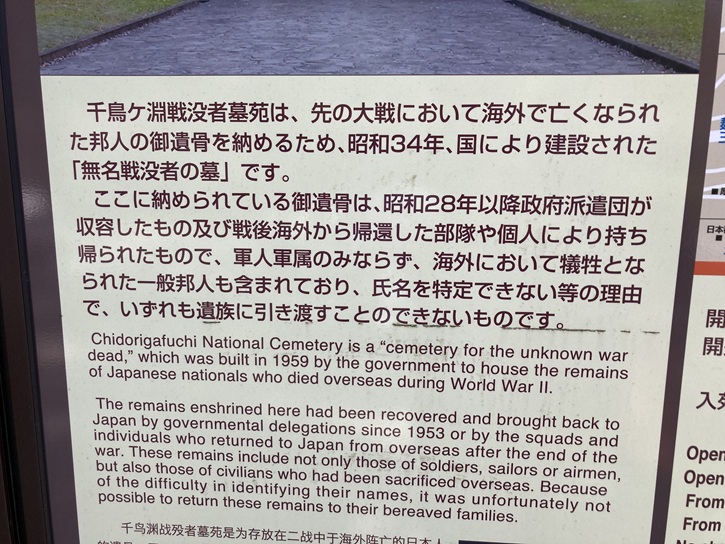
千鳥ケ淵戦没者墓苑は、先の大戦において海外で亡くなられた邦人の御遺骨を納めるため、昭和三十四年、国により建設された「無名戦没者の墓」です。ここに納められている御遺骨は、昭和二十八年以降政府派遣団が収容したもの及び戦後海外から帰還した部隊や個人により持ち帰られたもので、軍人軍属のみならず、海外において犠牲となられた一般邦人も含まれており、氏名を特定できない等の理由で、いずれも遺族に引き渡すことのできないものです。

Chidorigafuchi National Cemetery

Chidorigafuchi National Cemetery is a "cemetery for the unknown war dead," which was built in 1959 by the government to house the remains of Japanese nationals who died overseas during World War II. The remains enshrined here had been recovered and brought back to Japan by governmental delegations since 1953 or by the squads and individuals who returned to Japan from overseas after the end of the war. These remains include not only those of soldiers, sailors or airmen, but also those of civilians who had been sacrificed overseas. Because of the difficulty in identifying their names, it was unfortunately not possible to return these remains to their bereaved families.


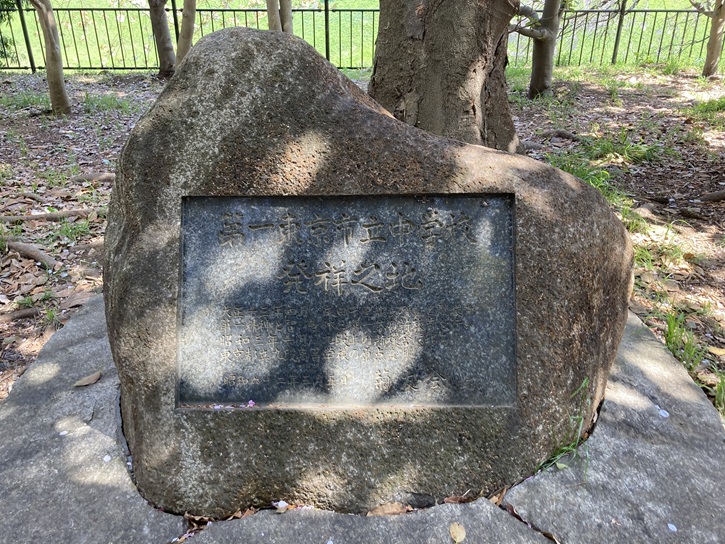
「第一東京市立中学校発祥之地」と書かれた石碑が建っています。第一東京市立中学校は、都立九段中学校を経て都立九段高等学校へと校名が変わりました。碑文中の「菊友会」は九段高校の同窓会の名称です。第一東京市立中学校は、関東大震災(1923年)後の学校不足を補うため、当時の東京市によって設立された学校です。大正デモクラシー下の大正自由教育運動(新教育運動)の気風を引き継ぎ、碑文にもある成田千里校長は開明的な人で、校風は自由、制服はブレザー、千葉に海の家を設けて毎年遠泳を実施し、当初は国立栄養研究所の指導の下で学校給食が出されたなど特徴ある学校でした。学校のレベルも高く、旧制一高の入学者を多数出していました。

第一東京市立中学校 発祥之地

大正十三年四月 成田千里校長のもと開校す。
第一精神と智徳体三位一体の新教育を行い、
昭和三年一月、九段上の信仰者に移る。
東京都立九段高等学校の原点なり。
昭和六十二年五月五日     菊友会


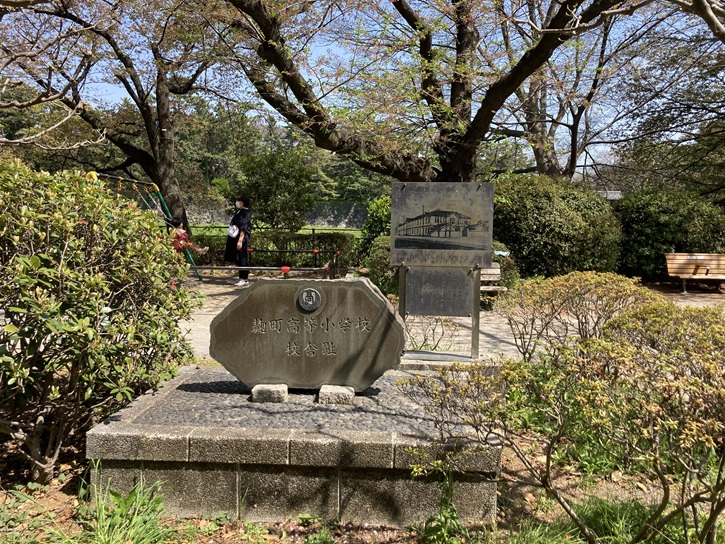
碑のすぐ近くには「麹町高等小学校校舎跡」という記念碑が建っています。明治八年(1875年)5月、「第一大学区第三中学区第六番公立小学平川学校」・「第一大学区第三中学区第七番公立小学麹町女学校」・「第一大学区第三中学区第八番公立小学清水学校」が開校し、明治十七年(1884年)3月には麹町女学校に日本最古の公立幼稚園とされている幼稚園が併設され、明治二十年(1887年)3月試行の小学校令により、これら3校が統合されて「麹町尋常高等小学校」が誕生しました。幾多の変遷を経て、平成五年(1993年)3月31日をもって閉校し、永田町小学校と統合されて現在は「千代田区立千代田麹町小学校」となっています。


ポイント14 服部半蔵が警固した 半蔵門

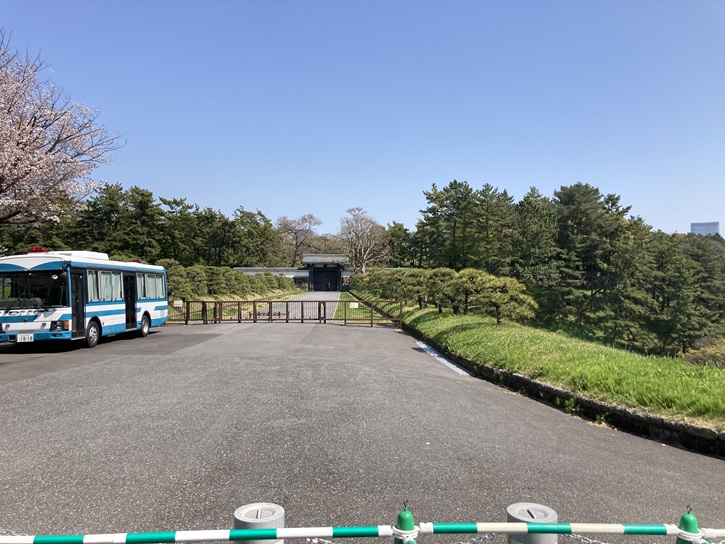
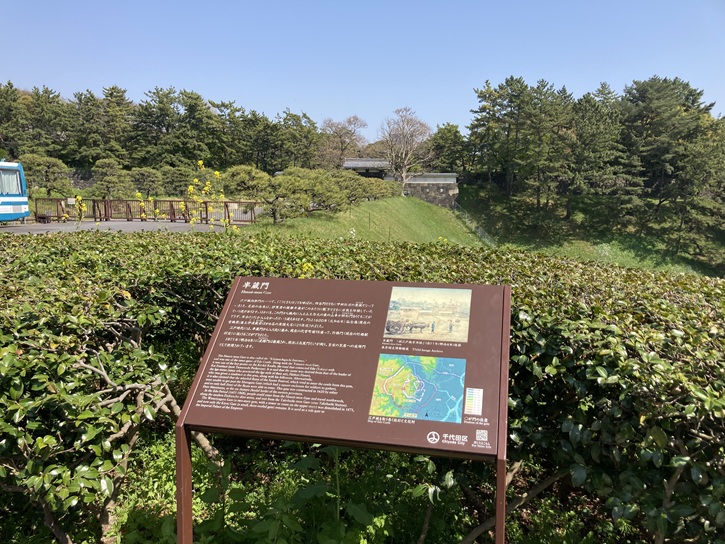
半蔵門は江戸城の城門のひとつで、皇居西端に位置し、国道20号甲州街道に通じています。江戸城の正門にあたる大手門とは正反対の位置にあり、江戸城三十六見附のひとつでした。半蔵門は桜田門と同じような枡形でしたが、櫓門の部分は明治時代に撤去されています。この門内は江戸時代には吹上御庭と呼ばれ、隠居した先代将軍や将軍継嗣などの住居とされました。現在は吹上御苑と呼ばれ、御所(天皇・皇后の御所)、吹上大宮御所(昭和天皇・香淳皇后の御所)、宮中三殿、生物学御研究所、天皇が稲作をする水田などがあります。そのため、天皇・内廷皇族及び秋篠宮家の皇居への出入りには、主にこの門が用いられています。旧来の門は昭和二十年(1945年)5月25日の東京大空襲(山の手大空襲)で焼失し、現在の門は和田倉門または吹上門のどちらかの高麗門を移築したものです。半蔵門の名称については、この門の警固を担当した徳川家の家来服部正成・正就父子の通称「半蔵」に由来するとする説が定説です。服部家の部下がこの門外に組屋敷を構え、四谷へと通じる甲州街道沿い一帯が旗本屋敷で固められていたことによります。一方、山王祭の山車の作り物として作られた象があまりにも大きかったために半分しか入らなかったことに由来するとする説もあります。


案内板が立っています。この辺りは、皇室ファンの人たちが皇族方の出入りを待ち受ける場所として知られています。

半蔵門

江戸城内郭門の一つで、「こうじまちロ」とも呼ばれ、四谷門とともに甲州街道の要衝となっていました。名前の由来は、伊賀者の服部半蔵がこのあたりに配下とともに屋敷を拝領していたという説があります。ほかにも、この門から城内に入る山王祭礼の象の山車が枡形門をくぐることができず、半分だけしか入らなかったという説もあります。門は元和六年(1620年)仙台藩(現在の宮城県)藩主伊達政宗ほか6名の東国大名により築造されました。江戸時代には、半蔵門から入り北に進み、現在の代官町通りを通って、竹橋門(現在の竹橋駅付近)に抜けることができました。明治四年(1871年)に渡櫓門は撤廃され、現在は高麗門だけが残り、皇室の皇居への通用門として使用されています。

Hanzo-mon Gate

The Hanzo-mon Gate is also called the "Kojimachiguchi Entrance," and was one of the inner gates of Edo Castle. Along with the Yotsuya-mon Gate, it was one of the key points on the Koshu Kaido, the road that connected Edo (Tokyo) with Kai Province (now Yamanashi Prefecture). It is said that the name was derived from that of the leader of the Iga-mono (ninja who practiced the Iga style of their art), Hattori Hanzo, who was given a residence in this area, along with his followers. Alternatively, it is also claimed that the wheeled floats of the Sanno Festival, which tried to enter the castle from this gate, were unable to get past the Masugata Gate (which had a square enclosure for soldiers to gather), and so only half (han) of the floats were able to enter. This gate was constructed in 1620 by either Date Masamune, or the six daimyo (feudal lords) of the eastern provinces. In the Edo Period (1603-1868), people could enter from the Hanzo-mon Gate and travel northwards, along the modern Daikancho-dori street, and exit from the Takebashi-mon Gate (near Takebashi Station). The Watariyagura Gate (a two-story gate, with a tower or room on the upper story) was demolished in 1871, and now only the Korai Gate (a small, three-roofed gate) remains. It is used as a side gate to the Imperial Palace of the Emperor.


ポイント15 別名「千代田城」が区名の由来 江戸城跡石碑

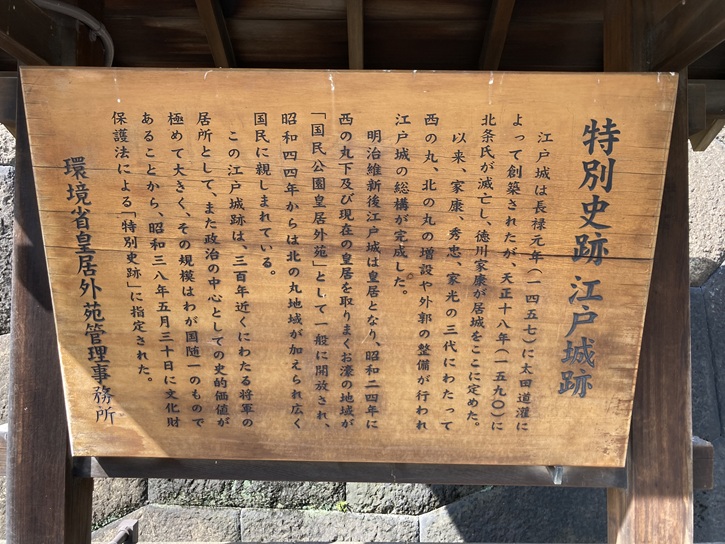
江戸城は長禄元年(1457年)に太田道灌によって創築されましたが、天正十八年(1590年)に北条氏が滅亡し、徳川家康が居城をここに定めました。以来、家康・秀忠・家光の三代にわたって西の丸と北の丸の増設や外郭に整備が行われ江戸城の総構が完成しました。明治維新後に江戸城は皇居となり、昭和二十四年に西の丸下及び現在の皇居を取りまくお濠の地域が「国民公園皇居外苑」として一般に開放され、昭和四十四年からは北の丸地域が加えられて広く国民に親しまれています。この江戸城跡は、三百年近くにわたる将軍の居所として、また政治の中心としての史的価値が極めて大きく、その規模はわが国随一のものであることから、昭和三十八年5月30日に文化財保護法による「特別史跡」に指定されました。


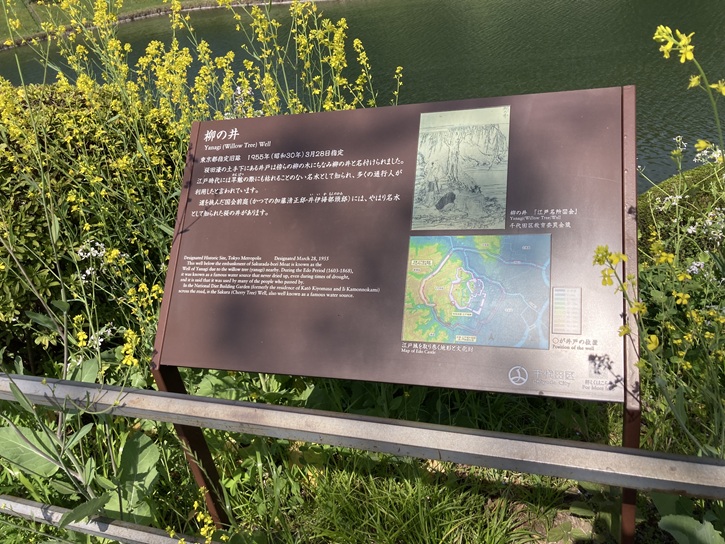
桜田濠の土手下にある井戸は傍らの柳の木に因んで「柳の井」と名付けられました。

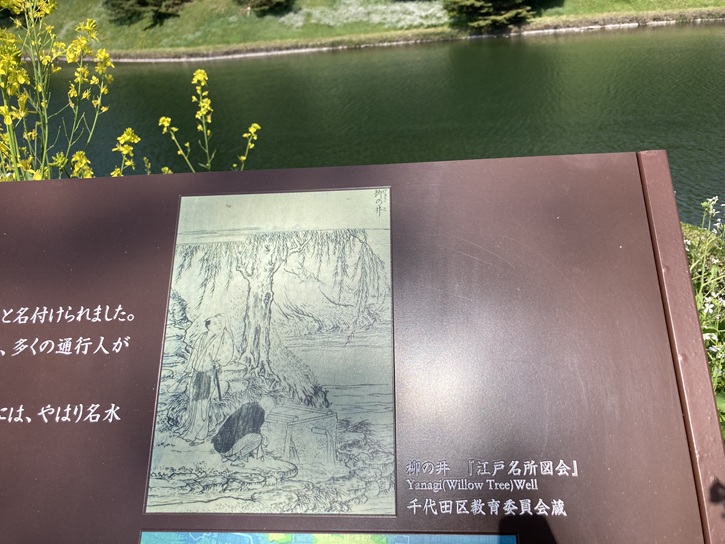
柳の井

桜田濠の土手下にある井戸は傍らの柳の木にちなみ柳の井と名付けられました。江戸時代には旱魃の際にも枯れることのない名水として知られ、多くの通行人が利用したと言われています。道を挟んだ国会前庭(かつての加藤清正邸・井伊掃部頭邸)には、やはり名水として知られた桜の井があります。

Yanagi (Willow Tree) Well

This well below the embankment of Sakurada-bori Moat is known as the Well of Yanagi due to the willow tree (yanagi) nearby. During the Edo Period (1603-1868), it was known as a famous water source that never dried up, even during times of drought, and it is said that it was used by many of the people who passed by. In the National Diet Building Garden (formerly the residence of Kato Kiyomasa and li Kamonnokami) across the road, is the Sakura (Cherry Tree) Well, also well known as a famous water source.


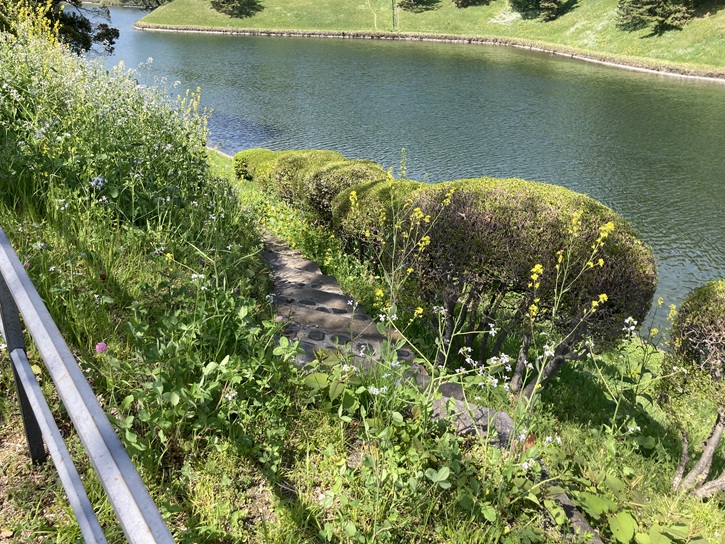
柳の井戸は、土手を下りた桜田濠の水面近くにあります。石段はあるのですが、立ち入りは出来ないようです。


ポイント16 桜田門間近に位置する 井伊掃部頭邸跡

国会前庭には、江戸時代に井伊掃部頭の上屋敷がありました。「掃部頭」は、井伊家が使用してい称号です。

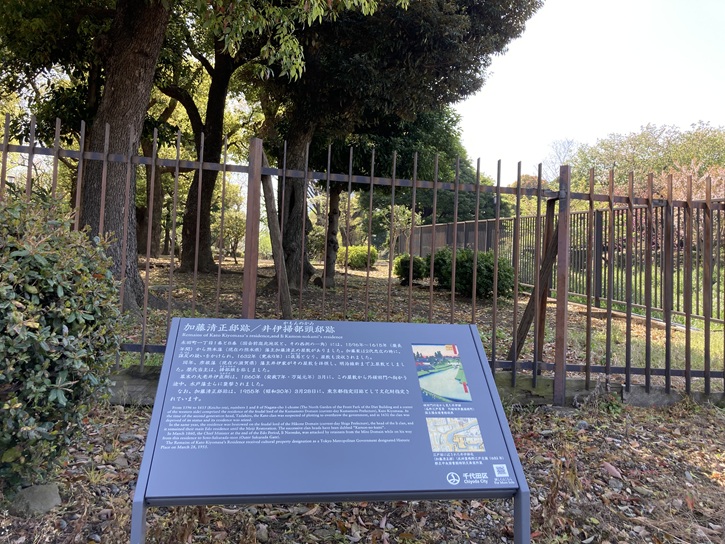
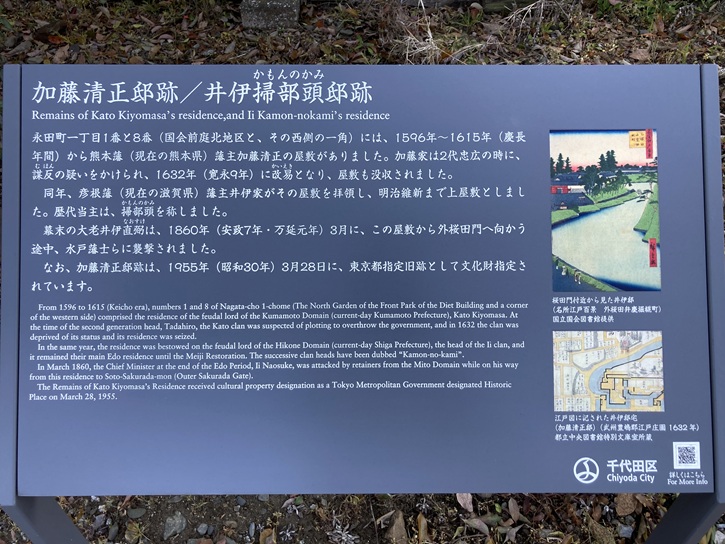
加藤清正邸跡/井伊掃部頭邸跡

永田町一丁目1番と8番(国会前庭北地区と、その西側の一角)には、慶長年間(1596年〜1615年)から熊本藩(現在の熊本県)藩主加藤清正の屋敷がありました。加藤家は2代忠広の時に、謀反の疑いをかけられ、寛永九年(1632年)に改易となり、屋敷も没収されました。同年、彦根藩(現在の滋賀県)藩主井伊家がその屋敷を拝領し、明治維新まで上屋敷としました。歴代当主は、掃部頭を称しました。幕末の大老井伊直弼は、安政七年・万延元年(1860年)3月に、この屋敷から外桜田門へ向かう途中、水戸藩士らに襲撃されました。なお、加藤清正邸跡は、昭和三十年(1955年)3月28日に、東京都指定旧跡として文化財指定されています。

Remains of Kato Kiyomasa's residence,and Ii Kamon-nokami's residence

From 1596 to 1615 (Keicho era), numbers 1 and 8 of Nagata-cho 1-chome (The North Garden of the Front Park of the Diet Building and a corner of the western side) comprised the residence of the feudal lord of the Kumamoto Domain (current-day Kumamoto Prefecture), Kato Kiyomasa. At the time of the second generation head, Tadahiro, the Kato clan was suspected of plotting to overthrow the government, and in 1632 the clan was deprived of its status and its residence was seized. In the same year, the residence was bestowed on the feudal lord of the Hikone Domain (current-day Shiga Prefecture), the head of the li clan, and it remained their main Edo residence until the Meiji Restoration. The successive clan heads have been dubbed "Kamon-no-kami". In March 1860, the Chief Minister at the end of the Edo Period, Ii Naosuke, was attacked by retainers from the Mito Domain while on his way from this residence to Soto-Sakurada-mon (Outer Sakurada Gate). The Remains of Kato Kiyomasa's Residence received cultural property designation as a Tokyo Metropolitan Government designated Historic Place on March 28, 1955.


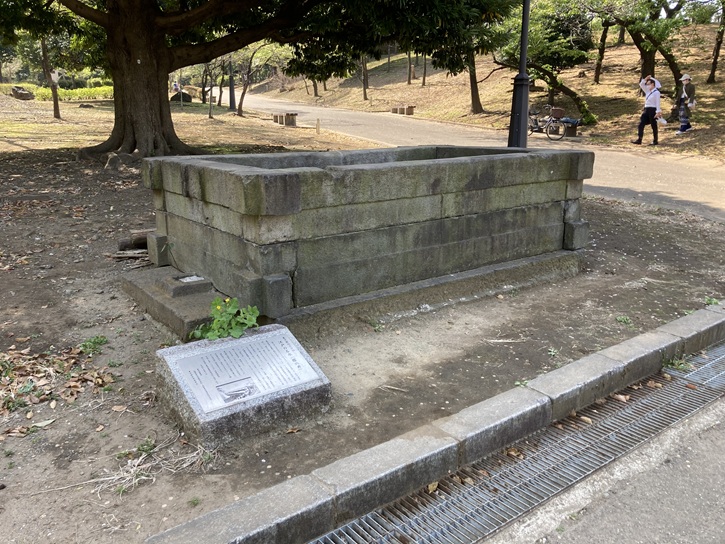
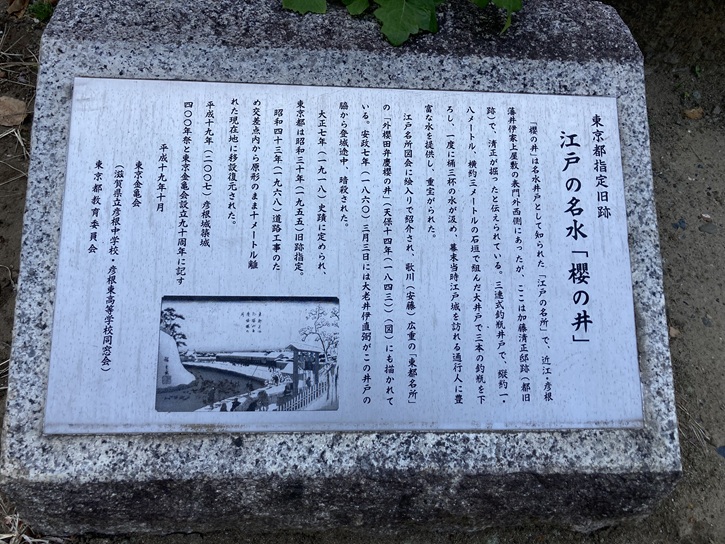
加藤清正邸/井伊掃部頭邸には、江戸の名水といわれた「櫻の井」がありました。

東京都指定旧跡
江戸の名水「櫻の井」

「櫻の井」は名水井戸として知られた「江戸の名所」で、近江・彦根藩井伊家上屋敷の表門外西側にあったが、ここは加藤清正邸跡(都旧跡)で、清正が掘ったと伝えられている。三連式釣瓶井戸で、縦約1.8メートル、横約3メートルの石垣で組んだ大井戸で三本の釣瓶を下ろし、一度に桶三杯の水が汲め、幕末当時江戸城を訪れる通行人に豊富な水を提供し、重宝がられた。江戸名所図会に絵入りで紹介され、歌川(安藤)広重の「東都名所」の「外櫻田弁慶櫻の井」(天保十四年【1843年】)(図)にも描かれている。安政七年(1860年)三月三日には大老井伊直弼がこの井戸の脇から登城途中、暗殺された。大正七年(1918年)史蹟に定められ、東京都は昭和三十年(1955年)旧跡指定。昭和四十三年(1968年)道路工事のため交差点内から原形のまま十メートル離れた現在地に移設復元された。

平成十九年(2007年)彦根城築城400年祭と東京金亀会(滋賀県立彦根中学校・彦根東高等学校同窓会)設立九十周年に記す。


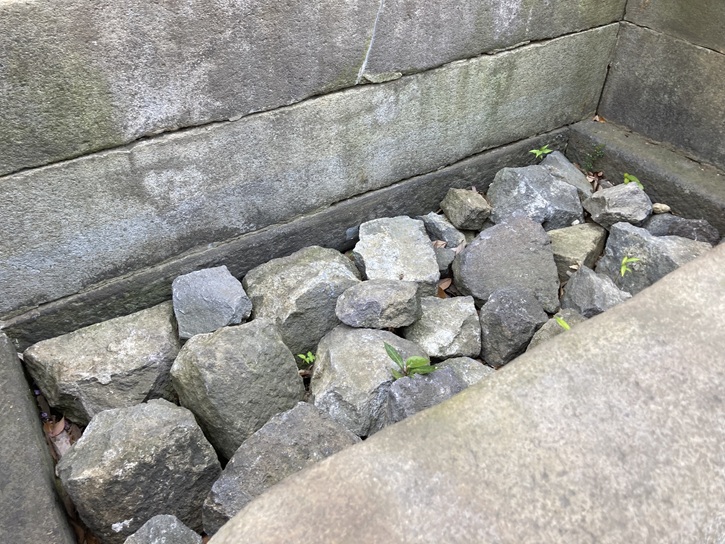
井戸は移築されたためか、中は石で塞がれています。


ポイント17 江戸城最大の枡形門 桜田門

桜田門は、1620年〜1630年頃に創建され、大正十二年(1923年)の関東大震災で破損した際に今の鉄網土蔵造りに改修されました。大老井伊直弼が水戸藩浪士らによって暗殺された「桜田門外の変」で著名な門です。現存している旧江戸城門の中では最も広い規模を有していることなどから、国の重要文化財に指定されています。

Sakuradamon Gate, completed in around 1620, is the largest remaining gate of Edo Castle. Only the huge force of the Great Kanto Earthquake in 1923 made an impact on this sturdy gate, shaking some of the rocks loose. Repairs have strengthened the gate's structure to prevent further damage. Sakuradamon Gate is a designated Important Cultural Property of Japan.

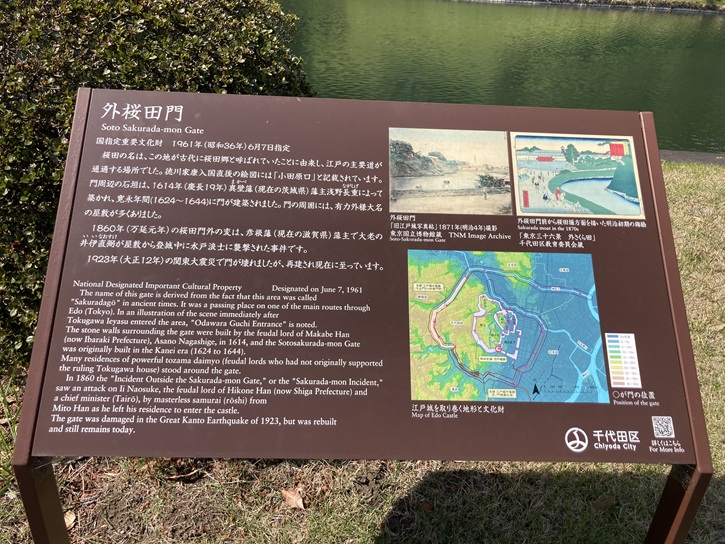
外桜田門

桜田の名は、この地が古代に桜田郷と呼ばれていたことに由来し、江戸の主要道が通過する場所でした。徳川家康入国直後の絵図には「小田原口」と記載されています。門周辺の石垣は、慶長十九年(1614年)真壁藩(現在の茨城県)藩主浅野長重によって築かれ、寛永年間(1624年〜1644年)に門が建築されました。門の周囲には、有力外様大名の屋敷が多くありました。万延元年(1860年)の桜田門外の変は、彦根藩(現在の滋賀県)藩主で大老の井伊直弼が屋敷から登城中に水戸浪士に襲撃された事件です。大正十二年(1923年)の関東大震災で門が壊れましたが、再建され現在に至っています。

Soto Sakurada-mon Gate

The name of this gate is derived from the fact that this area was called "Sakuradago" in ancient times. It was a passing place on one of the main routes through Edo (Tokyo). In an illustration of the scene immediately after Tokugawa Ieyasu entered the area, "Odawara Guchi Entrance" is noted. The stone walls surrounding the gate were built by the feudal lord of Makabe Han (now Ibaraki Prefecture), Asano Nagashige, in 1614, and the Sotosakurada-mon Gate was originally built in the Kanei era (1624 to 1644). Many residences of powerful tozama daimyo (feudal lords who had not originally supported the ruling Tokugawa house) stood around the gate. In 1860 the "Incident Outside the Sakurada-mon Gate," or the "Sakurada-mon Incident," saw an attack on li Naosuke, the feudal lord of Hikone Han (now Shiga Prefecture) and a chief minister (Tairo), by masterless samurai (roshi) from Mito Han as he left his residence to enter the castle. The gate was damaged in the Great Kanto Earthquake of 1923, but was rebuilt and still remains today.


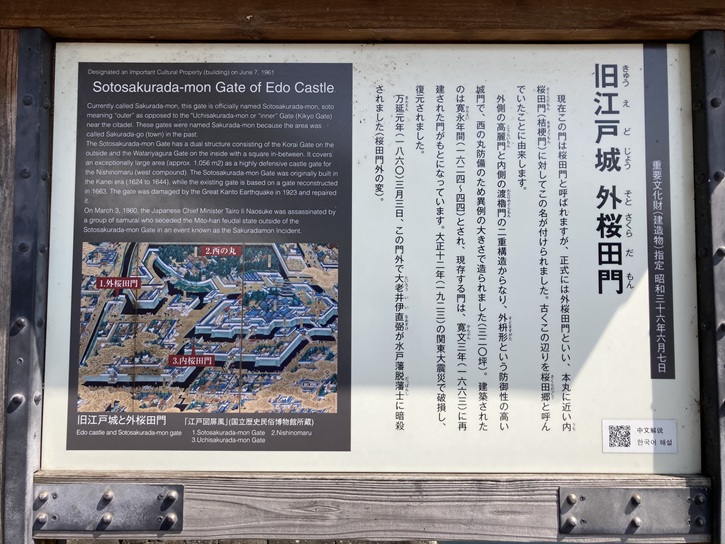
桜田門は、外側の高麗門と内側の渡櫓門からなる外桝形の城門となっています。

旧江戸城 外桜田門

現在この門は桜田門と呼ばれますが、正式には外桜田門といい、本丸に近い内桜田門(桔梗門)に対してこの名が付けられました。古くこの辺りを桜田郷と呼んでいたことに由来します。外側の高麗門と内側の渡櫓門の二重構造からなり、外枡形という防御性の高い城門で、西の丸防備のため異例の大きさで造られました(320坪)。建築されたのは寛永年間(1624年〜1644年)とされ、現存する門は、寛文三年(1663年)に再建された門がもとになっています。大正十二年(1923年)の関東大震災で破損し、復元されました。万延元年(1860年)三月三日、この門外で大老井伊直弼が水戸藩脱藩士に暗殺されました(桜田門外の変)。

Sotosakurada-mon Gate of Edo Castle

Currently called Sakurada-mon, this gate is officially named Sotosakurada-mon, soto meaning "outer" as opposed to the "Uchisakurada-mon or "inner" Gate (Kikyo Gate) near the citadel. These gates were named Sakurada-mon because the area was called Sakurada-go (town) in the past. The Sotosakurada-mon Gate has a dual structure consisting of the Korai Gate on the outside and the Watariyagura Gate on the inside with a square in-between. It covers an exceptionally large area (approx. 1,056 sqm) as a highly defensive castle gate for the Nishinomaru (west compound). The Sotosakurada-mon Gate was originally built in the Kanei era (1624 to 1644), while the existing gate is based on a gate reconstructed in 1663. The gate was damaged by the Great Kanto Earthquake in 1923 and repaired it. On March 3, 1860, the Japanese Chief Minister Tairo li Naosuke was assassinated by a group of samurai who seceded the Mito-han feudal state outside of the Sotosakurada-mon Gate in an event known as the Sakuradamon Incident.


高麗門です。


渡櫓門です。


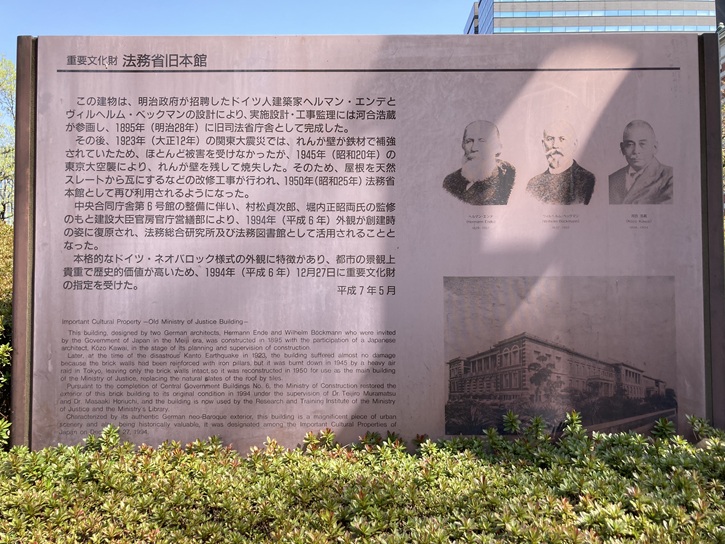
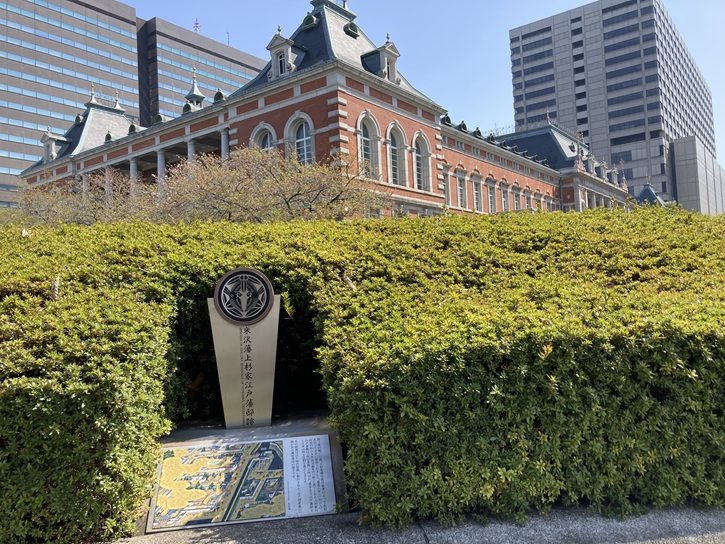
桜田門のはす向かいに法務省の重厚な建物があります。

重要文化財 法務省旧本館

この建物は、明治政府が招聘したドイツ人建築家ヘルマン・エンデとヴィルヘルム・ベックマンの設計により、実施設計・工事監理には河合浩蔵が参画し、明治二十八年(1895年)に旧司法省庁舎として完成した。その後、大正十二年(1923年)の関東大震災では、れんが壁が鉄材で補強されていたため、ほとんど被害を受けなかったが、昭和二十年(1945年)の東京大空襲により、れんが壁を残して焼失した。そのため、屋根を天然スレートから瓦にするなどの改修工事が行われ、昭和二十五年(1950年)法務省本館として再び利用されるようになった。中央合同庁舎第6号館の整備に伴い、村松貞次郎、堀内正昭両氏の監修のもと建設大臣官房官庁営繕部により、平成六年(1994年)外観が創建時の姿に復原され、法務総合研究所及び法務図書館として活用されることとなった。本格的なドイツ・ネオバロック様式の外観に特徴があり、都市の景観上貴重で歴史的価値が高いため、平成六年(1994年)12月27日に重要文化財の指定を受けた。

Important Cultural Property -Old Ministry of Justice Building-

This building, designed by two German architects, Hermann Ende and Wilhelm Bockmann who were invited by the Government of Japan in the Meiji era, was constructed in 1895 with the participation of a Japanese architect, Kozo Kawai, in the stage of its planning and supervision of construction. Later, at the time of the disastrous Kanto Earthquake in 1923, the building suffered almost no damage because the brick walls had been reinforced with iron pillars, but it was burnt down in 1945 by a heavy air raid in Tokyo, leaving only the brick walls intact, so it was reconstructed in 1950 for use as the main building of the Ministry of Justice, replacing the natural slates of the roof by tiles. Pursuant to the completion of Central Government Buildings No. 6, the Ministry of Construction restored the exterior of this brick building to its original condition in 1994 under the supervision of Dr. Teijiro Muramatsu and Dr. Masaaki Horiuchi, and the building is now used by the Research and Training Institute of the Ministry of Justice and the Ministry's Library. Characterized by its authentic German neo-Baroque exterior, this building is a magnificent piece of urban scenery and al being historically valuable, it was designated among the Important Cultural Properties of Japan on Dec 27, 1994.


ポイント18 波瀾万丈だった上杉家の藩邸 米沢藩上杉家江戸藩邸跡

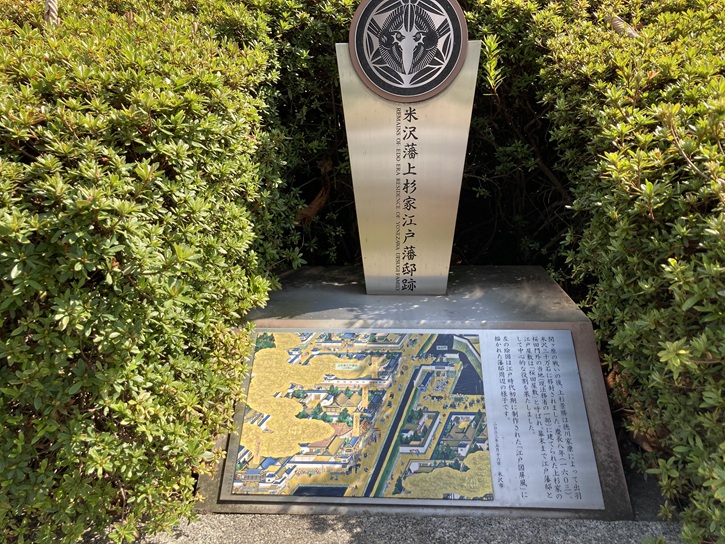
法務省旧本館前の植え込みの中に、米沢藩上杉家江戸藩邸跡の記念碑が建っています。

米沢藩上杉家江戸藩邸跡

関ヶ原の戦いの後、上杉景勝は徳川家康によって出羽米沢三十万石に移封されました。慶長八年(1603年)、桜田門外の当地(現法務省の一部)に建てられた上杉家の江戸屋敷は「桜田屋敷」と呼ばれ、幕末まで江戸藩邸として中心的な役割を果たしました。左の絵図は江戸時代初期に制作された「江戸図屏風」に描かれた藩邸周辺の様子です。


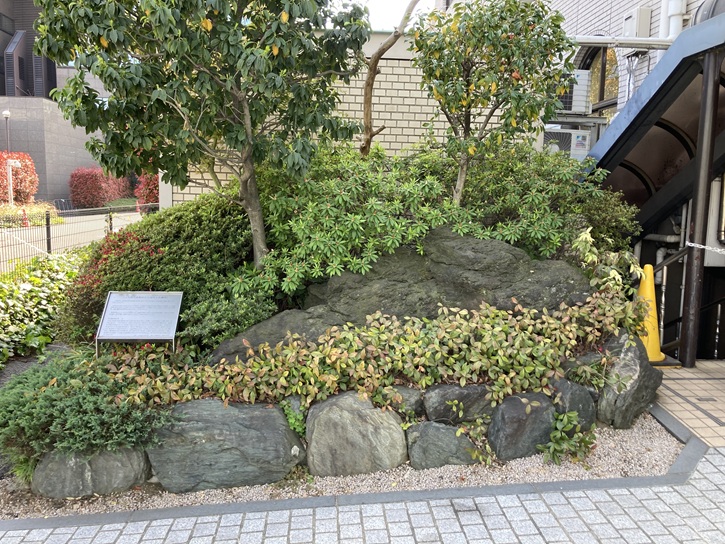
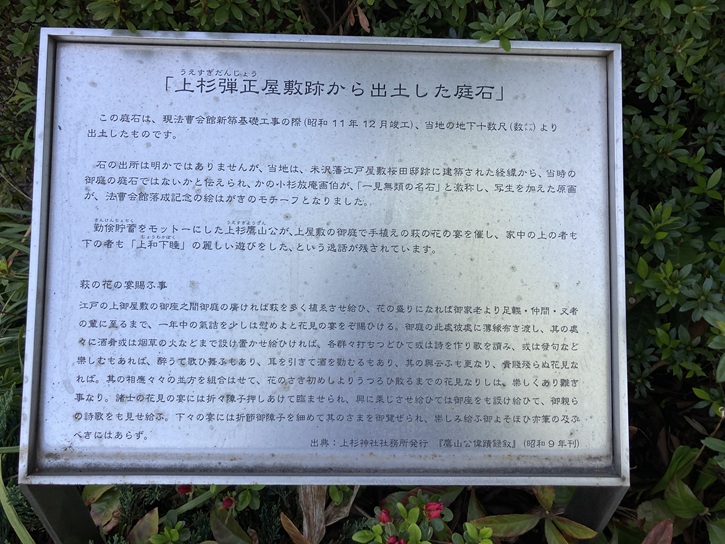
上杉家江戸藩邸から出土した庭石が展示されています。

「上杉弾正屋敷跡から出土した庭石」

この庭石は、現法曹会館新築基礎工事の際(昭和十一年12月竣工)、当地の地下十数尺(数メートル)より出土したものです。石の出所は明かではありませんが、当地は、米沢藩江戸屋敷桜田邸跡に建築された経緯から、当時の御庭の庭石ではないかと伝えられ、かの小杉放庵画伯が、「一見無類の名石」と激称し、写生を加えた原画が、法曹会館落成記念の絵はがきのモチーフとなりました。勤倹貯蓄をモットーにした上杉鷹山公が、上屋敷の御庭で手植えの萩の花の宴を催し、家中の上の者も下の者も「上和下睦」の麗しい遊びをした、という逸話が残されています。

萩の花の宴賜ふ事
江戸の上御屋敷の御座之間御庭の廣ければ萩を多く植ゑさせ給ひ、花の盛りになれば御家老より足輕・仲間・又者の輩に至るまで、一年中の氣詰を少しは慰めよと花見の宴をぞ賜ひける。御庭の此處彼處に薄縁布き渡し、其の處々に酒肴或は烟草の火などまで設け置かせ給ひければ、各群々打ちつどひて或は詩を作り歌を讀み、或は發句など楽しむもあれば、酔うて歌ひ舞ふもあり、耳を引きて酒を勧むるもあり、其の興云ふも更なり、貴賤残らぬ花見なれば。其の相應々々の並方を組合はせて、花のさき初めしよりうつろひ散るまでの花見なりしは、楽しくあり難き事なり。諸士の花見の宴には折々障子押しあけて臨ませられ、興に乗じさせ給ひては御座をも設け給ひて、御親らの詩歌をも見せ給ふ。下々の宴には折節御障子を細めて其のさまを御覧ぜられ、楽しみ給ふ御よそほび筆の及ぶべきにはあらず。


ポイント19 名奉行が暮らした場所 大岡越前守忠相屋敷跡

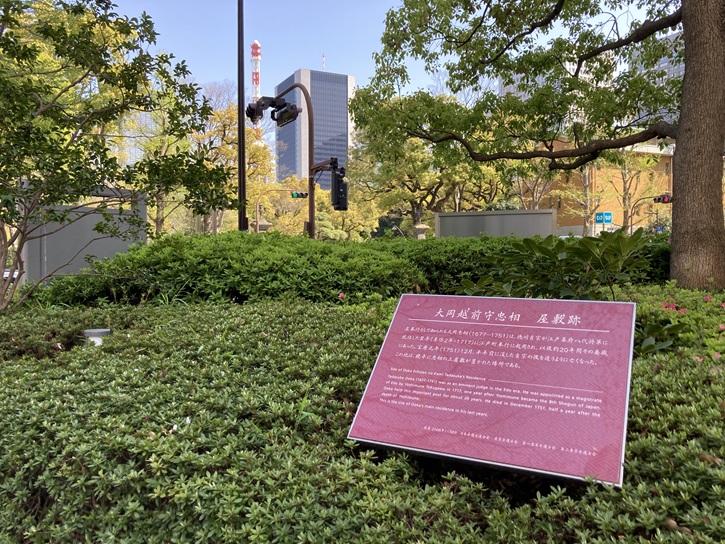
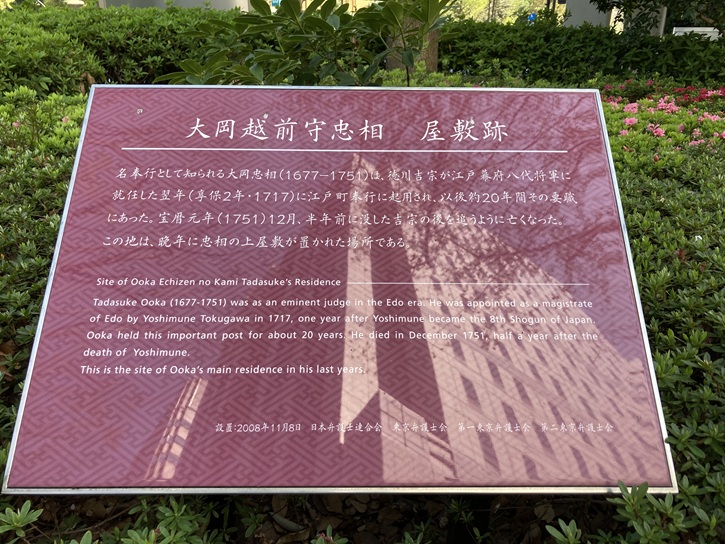
東京メトロ霞ケ関駅前の弁護士会館には、大岡越前守忠助の屋敷がありました。八代将軍吉宗に抜擢され、江戸町奉行となった忠助の公正で人情味ある裁きは、講談や落語で広く伝わります。町火消制度や小石川養成所の創設にも尽力し、大名にまで栄進しました。
大岡越前守忠相 屋敷跡

名奉行として知られる大岡忠相(1677年〜1751年)は、徳川吉宗が江戸幕府八代将軍に就任した翌年(享保二年・1717年)に江戸町奉行に起用され、以後約20年間その要職にあった。宝暦元年(1751年)12月、半年前に没した吉宗の後を追うように亡くなった。この地は、晩年に忠相の上屋敷が置かれた場所である。

Site of Ooka Echizen no Kami Tadasuke's Residence

Tadasuke Ooka (1677-1751) was as an eminent judge in the Edo era. He was appointed as a magistrate of Edo by Yoshimune Tokugawa in 1717, one year after Yoshimune became the 8th Shogun of Japan. Ooka held this important post for about 20 years. He died in December 1751, half a year after the death of Yoshimune. This is the site of Ooka's main residence in his last years.


ポイント20 吉田松陰も出入りした 長州藩上屋敷跡

江戸時代初期には日比谷公園一帯は入江でした。公園内の心字池はその名残だといわれています。慶長年間(1596年〜1615年)に埋め立てられ、長州藩など有力大名の屋敷となりました。吉田松陰も出入りしたといわれる長州藩上屋敷跡は、特に案内板はありませんが「東都桜田長州屋敷図」などにも描かれています。現在は日比谷公園になっています。

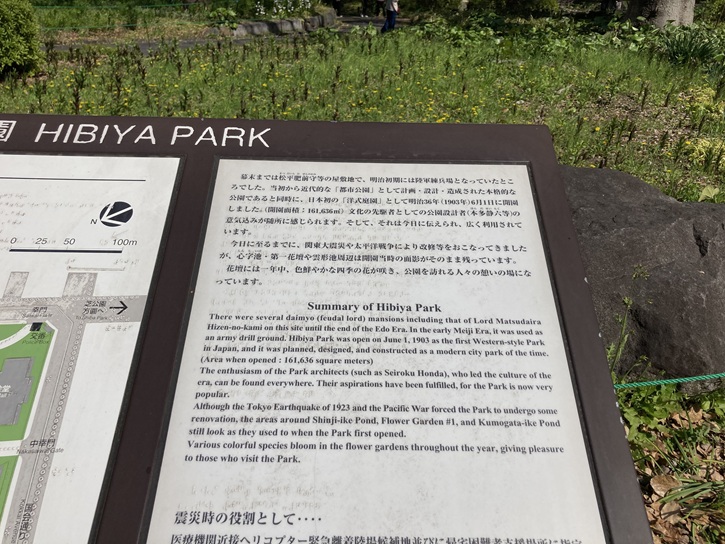
日比谷公園

幕末までは松平肥前守等の屋敷地で、明治初期には陸軍練兵場となっていたところでした。当初から近代的な「都市公園」として計画・設計 造成された本格的な公園であると同時に、日本初の「洋式庭園」として明治三十六年(1903年)6月1日に開園しました(開園面積:161、636u)。文化の先駆者としての公園設計者(本多静六等)の意気込みが随所に感じられます。そして、それは今日に伝えられ、広く利用されています。今日に至るまでに、関東大震災や太平洋戦争により改修等をおこなってきましたが、心字池・第一花壇や雲形池周辺は開園当時の面影がそのまま残っています。花壇には一年中、色鮮やかな四季の花が咲き、公園を訪れる人々の憩いの場になっています。

Summary of Hibiya Park

There were several daimyo (feudal lord) mansions including that of Lord Matsudaira Hizen-no-kami on this site until the end of the Edo Era. In the early Meiji Era, it was used as an army drill ground. Hibiya Park was open on June 1, 1903 as the first Western-style Park in Japan, and it was planned, designed, and constructed as a modern city park of the time. (Area when opened: 161,636 square meters) The enthusiasm of the Park architects (such as Seiroku Honda), who led the culture of the era, can be found everywhere. Their aspirations have been fulfilled, for the Park is now very popular. Although the Tokyo Earthquake of 1923 and the Pacific War forced the Park to undergo some renovation, the areas around Shinji-ike Pond, Flower Garden #1, and Kumogata-ike Pond still look as they used to when the Park first opened. Various colorful species bloom in the flower gardens throughout the year, giving pleasure to those who visit the Park.


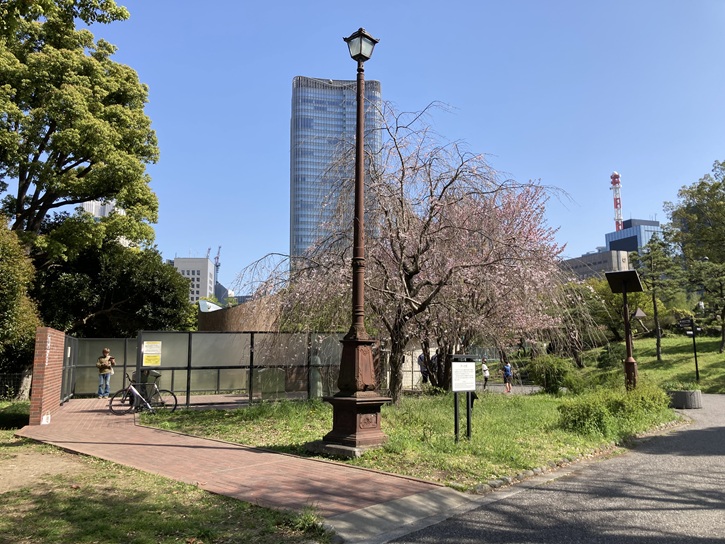
開園当時のアーク灯が残されています。

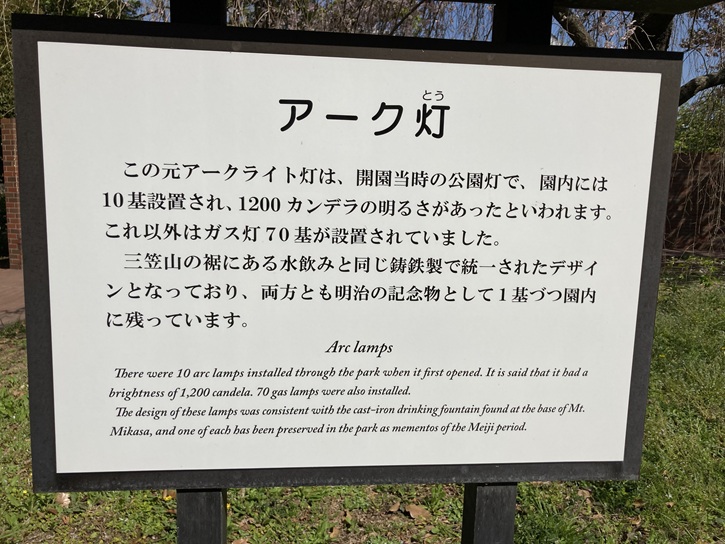
アーク灯

この元アークライト灯は、開園当時の公園灯で、園内には10基設置され、1200カンデラの明るさがあったといわれます。これ以外はガス灯70基が設置されていました。三笠山の裾にある水飲みと同じ鋳鉄製で統一されたデザインとなっており、両方とも明治の記念物として1基づつ園内に残っています。

Arc lamps

There were 10 arc lamps installed through the park when it first opened. It is said that it had a brightness of 1,200 candela. 70 gas lamps were also installed. The design of these lamps was consistent with the cast-iron drinking fountain found at the base of Mt. Mikasa, and one of each has been preserved in the park as mementos of the Meiji period.


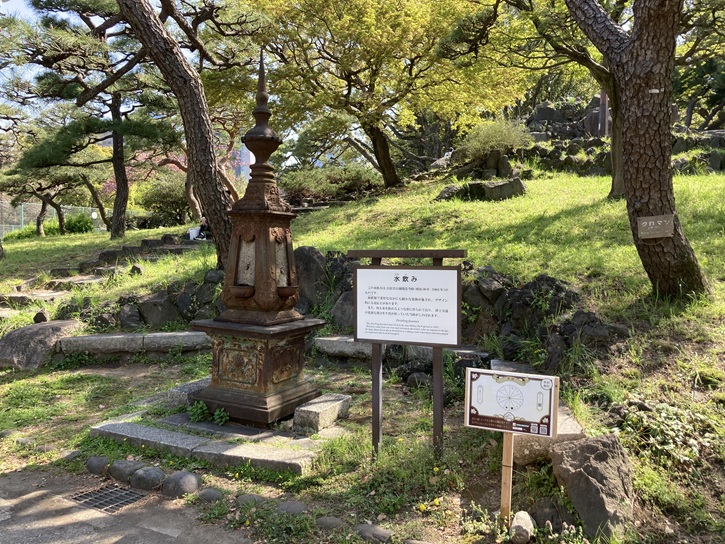
水飲み場も遺されています。動物兼用なのが明治時代らしいですね。

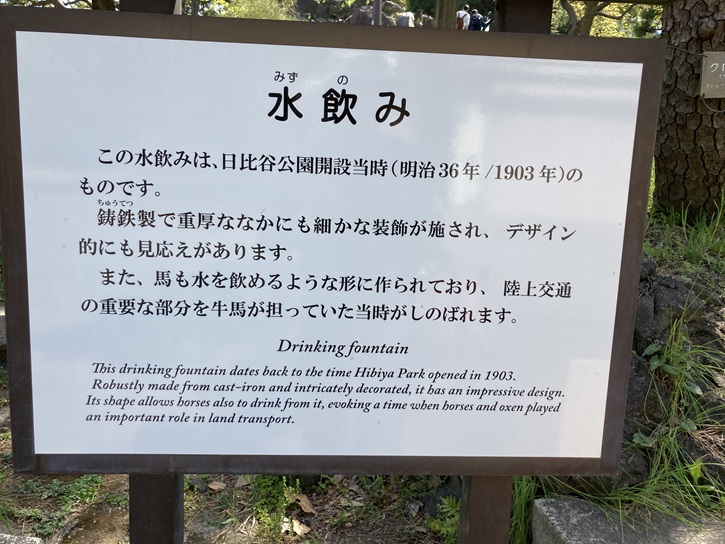
水飲み

この水飲みは、日比谷公園開設当時(明治三十六年/1903年)のものです。鋳鉄製で重厚ななかにも細かな装飾が施され、デザイン的にも見応えがあります。また、馬も水を飲めるような形に作られており、陸上交通の重要な部分を牛馬が担っていた当時がしのばれます。

Drinking fountain

This drinking fountain dates back to the time Hibiya Park opened in 1903. Robustly made from cast-iron and intricately decorated, it has an impressive design. Its shape allows horses also to drink from it, evoking a time when horses and oxen played an important role in land transport.


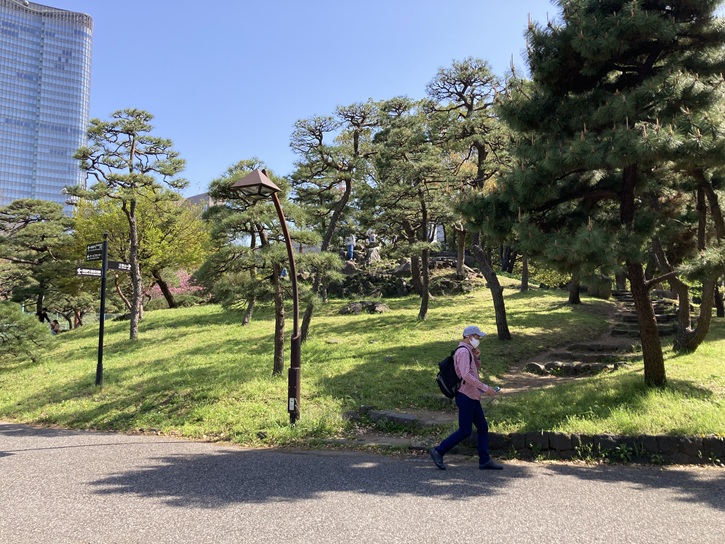
小高い丘は三笠山と呼ばれています。

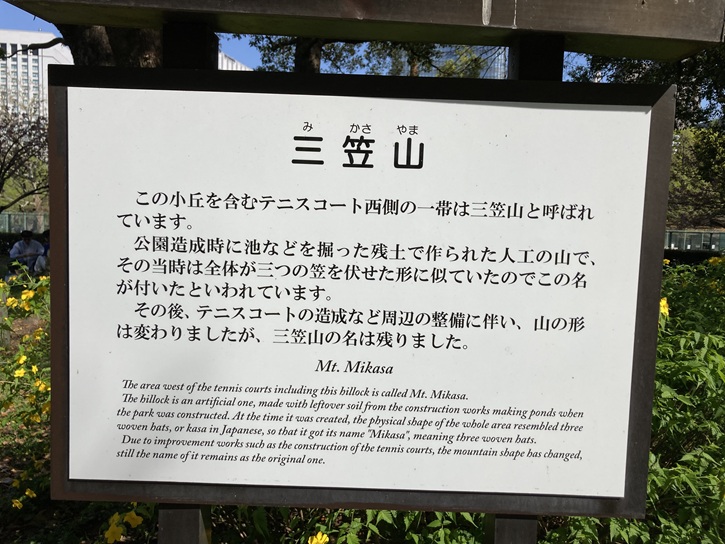
三笠山

この小丘を含むテニスコート西側の一帯は三笠山と呼ばれています。公園造成時に池などを掘った残土で作られた人工の山で、その当時は全体が三つの笠を伏せた形に似ていたのでこの名が付いたといわれています。その後、テニスコートの造成など周辺の整備に伴い、山の形は変わりましたが、三笠山の名は残りました。
Mt. Mikasa

The area west of the tennis courts including this hillock is called Mt. Mikasa. The hillock is an artificial one, made with leftover soil from the construction works making ponds when the park was constructed. At the time it was created, the physical shape of the whole area resembled three woven hats, or kasa in Japanese, so that it got its name "Mikasa", meaning three woven hats. Due to improvement works such as the construction of the tennis courts, the mountain shape has changed, still the name of it remains as the original one.


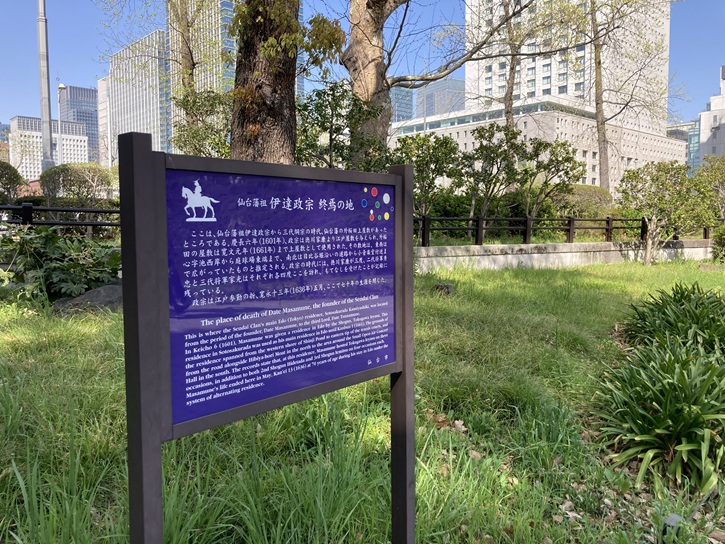
伊達政宗は仙台藩の外桜田上屋敷で息を引き取りました。
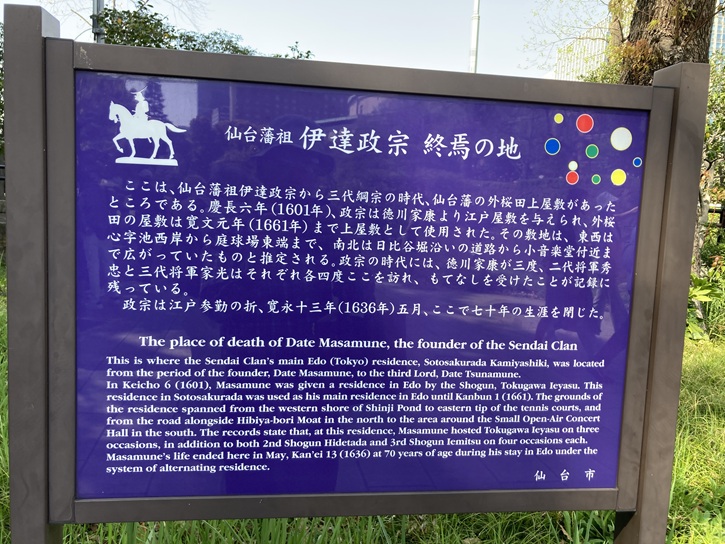
仙台藩祖 伊達政宗 終焉の地

ここは、仙台藩祖伊達政宗から三代綱宗の時代、仙台藩の外桜田上屋敷があったところである。慶長六年(1601年)、政宗は徳川家康より江戸屋敷を与えられ、外桜田の屋敷は寛文元年(1661年)まで上屋敷として使用された。その敷地は、東西は心字池西岸から庭球場東端まで、南北は日比谷堀沿いの道路から小音楽堂付近まで広がっていたものと推定される。政宗の時代には、徳川家康が三度、二代将軍秀忠と三代将軍家光はそれぞれ各四度ここを訪れ、もてなしを受けたことが記録に残っている。政宗は江戸参勤の折、寛永十三年(1636年)五月、ここで七十年の生涯を閉じた。
The place of death of Date Masamune, the founder of the Sendai Clan

This is where the Sendai Clan's main Edo (Tokyo) residence, Sotosakurada Kamiyashiki, was located from the period of the founder, Date Masamune, to the third Lord, Date Tsunamune. In Keicho 6 (1601), Masamune was given a residence in Edo by the Shogun, Tokugawa Ieyasu. This residence in Sotosakurada was used as his main residence in Edo until Kanbun 1 (1661). The grounds of the residence spanned from the western shore of Shinji Pond to eastern tip of the tennis courts, and from the road alongside Hibiya-bori Moat in the north to the area around the Small Open-Air Concert Hall in the south. The records state that, at this residence, Masamune hosted Tokugawa Ieyasu on three occasions, in addition to both 2nd Shogun Hidetada and 3rd Shogun Iemitsu on four occasions each. Masamune's life ended here in May, Kan'ei 13 (1636) at 70 years of age during his stay in Edo under the system of alternating residence.


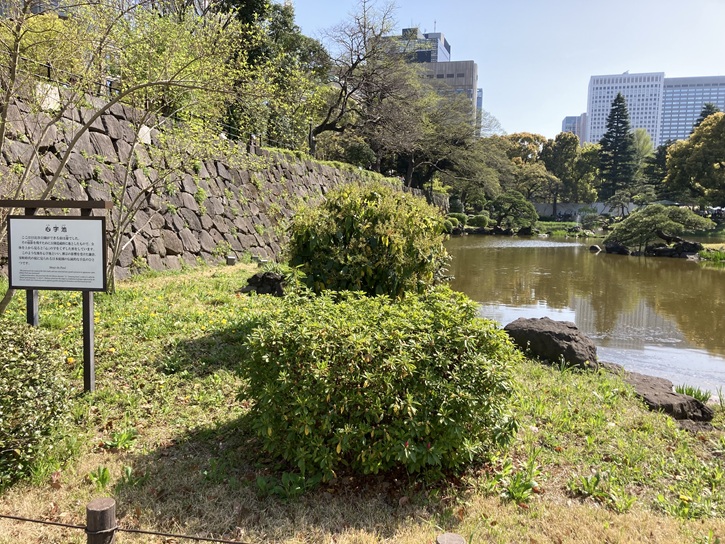
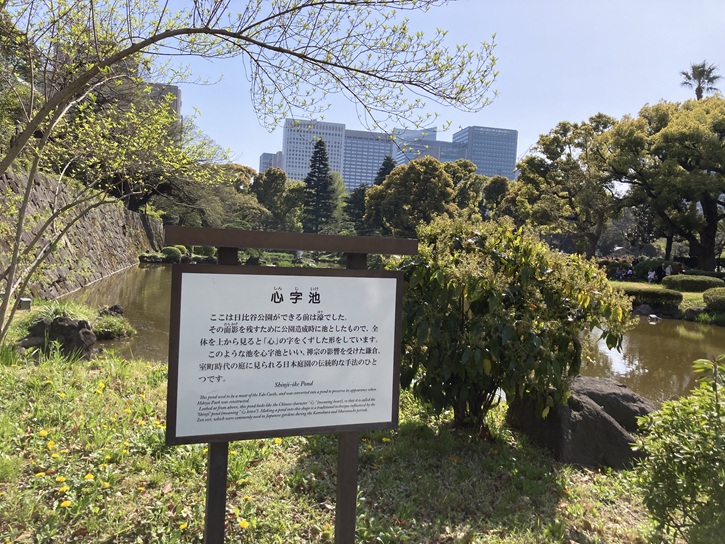
心字池は、日比谷公園開園前の濠を偲んで造られ、開園当初からの面影を残す伝統的な日本庭園です。池の周辺は周囲の森と共にシラサギやカモなどの野鳥の生息場所になっています。また、6月にはハナショウブが咲き、冬には松の雪吊りが見られます。池の中央にはカメの形をした小さな「カメの噴水」があります。

心字池

ここは日比谷公園ができる前は濠でした。その面影を残すために公園造成時に池としたもので、全体を上から見ると「心」の字をくずした形をしています。このような池を心字池といい、禅宗の影響を受けた鎌倉、室町時代の庭に見られる日本庭園の伝統的な手法のひとつです。

Shinji-ike Pond

This pond used to be a moat of the Edo Castle, and was converted into a pond to preserve its appearance when Hibiya Park was constructed. Looked at from above, this pond looks like the Chinese character ""(meaning heart), so that it is called the "Shinji" pond (meaning "letter"). Making a pond into this shape is a traditional technique influenced by the Zen sect, which were commonly used in Japanese gardens during the Kamakura and Muromachi periods.


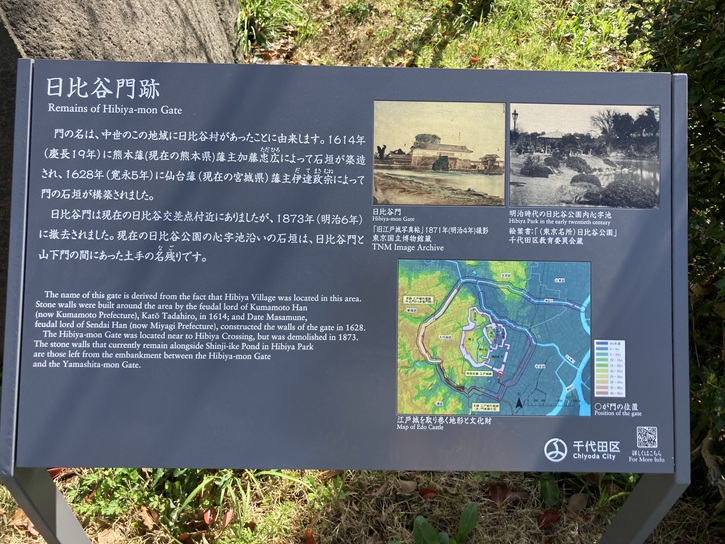
日比谷交差点に面して、日比谷門がありました。
日比谷門跡

門の名は、中世のこの地域に日比谷村があったことに由来します。慶長十九年(1614年)に熊本藩(現在の熊本県)藩主加藤忠広によって石垣が築造され、寛永五年(1628年)に仙台藩(現在の宮城県)藩主伊達政宗によって門の石垣が構築されました。日比谷門は現在の日比谷交差点付近にありましたが、明治六年(1873年)に撤去されました。現在の日比谷公園の心字池沿いの石垣は、日比谷門と山下門の間にあった土手の名残りです。

Remains of Hibiya-mon Gate

The name of this gate is derived from the fact that Hibiya Village was located in this area. Stone walls were built around the area by the feudal lord of Kumamoto Han (now Kumamoto Prefecture), Kato Tadahiro, in 1614; and Date Masamune, feudal lord of Sendai Han (now Miyagi Prefecture), constructed the walls of the gate in 1628. The Hibiya-mon Gate was located near to Hibiya Crossing, but was demolished in 1873. The stone walls that currently remain alongside Shinji-ike Pond in Hibiya Park are those left from the embankment between the Hibiya-mon Gate and the Yamashita-mon Gate.


日比谷見附は江戸城外郭城門のひとつでした。

日比谷見附跡

この石垣は、江戸城外郭城門の一つ、日比谷御門の一部です。城の外側から順に、高麗門・枡形・渡櫓・番所が石垣でかこまれていましたが、石垣の一部だけが、ここに残っています。当時、石垣の西側は濠となっていましたが、公園造成時の面影を偲び、心字池としました。
Hibiya Mitsuke (Approach) Remains

This stone wall is a part of Hibiya Gate, one of the outer defenses of the Edo Castle. Outside of the castle, the Koma gate, square, turreted passageway, and guardhouse used to be surrounded by the stone wall, but only part of the stone wall remains today. On the west side of the stone wall was the moat, which was later converted into Shinji-ike Pond and recalls the appearance at the time the Park was constructed.


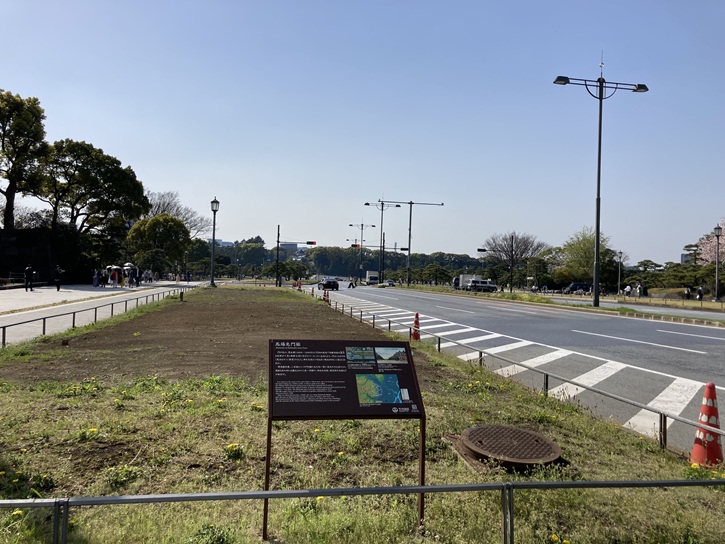
ポイント21 セレモニーと縁の深い 馬場先門跡

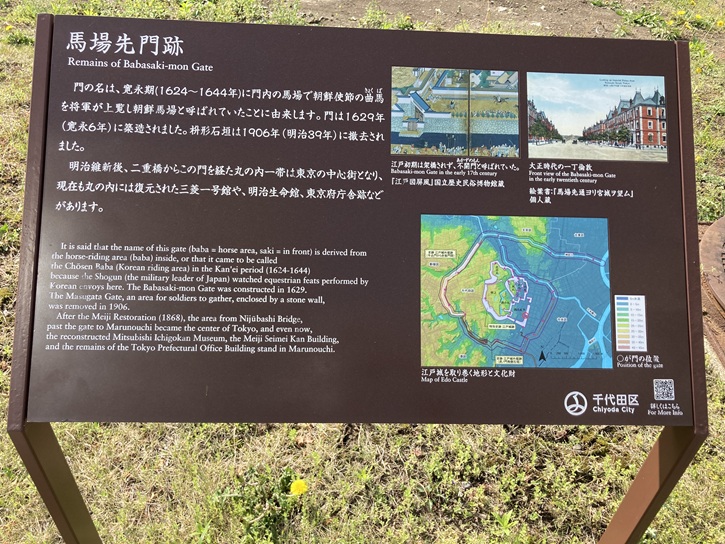
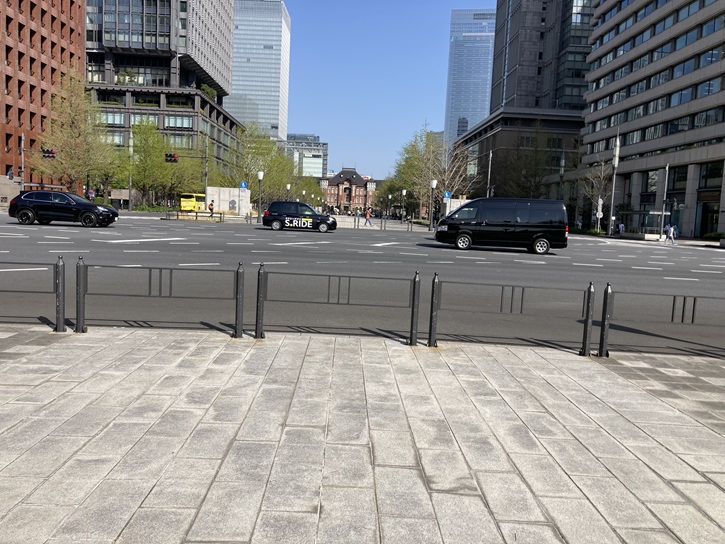
馬場先門は 江戸城内郭門のひとつです。明治維新後、二重橋からこの門を経た丸の内一帯は東京の中心街となり、門に面した丸の内側には三菱二号館や東京商業会議所などが建てられました。三菱の煉瓦建築が建ち並ぶ様子は、一丁倫敦(いっちょうロンドン)と呼ばれ、近代化を象徴する場所となりました。現在も丸の内には復元された三菱一号館や、明治生命館、東京府庁舎跡などがあります。日露戦争中の明治三十七年(1904年)5月8日、第一回戦勝祝賀会で行われた提灯行列で東京府庁舎(現在の東京国際フォーラム)を通過した一群が馬場先門から二重橋へ向かおうとしました。ところが馬場先門の橋を渡ったところで通行規制されたため、枡形門の中に多くの人々が押し込められることになり、20名の死者を出す惨事が発生しました。この事件を受け、馬場先門の桝形石垣と橋が撤去され、堀も埋め立てられ約72メートル幅の道路が建設されました。この道路建設に合わせて、大手門から和田倉門内へ入る道と、馬場先門内から日比谷公園へ至る道が明治三十九年(1906年)に建設され、凱旋道路と名付けられました(現在の内堀通り)。同年には日露戦争の戦勝を祝賀する凱旋門が馬場先門の桝形石垣のあった場所に建設されました(祝賀会の終了後に撤去されています)。

馬場先門跡

門の名は、寛永期(1624年〜1644年)に門内の馬場で朝鮮使節の曲馬を将軍が上覧し朝鮮馬場と呼ばれていたことに由来します。門は寛永六年(1629年)に築造されました。枡形石垣は明治三十九年(1906年)に撤去されました。明治維新後、二重橋からこの門を経た丸の内一帯は東京の中心街となり、現在も丸の内には復元された三菱一号館や、明治生命館、東京府庁舎跡などがあります。

Remains of Babasaki-mon Gate

It is said that the name of this gate (baba = horse area, saki = in front) is derived from the horse-riding area (baba) inside, or that it came to be called the Chosen Baba (Korean riding area) in the Kan'ei period (1624-1644) because the Shogun (the military leader of Japan) watched equestrian feats performed by Korean envoys here. The Babasaki-mon Gate was constructed in 1629. The Masugata Gate, an area for soldiers to gather, enclosed by a stone wall, was removed in 1906. After the Meiji Restoration (1868), the area from Nijubashi Bridge, past the gate to Marunouchi became the center of Tokyo, and even now, the reconstructed Mitsubishi Ichigokan Museum, the Meiji Seimei Kan Building, and the remains of the Tokyo Prefectural Office Building stand in Marunouchi.


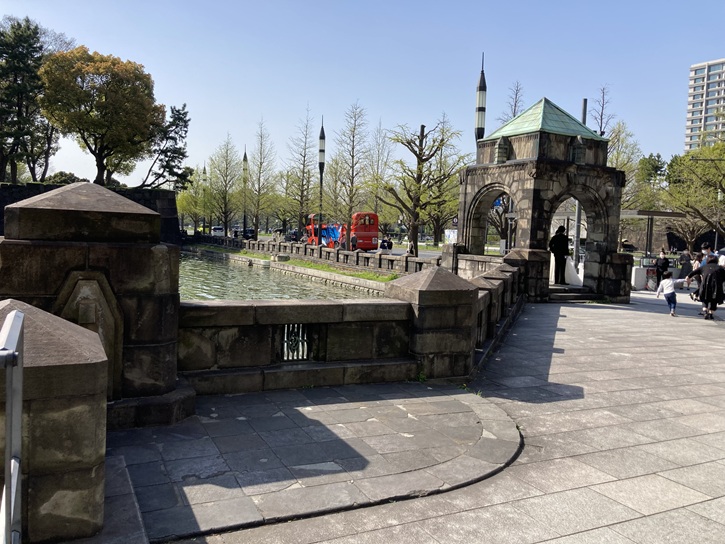
都道404号線(皇居前東京停車場線)は、皇居外苑の坂下門前の内堀通りとの交差点から、丸の内一丁目の東京駅丸の内口の都道402号線(錦町有楽町線)と交差する東京駅中央口交差点に至る延長0.4kmの一直線の都道です。この都道は、建設時には行幸道路・行幸通りと呼ばれ、その名称は広く一般に浸透しています。行幸通りは、信任状捧呈式の馬車列が通行し、エリアマネジメントでライトアップなども行われています。和田倉門交差点の皇居寄りには、古風な元宮城和田倉門守衛所跡が遺されています。


ポイント22 復元した橋と濠の景観が見事 和田倉門跡

和田倉門は、現在は門跡として石垣のみが遺されています。徳川家康が江戸城に入った頃、この辺りを蔵地としたので、この門が「蔵の御門」と呼ばれ、これが門の名前の由来となりました。門の築造は、元和六年(1620年)に仙台藩(現在の宮城県)藩主伊達政宗などによって行われ、さらに寛永五年(1628年)に熊本藩(現在の熊本県)藩主加藤忠広により改築されました。現在は枡形門の石垣と昭和四十九年(1974年)に改修された木橋風のコンクリート橋が当時の面影を残しています。和田倉門は一般人は通行できず、武士だけが通ることを許されていました。「和田倉」と呼ぶようになったのは、慶長十二年頃からといわれていて、海の名称「わた」に由来したものです。建てられた当時、門が日比谷の入り江に面し、その入江に臨んで倉が並んでいたので、あわせてこの地を和田倉と呼ぶようになったといわれています。明治天皇が明治元年に初めて東幸した際には、呉服橋門から和田倉門を通って江戸城に入られました。和田倉門は関東大震災で大破し、渡り櫓は翌年一月の地震で潰れ、橋は腐朽が甚だしかったので、昭和十五年の「紀元2600記念事業」で復旧しかけましたが、第二次世界大戦のため中止になりました。戦後に復興し、現在の形になっています。門前の「和田倉橋」は皇居東御苑への入り口のひとつともなっている平川門の門前に架かる「平川橋」と共に、江戸城木橋の形を復元した只二つの貴重な木橋です。

和田倉門跡

慶長七年(1602年)頃の絵図には、門内には「一の蔵」があり、この門が「蔵の御門」と記されています。これが門の名の由来です。門の築造は、元和六年(1620年)仙台藩(現在の宮城県)藩主伊達政宗などによって行われ、さらに寛永五年(1628年)に熊本藩(現在の熊本県)藩主加藤忠広により改築されました。現在は枡形門の石垣と昭和四十九年(1974年)に改修された木橋風のコンクリート橋が当時の面影を残しています。

Remains of Wadakura-mon Gate

"Kura no Gomon (the storehouse gate)" and "Ichi no Kura (first storehouse)" are recorded in illustrations from around 1602, and the name of the Wadakura-mon Gate is derived from these. The gate was constructed in 1620 by the feudal lord of Sendai Han (now Miyagi Prefecture), Date Masamune, and reconstructed with a Masugata Gate, a square enclosure for soldiers to gather, in 1628 by the feudal lord of Kumamoto Han (now Kumamoto Prefecture), Kato Tadahiro. Today, traces still remain of the original stone wall around the Masugata Gate and the concrete bridge reconstructed in the style of a wooden bridge in 1974.


石垣の前に江戸城跡の案内板が建っています。今更ながらですが。。。

特別史跡 江戸城跡

江戸城は長禄元年(1457年)に太田道灌によって創築されたが、天正十八年(1590年)に北条氏が滅亡し、徳川家康が居城をここに定めた。以来、家康、秀忠、家光の三代にわたって西の丸、北の丸の増設や外郭の整備が行われ江戸城の総構が完成した。明治維新後江戸城は皇居となり、昭和二十四年に西の丸下及び現在の皇居を取りまくお濠の地域が「国民公園皇居外苑」として一般に開放され、昭和四十四年からは北の丸地域が加えられ広く国民に親しまれている。この江戸城跡は、三百年近くにわたる将軍の居所として、また政治の中心としての史的価値が極めて大きく、その規模はわが国随一のものであることから、昭和三十八年五月三十日に文化財保護法による「特別史跡」に指定された。
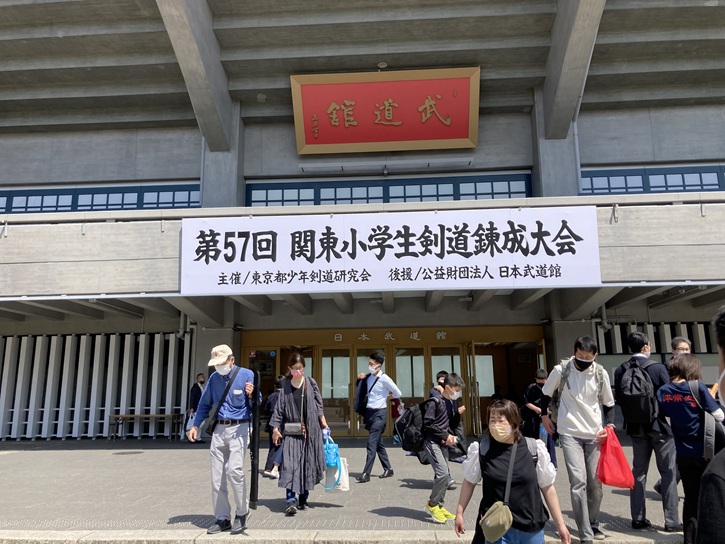
The Imperial Palace (former Edo Castle)

The Imperial Palace has occupied the site of the former Edo Castle since 1868. Edo Castle was the home of the Tokugawa Shoguns and the seat of the feudal samurai government which ruled Japan from 1603 until 1867. After the end of feudal rule in 1867, Edo Castle was vacated by the Shogun and transferred to the new Imperial Government. The Emperor moved from Kyoto to Tokyo in 1869, after residing in Kyoto for over a millennium. There has been a castle on this site since 1457, when a castle that occupied the site of the Honmaru, Ninomaru and Sannomaru areas was built by the samurai Ota Dokan. From 1590 this castle was the home of Lord Tokugawa Ieyasu, who became the first Tokugawa Shogun in 1603. The Honmaru area included the massive keep tower, and the palace of the Shogun. Edo Castle was extended by the second and third Shoguns, Hidetada and Iemitsu, with work completed by 1660. Most of the original castle buildings have been lost to fire. The current Imperial Palace buildings were completed in 1968, in the Nishinomaru, which had been the palace of the retired shoguns during the Tokugawa shogunate.


ゴール地点の大手町交差点に戻ってきました。いや〜〜〜、長かった。。。
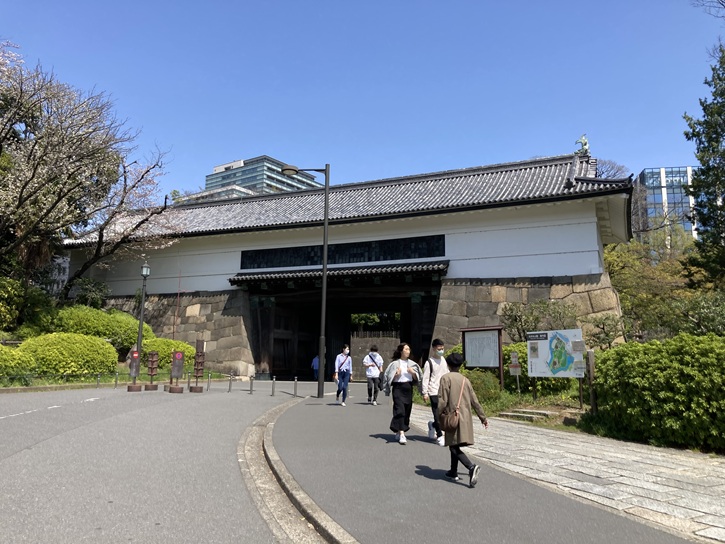


ということで、千代田区で最初のコースである「@その1.江戸城とお堀めぐり・江戸城と内堀をめぐる」を歩き終えました。次は千代田区で二番目のコースである「@その2.江戸城とお堀めぐり・大名屋敷と外堀をめぐる」を歩きます。


戻る