Historic Places Masakado-Zuka (The mound of Masakado)
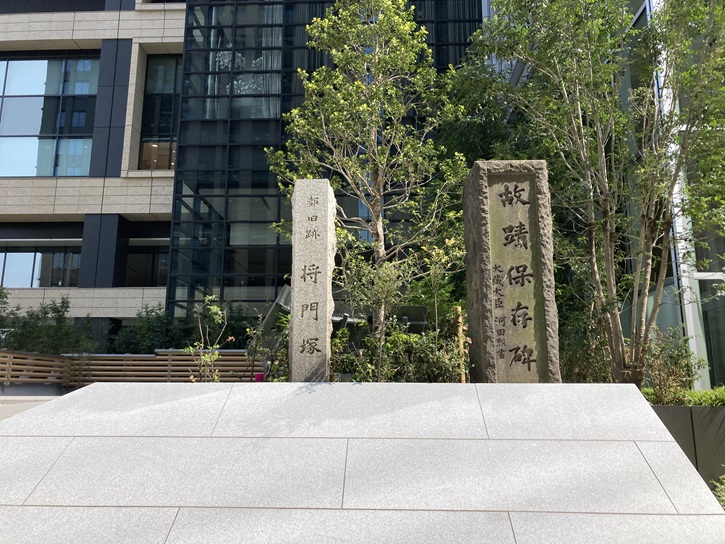
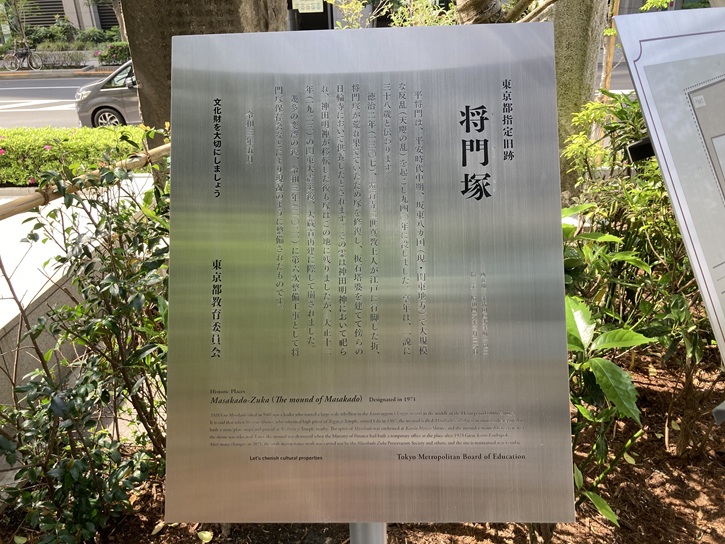
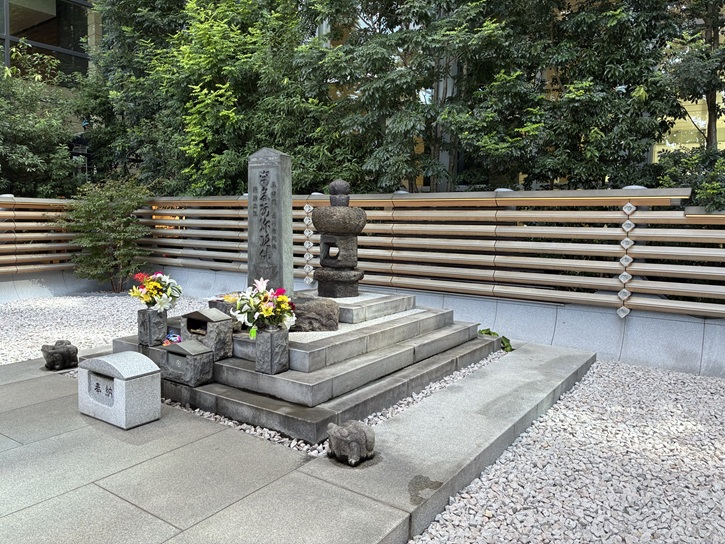
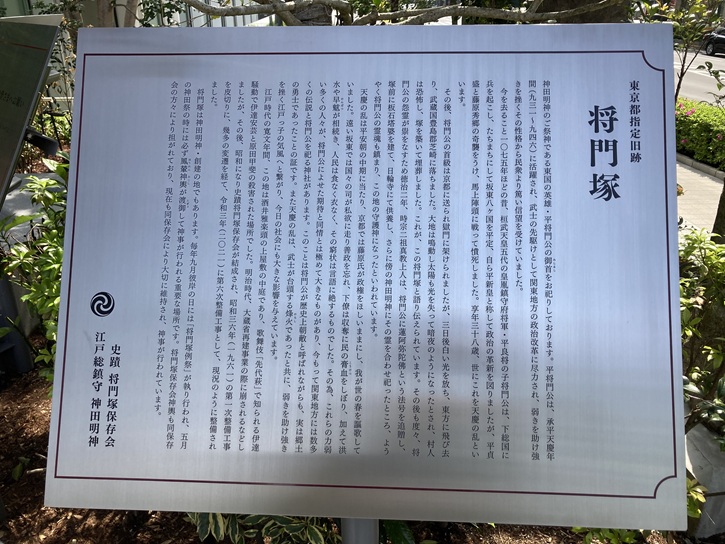
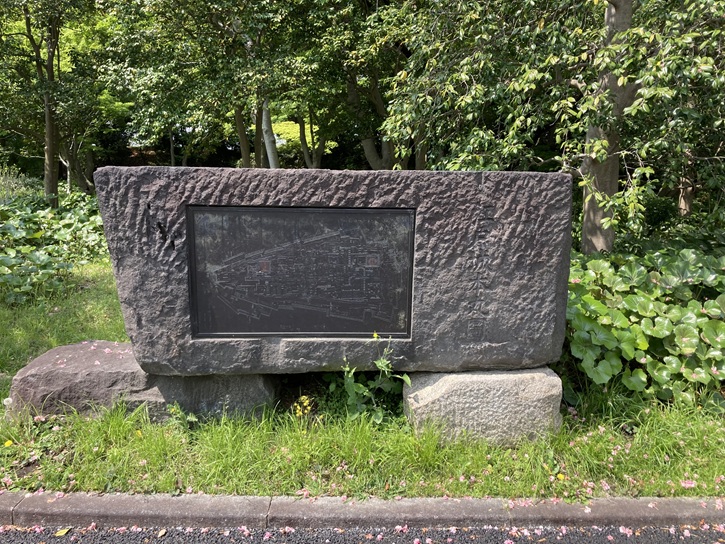
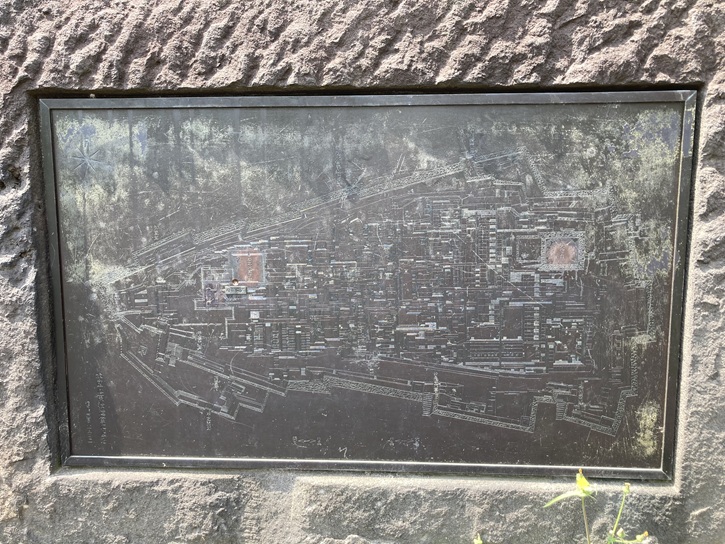
TAIRA no Masakado (died in 940) was a leader who started a large-scale rebellion in the Kanto region (Tengyo no ran) in the middle of the Heian period (10th century). It is said that when Shingyo Shoum, who inherited high priest of Yugyo-ji Temple, visited Edo in 1307, the mound (called Masakado-Zuka) was in ruins, so he repaired it. built a stone plate stupa and prayed at Nichirin-ji Temple nearby. The spirit of Masakado was enshrined at Kanda Myojm Shrine, and the mound remained here even after the shrine was relocated. I ater, the mound was destroyed when the Ministry of Finance had built a temporary office at the place after 1923 Great Kanto Earthquake. After many changes, in 2021, the sixth maintenance work was carried out by the Masakado-Zuka Preservation Society and others, and the site is maintained as it is today.
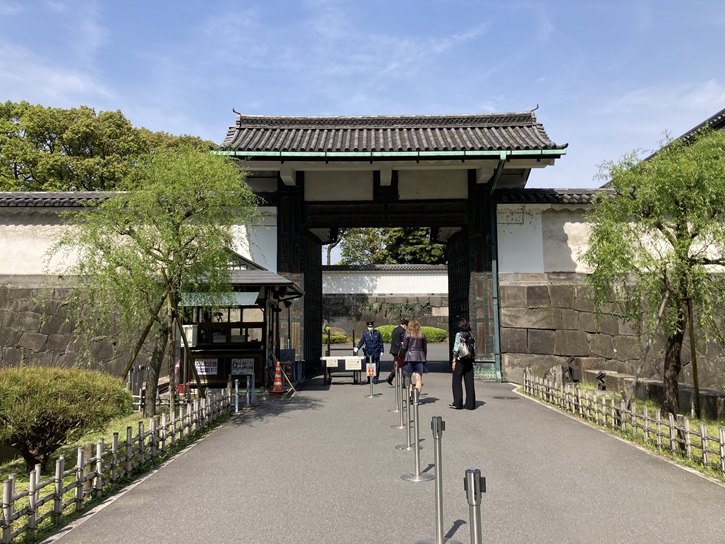
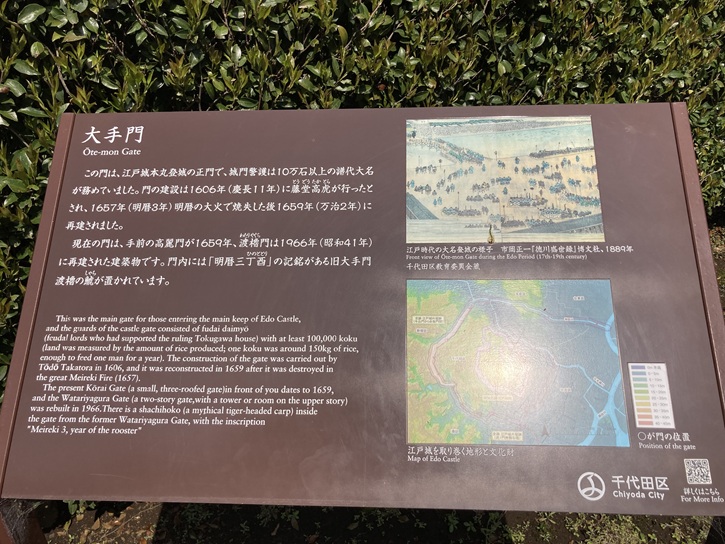
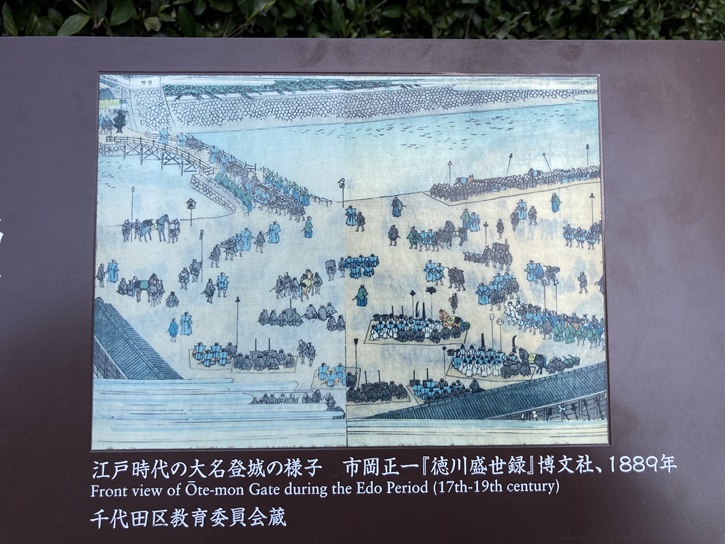
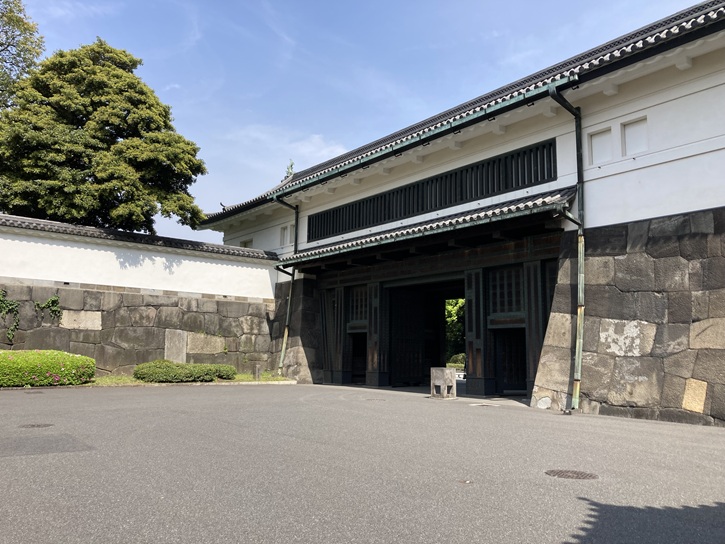
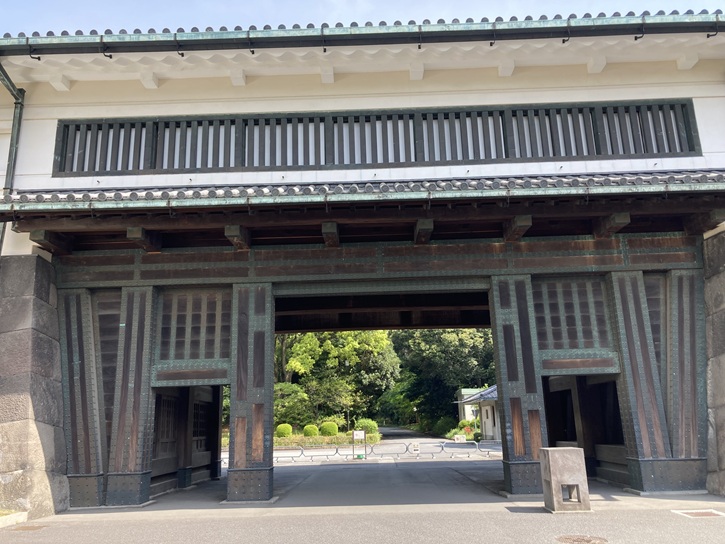
This was the main gate for those entering the main keep of Edo Castle, and the guards of the castle gate consisted of fudai daimyo (feudal lords who had supported the ruling Tokugawa house) with at least 100,000 koku (land was measured by the amount of rice produced; one koku was around 150kg of rice,
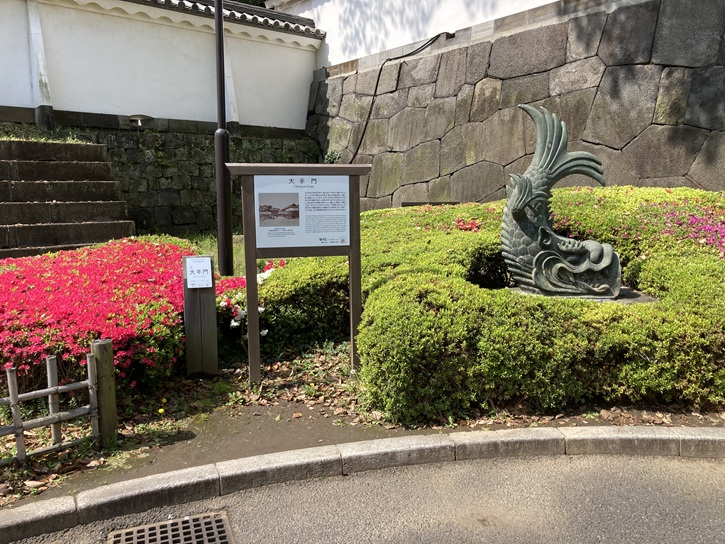
enough to feed one man for a year). The construction of the gate was carried out by Todo Takatora in 1606, and it was reconstructed in 1659 after it was destroyed in the great Meireki Fire (1657). The present Korai Gate (a small, three-roofed gate) in front of you dates to 1659, and the Watariyagura Gate (a two-story gate, with a tower or room on the upper story) was rebuilt in 1966.There is a shachihoko (a mythical tiger-headed carp) inside the gate from the former Watariyagura Gate, with the inscription "Meireki 3, year of the rooster"
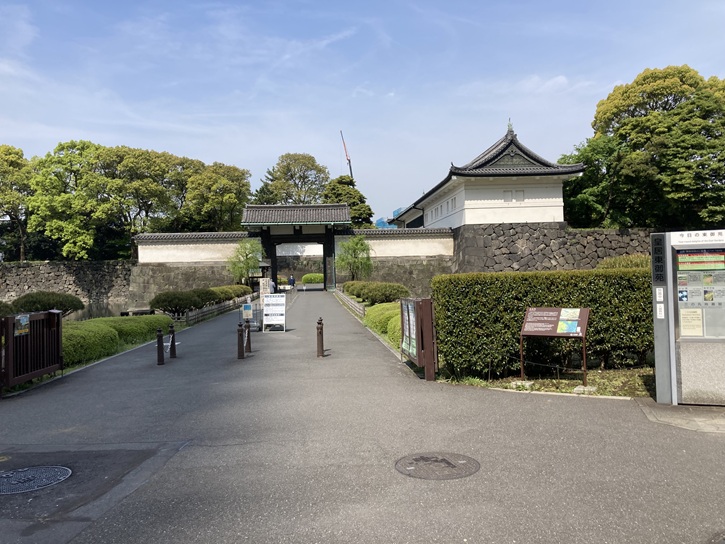
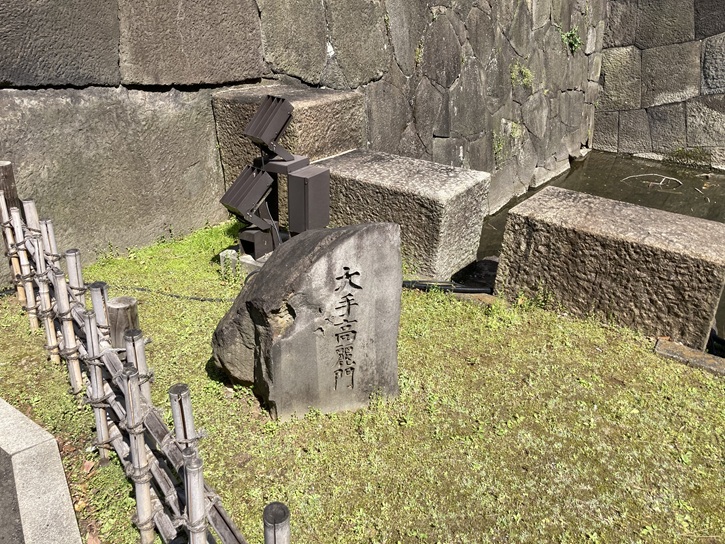
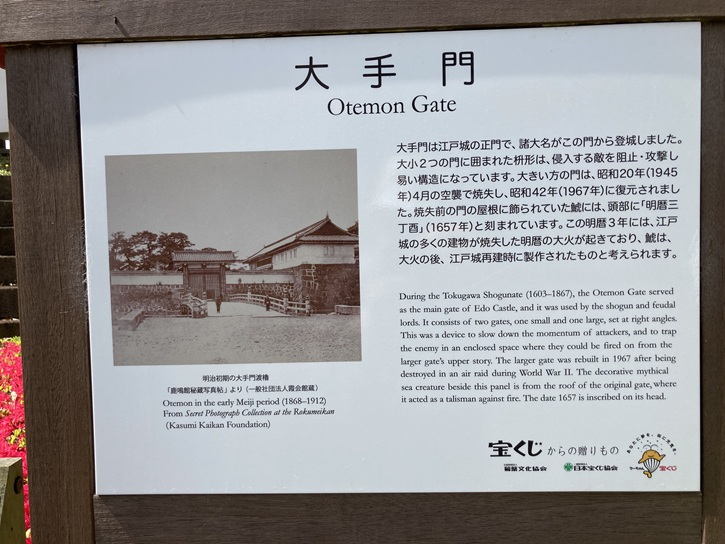
During the Tokugawa Shogunate (1603-1867), the Otemon Gate served as the main gate of Edo Castle, and it was used by the shogun and feudal lords. It consists of two gates, one small and one large, set at right angles. This was a device to slow down the momentum of attackers, and to trap the enemy in an enclosed space where they could be fired on from the larger gate's upper story. The larger gate was rebuilt in 1967 after being destroyed in an air raid during World War II. The decorative mythical sea creature beside this panel is from the roof of the original gate, where it acted as a talisman against fire. The date 1657 is inscribed on its head.
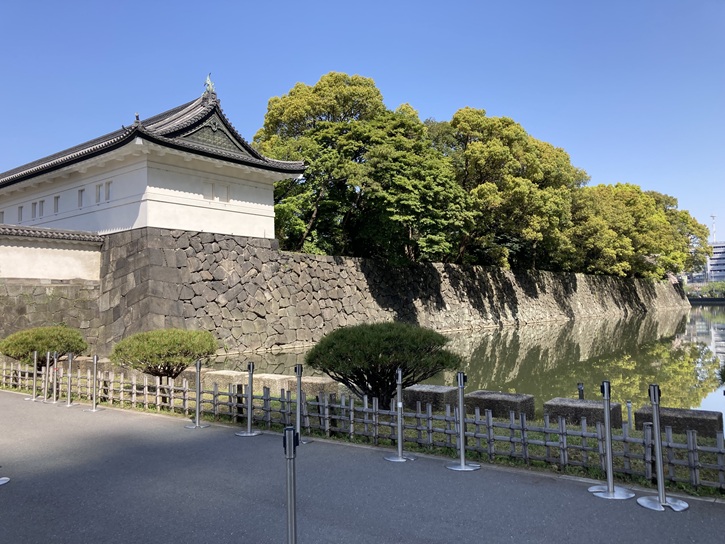
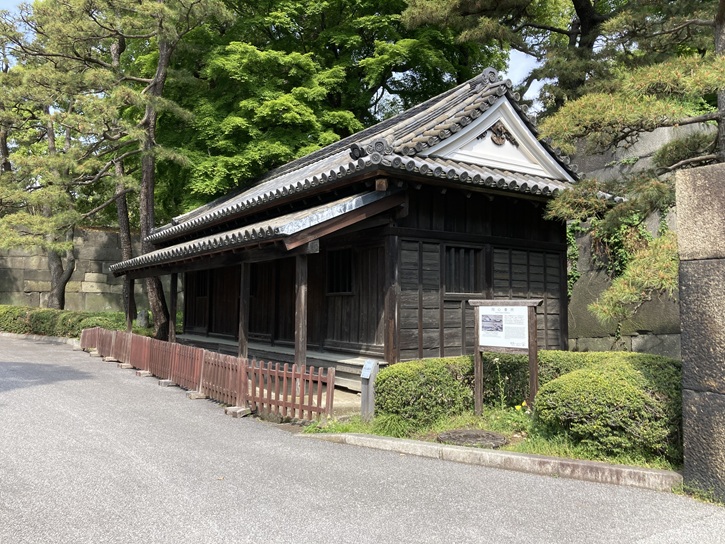
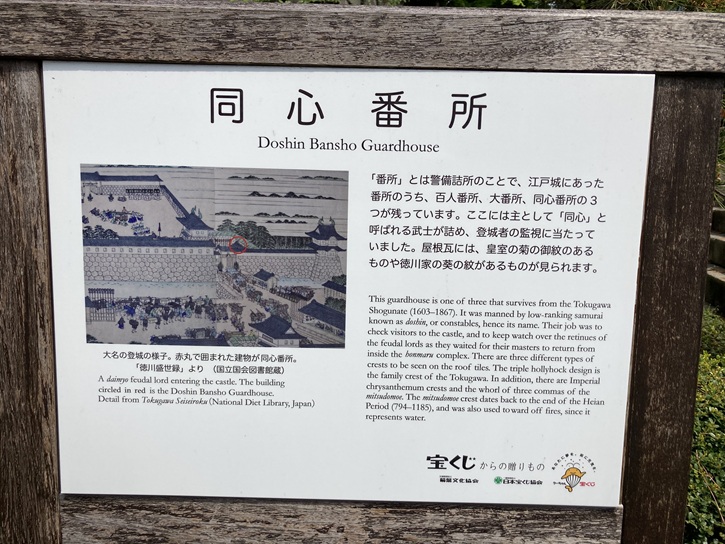
This guardhouse is one of three that survives from the Tokugawa Shogunate (1603-1867). It was manned by low-ranking samurai known as doshin, or constables, hence its name. Their job was to check visitors to the castle, and to keep watch over the retinues of the feudal lords as they waited for their masters to return from inside the honmaru complex. There are three different types of crests to be seen on the roof tiles. The triple hollyhock design is
the family crest of the Tokugawa. In addition, there are Imperial chrysanthemum crests and the whorl of three commas of the mitsudomoe. The mitsudomoe crest dates back to the end of the Heian Period (794-1185), and was also used to ward off fires, since it represents water.
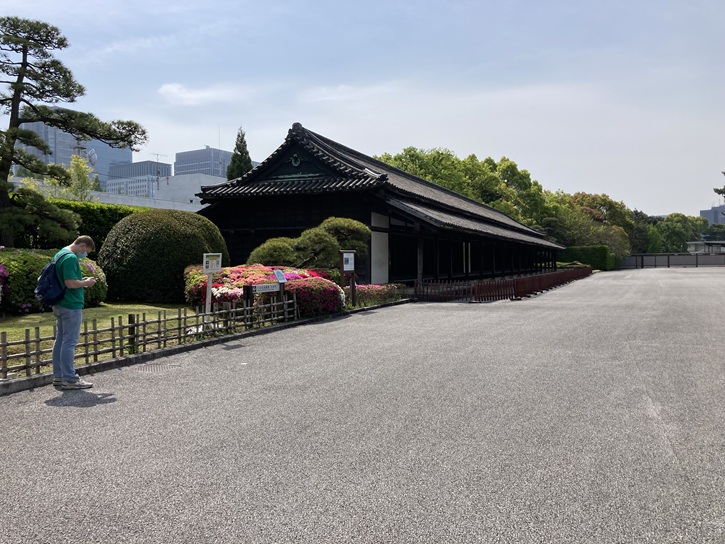
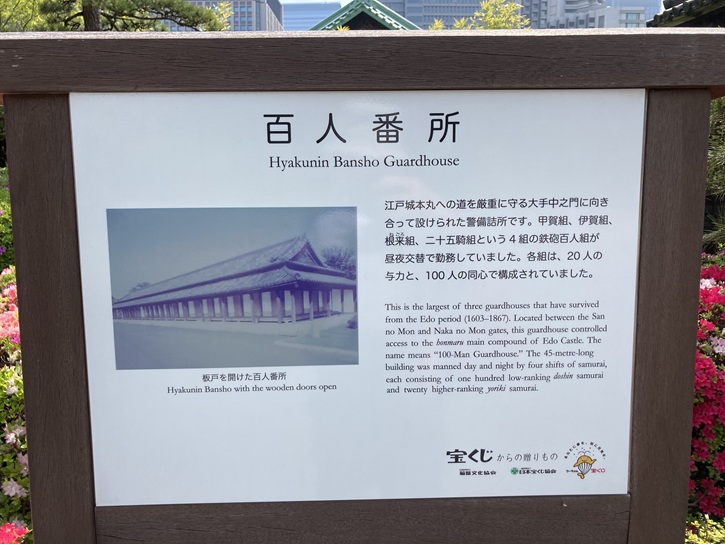
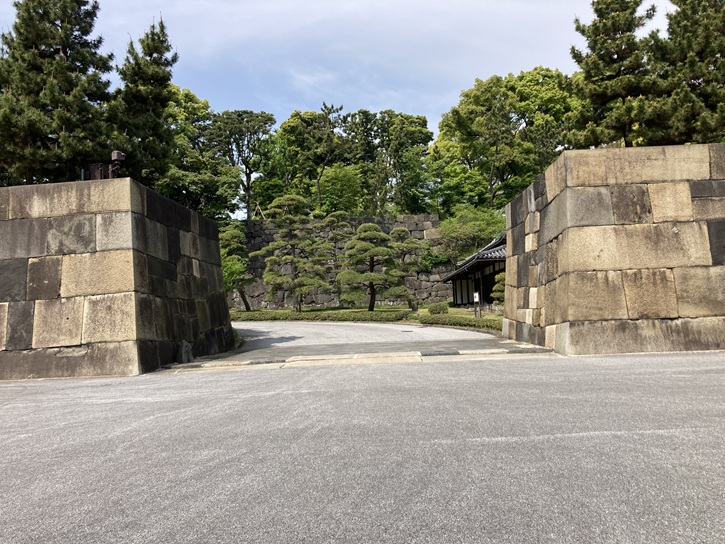
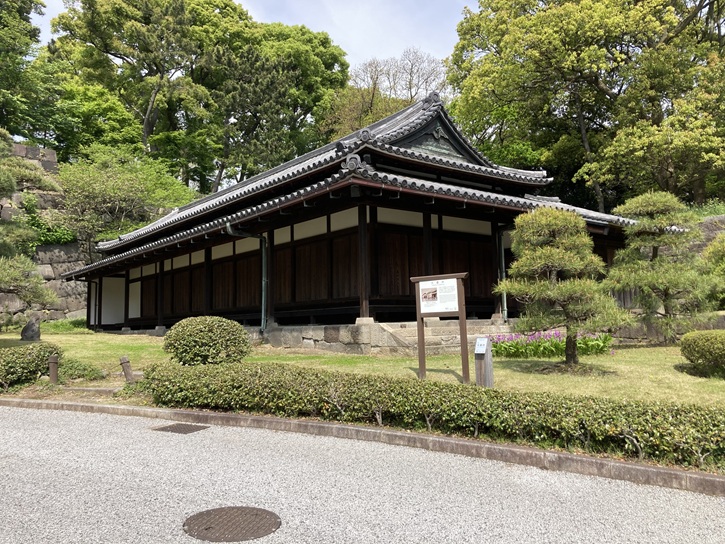
This is the largest of three guardhouses that have survived from the Edo period (1603-1867). Located between the San no Mon and Naka no Mon gates, this guardhouse controlled access to the honmaru main compound of Edo Castle. The
name means "100-Man Guardhouse." The 45-metre-long building was manned day and night by four shifts of samurai, each consisting of one hundred low-ranking doshin samurai and twenty higher-ranking yoriki samurai.
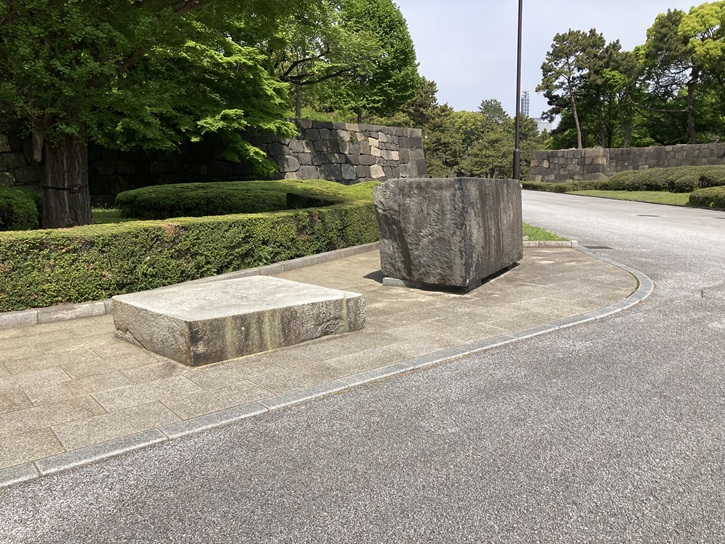
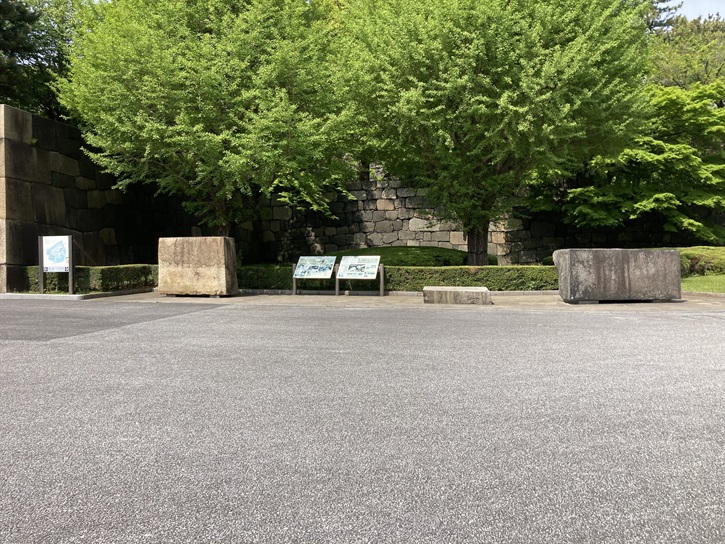
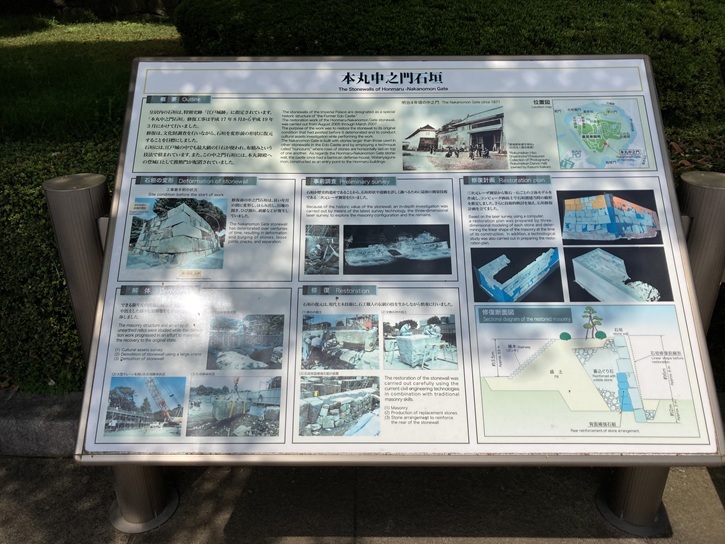
The Stonewalls of Honmaru-Nakanomon Gate - Outline
The stonewalls of the Imperial Palace are designated as a special historic structure of "the Former Edo Castle." The restoration work of the Honmaru-Nakanomon Gate stonewall, was carried out from August 2005 through March 2007.
The purpose of the work was to restore the stonewall to its original
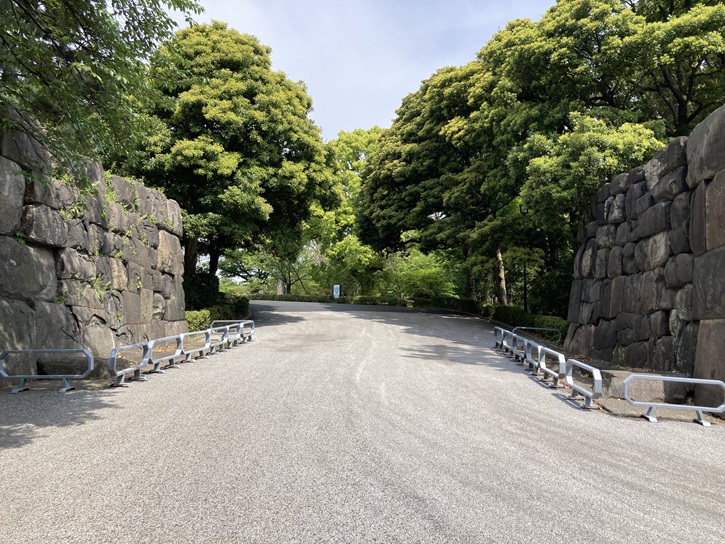
condition that had existed before it deteriorated and to conduct cultural assets investigation while performing the work. The Nakanomon Gate is built with stones larger than those used in other stonewalls in the Edo Castle and by employing a technique called "nunozumi," where rows of stones are horizontally laid on top of one another. As regards the Honmaru-Nakanomon Gate stonewall, the castle once had a barbican defense-house, Watariyagura-mon, constructed as an entry point to the Honmaru buildings.
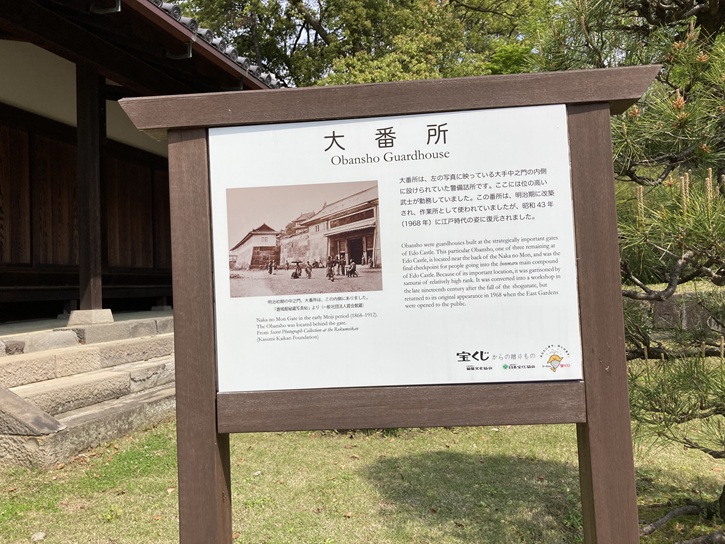
Obansho were guardhouses built at the strategically important gates of Edo Castle. This particular Obansho, one of three remaining at Edo Castle, is located near the back of the Naka no Mon, and was the final checkpoint for people going into the honmaru main compound of Edo Castle. Because of its important location, it was garrisoned by samurai of relatively high rank. It was converted into a workshop in the late nineteenth century after the fall of the shogunate, but returned to its original appearance in 1968 when the East Gardens were opened to the public.
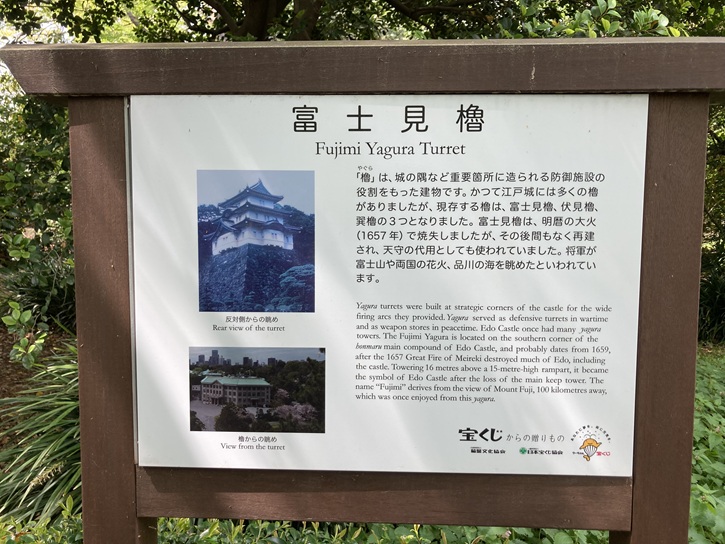
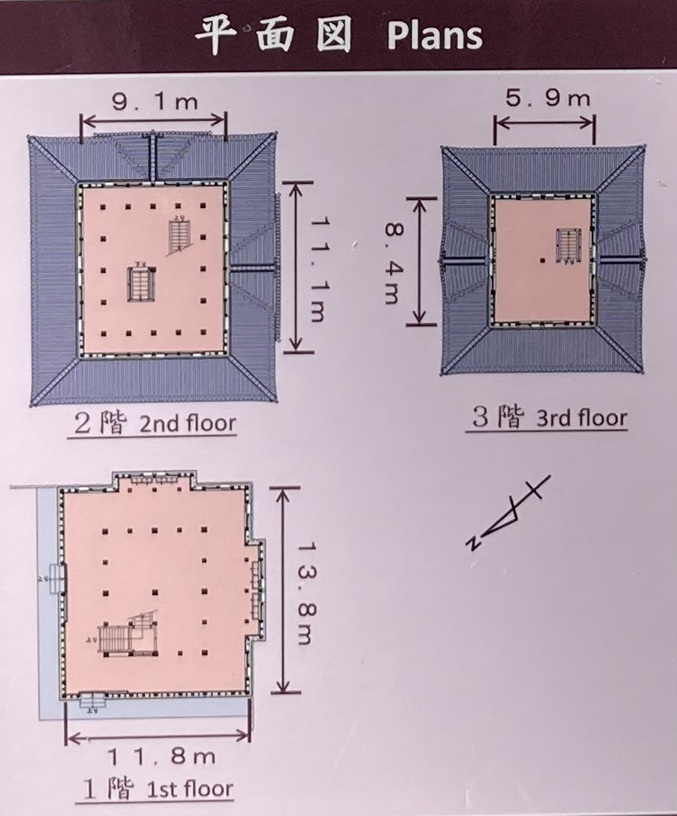
Yagura turrets were built at strategic corners of the castle for the wide
firing arcs they provided. Yagura served as defensive turrets in wartime
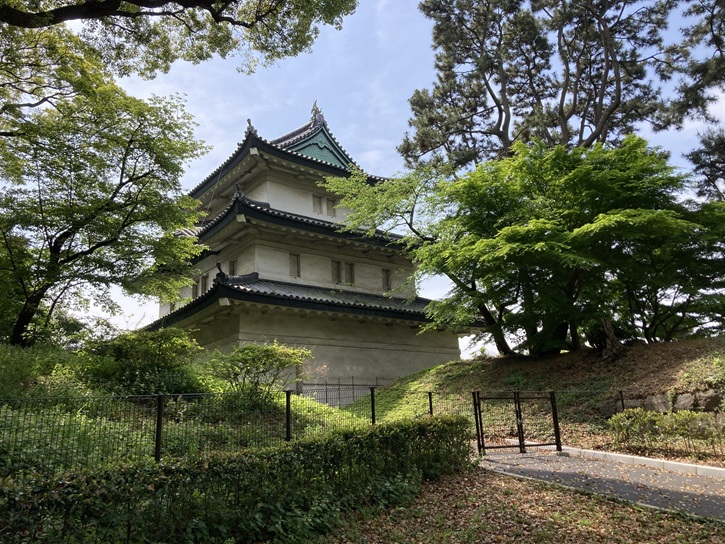
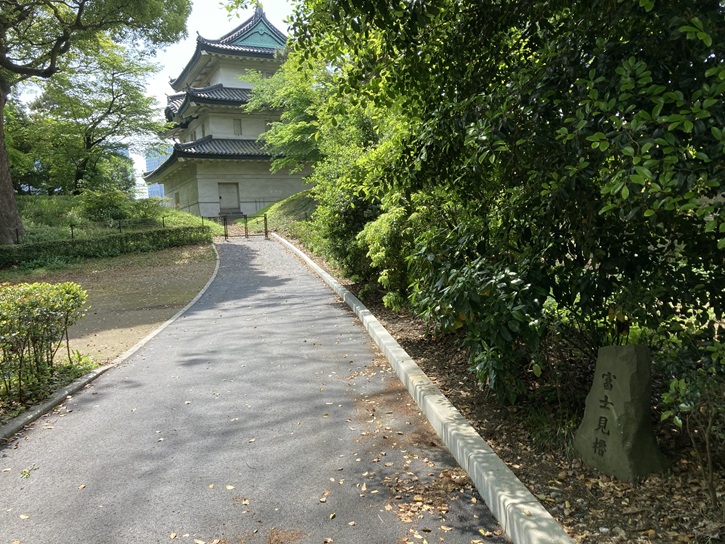
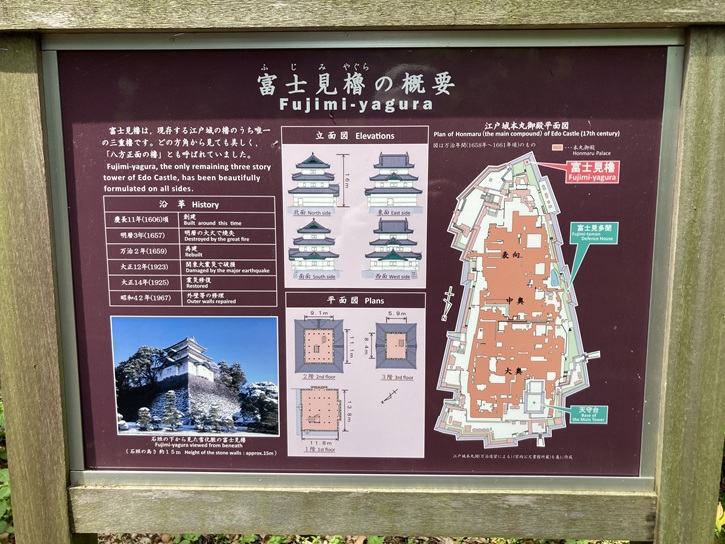
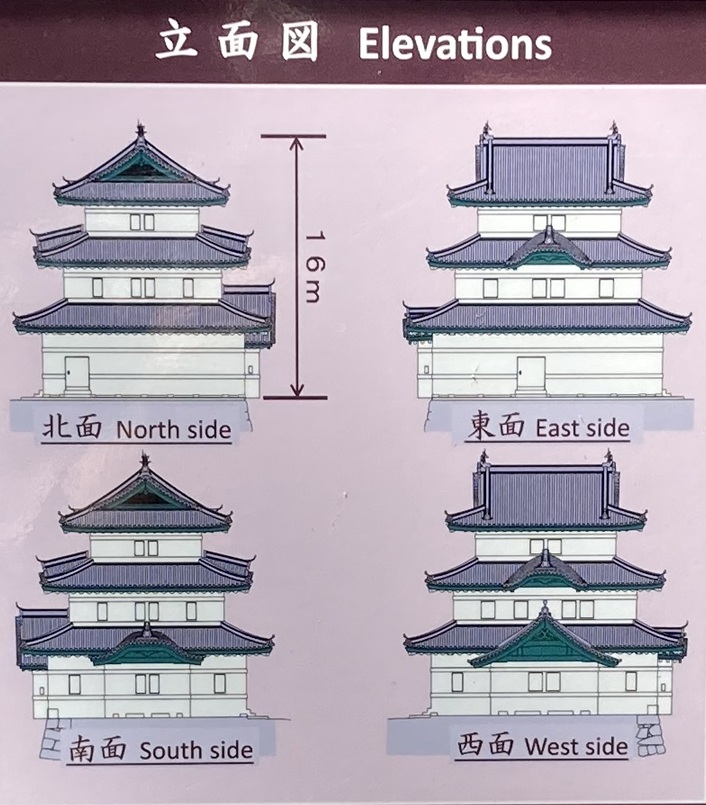
and as weapon stores in peacetime. Edo Castle once had many yagura towers. The Fujimi Yagura is located on the southern corner of the honmaru main compound of Edo Castle, and probably dates from 1659, after the 1657 Great Fire of Meireki destroyed much of Edo, including the castle. Towering 16 metres above a 15-metre-high rampart, it became the symbol of Edo Castle after the loss of the main keep tower. The name "Fujimi" derives from the view of Mount Fuji, 100 kilometres away, which was once enjoyed from this yagura.
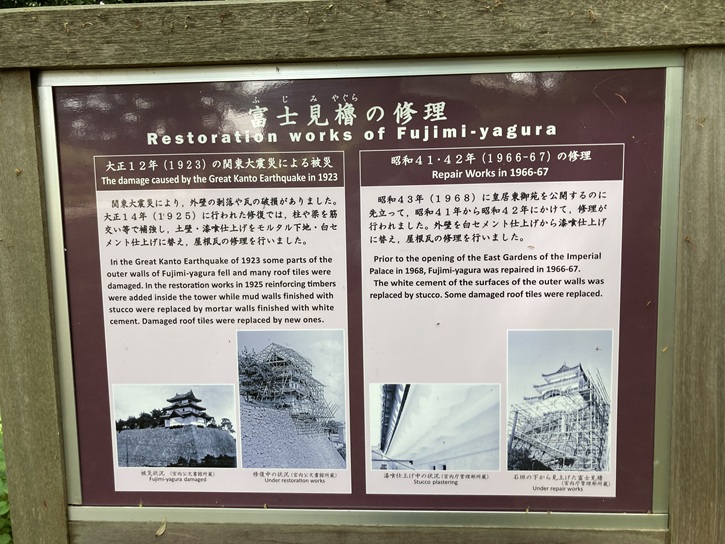
The damage caused by the Great Kanto Earthquake in 1923
In the Great Kanto Earthquake of 1923 some parts of the outer walls of Fujimi-yagura fell and many roof tiles were damaged. In the restoration works in 1925 reinforcing timbers were added inside the tower while mud walls finished with
stucco were replaced by mortar walls finished with white cement. Damaged roof tiles were replaced by new ones.
Repair Works in 1966-67
Prior to the opening of the East Gardens of the Imperial Palace in 1968, Fujimi-yagura was repaired in 1966-67. The white cement of the surfaces of the outer walls was replaced by stucco. Some damaged roof tiles were replaced.
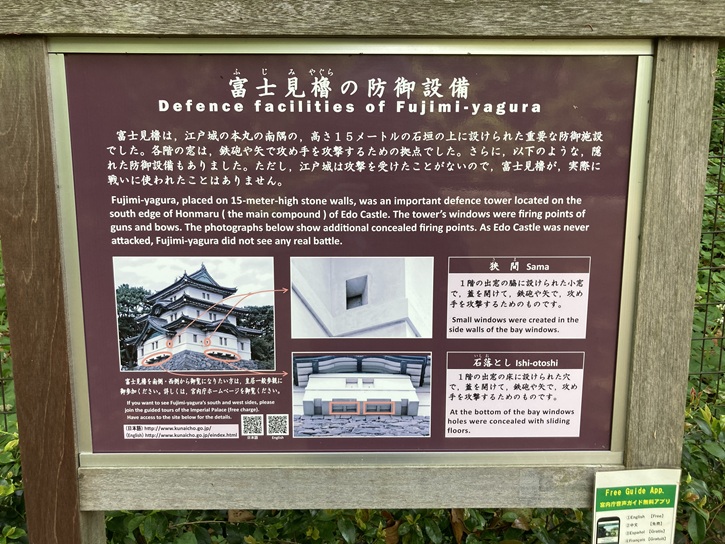
Fujimi-yagura, placed on 15-meter-high stone walls, was an important defence tower located on the south edge of Honmaru (the main compound) of Edo Castle. The tower's windows were firing points of guns and bows. The photographs below show additional concealed firing points. As Edo Castle was never attacked, Fujimi-yagura did not see any real battle.
Sama
Small windows were created in the side walls of the bay windows.
Ishi-otoshi
At the bottom of the bay windows holes were concealed with sliding floors.
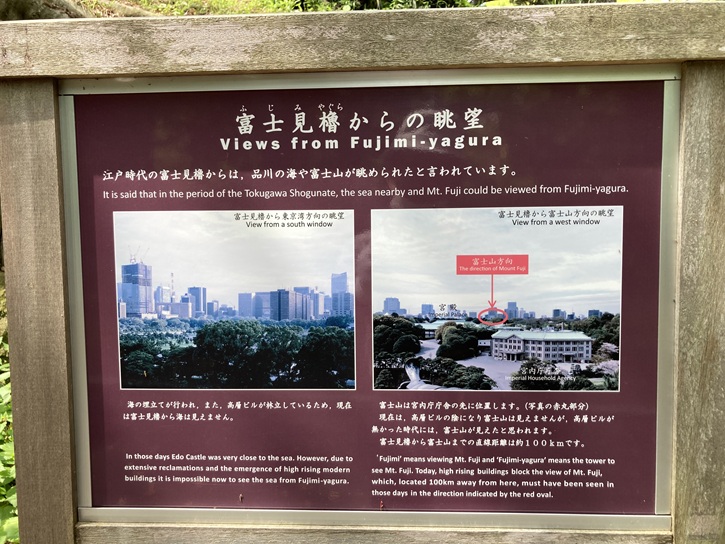
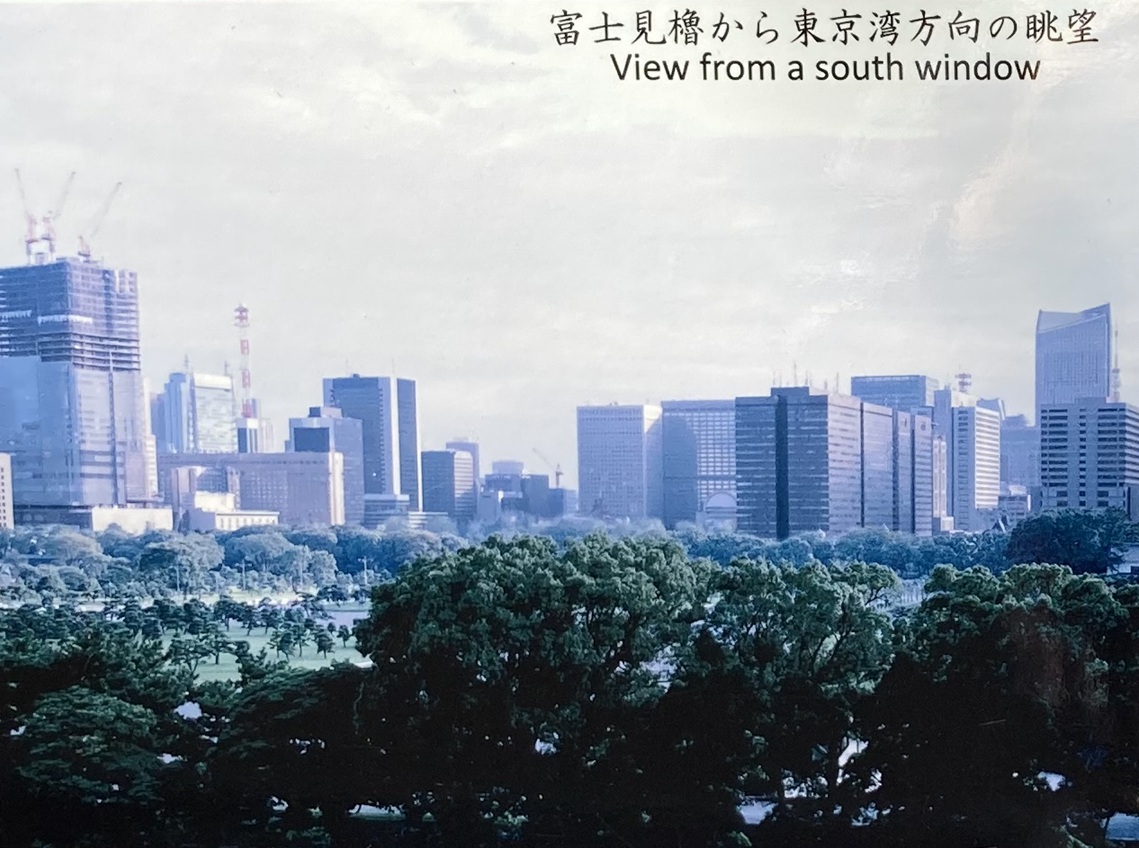
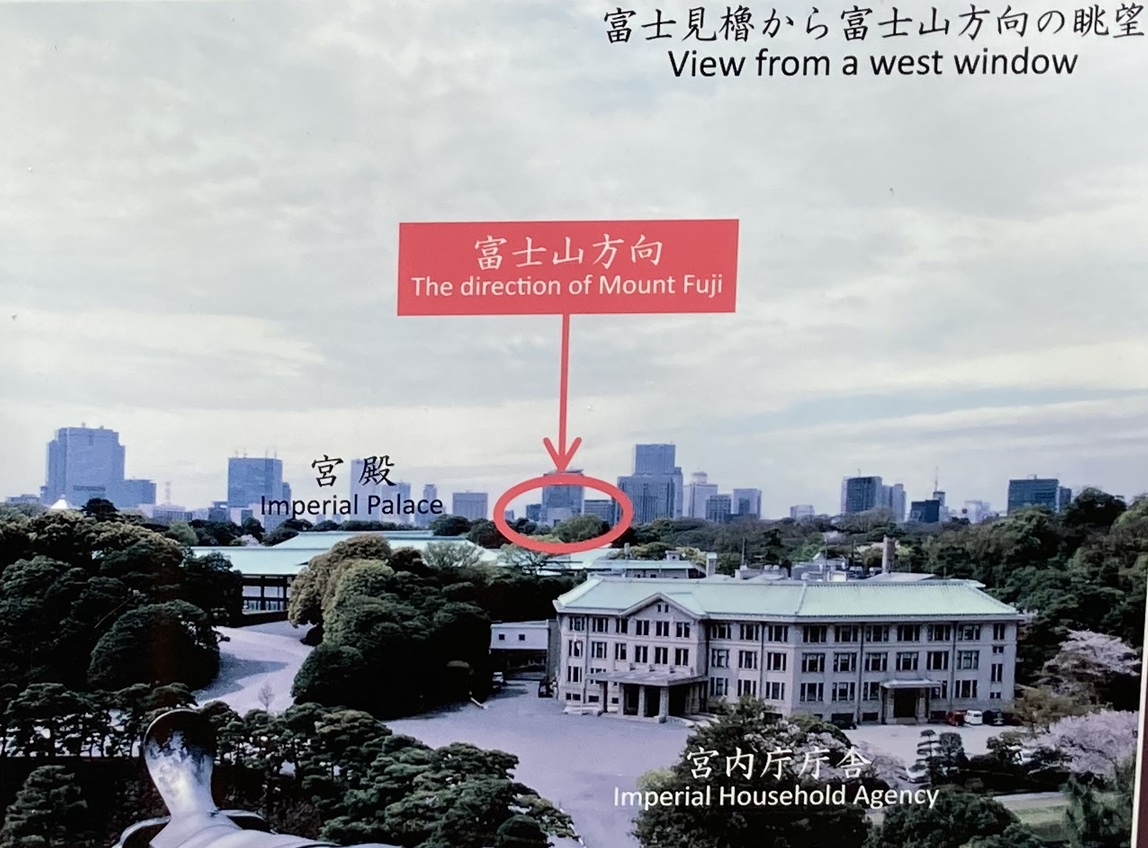
It is said that in the period of the Tokugawa Shogunate, the sea nearby and Mt. Fuji could be viewed from Fujimi-yagura.
【Left: View from a south window】
In those days Edo Castle was very close to the sea. However, due to extensive reclamations and the emergence of high rising modern buildings it is impossible now to see the sea from Fujimi-yagura.
【Right: View from a west window】
'Fujimi' means viewing Mt. Fuji and 'Fujimi-yagura' means the tower to see Mt. Fuji. Today, high rising buildings block the view of Mt. Fuji, which, located 100km away from here, must have been seen in those days in the direction indicated by the red oval.
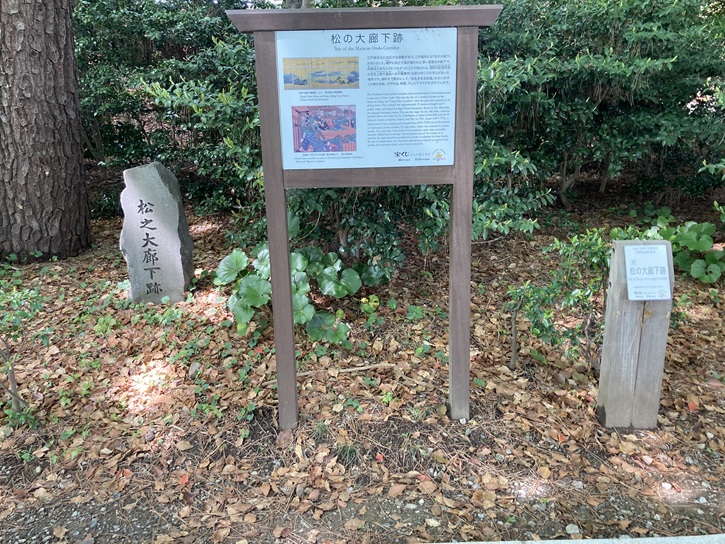
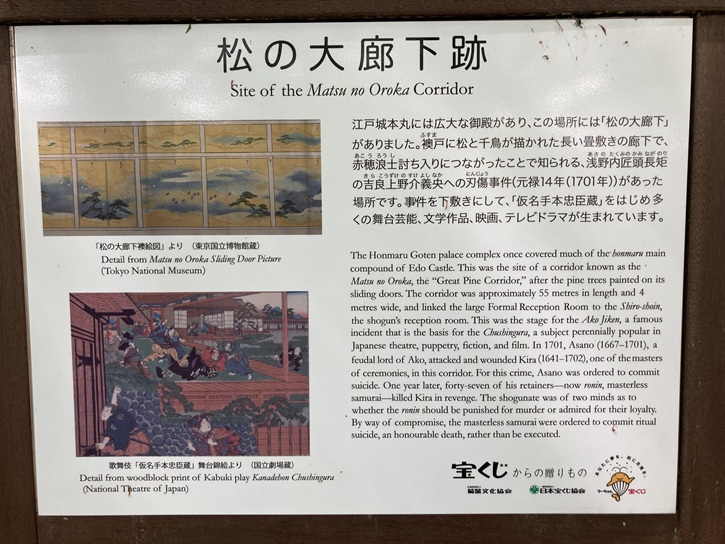
The Honmaru Goten palace complex once covered much of the bonmaru main compound of Edo Castle. This was the site of a corridor known as the Matsu no Oroka, the "Great Pine Corridor," after the pine trees painted on its sliding doors. The corridor was approximately 55 metres in length and 4 metres wide, and linked the large Formal Reception Room to the Shiro-shoin, the shogun's reception room. This was the stage for the Ako Jiken, a famous incident that is the basis for the Chushingura, a subject perennially popular in Japanese theatre, puppetry, fiction, and film. In 1701, Asano (1667-1701), a feudal lord of Ako, attacked and wounded Kira (1641-1702), one of the masters of ceremonies, in this corridor. For this crime, Asano was ordered to commit suicide. One year later, forty-seven of his retainers now ronin, masterless samurai-killed Kira in revenge. The shogunate was of two minds as to whether the ronin should be punished for murder or admired for their loyalty. By way of compromise, the masterless samurai were ordered to commit ritual suicide, an honourable death, rather than be executed.
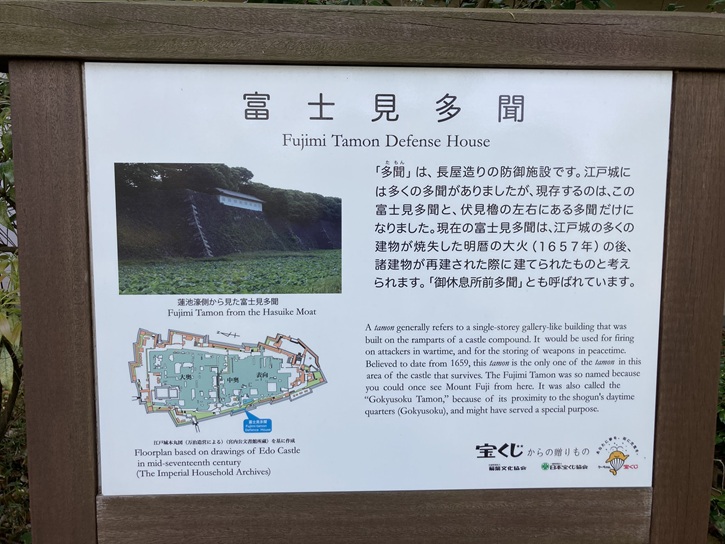
A tamon generally refers to a single-storey gallery-like building that was
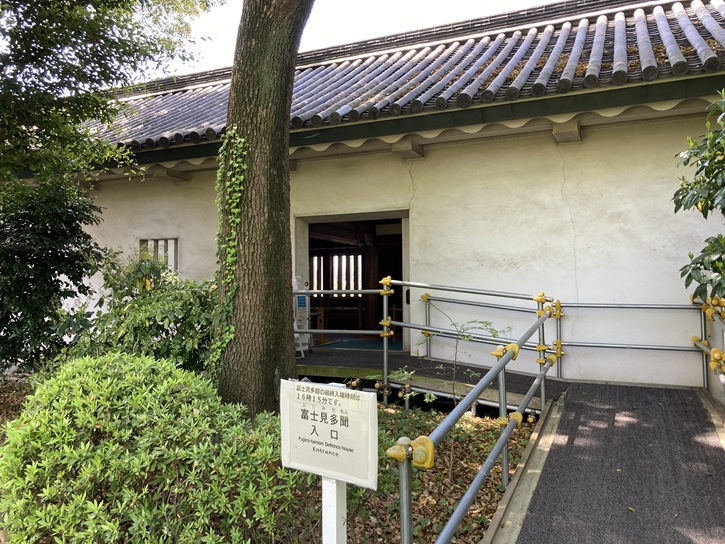
built on the ramparts of a castle compound. It would be used for firing on attackers in wartime, and for the storing of weapons in peacetime. Believed to date from 1659, this tamon is the only one of the tamon in this area of the castle that survives. The Fujimi Tamon was so named because you could once see Mount Fuji from here. It was also called the "Gokyusoku Tamon," because of its proximity to the shogun's daytime quarters (Gokyusoku), and might have served a special purpose.
The tamon began to appear in Japanese castles from the late 16th century. As the base of firing points it was more effective in fending off attackers than a simple defence wall. In many castles tamons were used for various purposes in peacetime, such as warehouse for weapons, tools or documents, and dormitory for female servants.
The function of Fujimi-tamon
By the time this tamon was built the rule of the Tokugawa Shogunate had become stable and there was no acute need to fortify heavily Honmaru (the main compound) of Edo Castle. The tamon was close to Gokyusoku, the Tokugawa Shogun's living room of Honmaru Palace. Although its precise function is unknown, in view of the lintels and sills for fusumas (sliding doors) Fujimi-tamon might have been used for certain purposes other than simply storing goods.
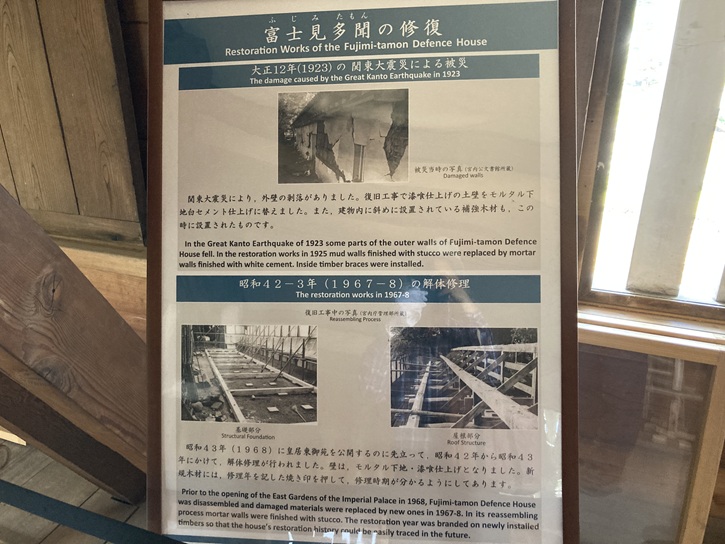
Restoration Works of the Fujimi-tamon Defence House
The damage caused by the Great Kanto Earthquake in 1923
In the Great Kanto Earthquake of 1923 some parts of the outer walls of Fujimi-tamon Defence House fell. In the restoration works in 1925 mud walls finished with stucco were replaced by mortar walls finished with white cement. Inside timber braces were installed.
The restoration works in 1967-8
Prior to the opening of the East Gardens of the Imperial Palace in 1968, Fujimi-tamon Defence House was disassembled and damaged materials were replaced by new ones in 1967-8. In its reassembling process mortar walls were finished with stucco. The restoration year was branded on newly installed timbers so that the house's restoration history could be easily traced in the future.
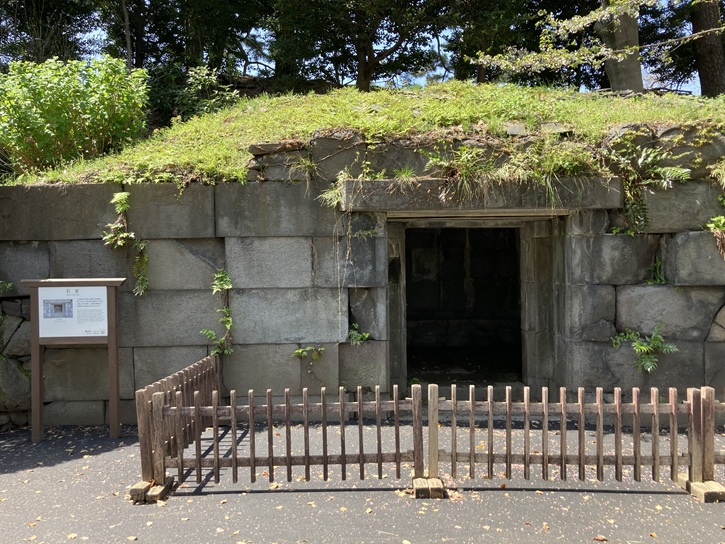
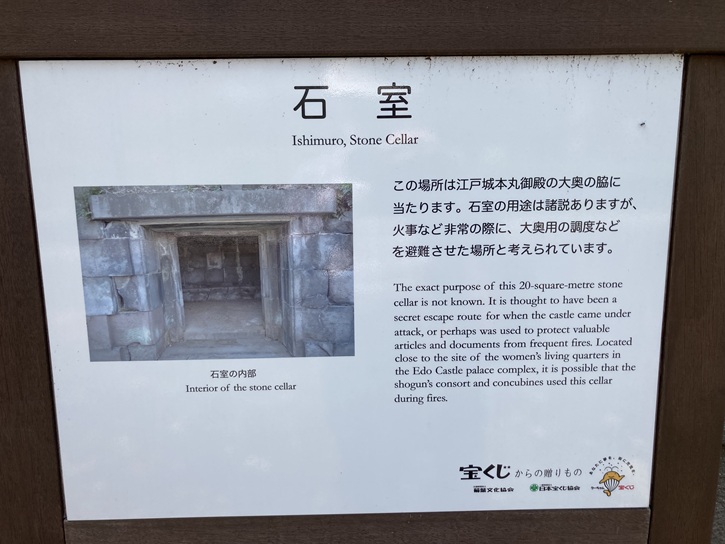
The exact purpose of this 20-square-metre stone cellar is not known. It is thought to have been asecret escape route for when the castle came under
attack, or perhaps was used to protect valuable articles and documents from frequent fires. Located close to the site of the women's living quarters in
the Edo Castle palace complex, it is possible that the shogun's consort and concubines used this cellar during fires.
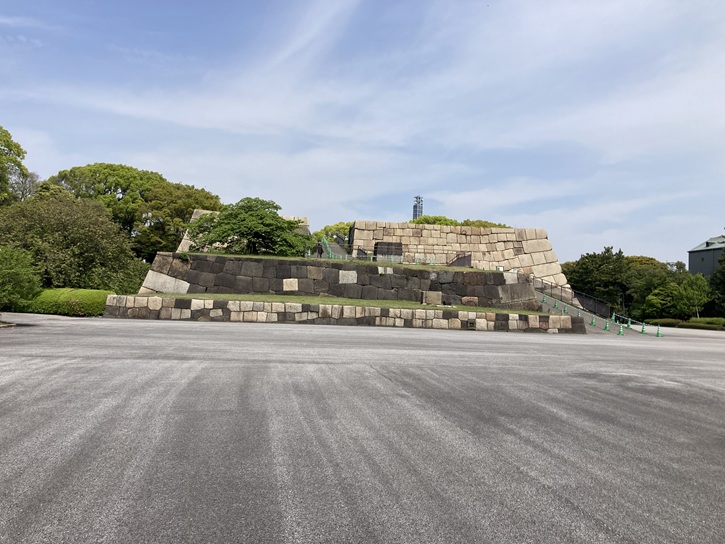
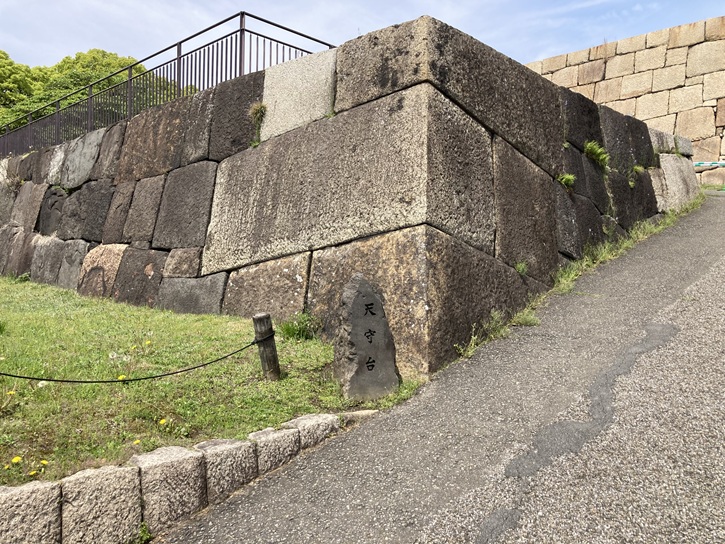
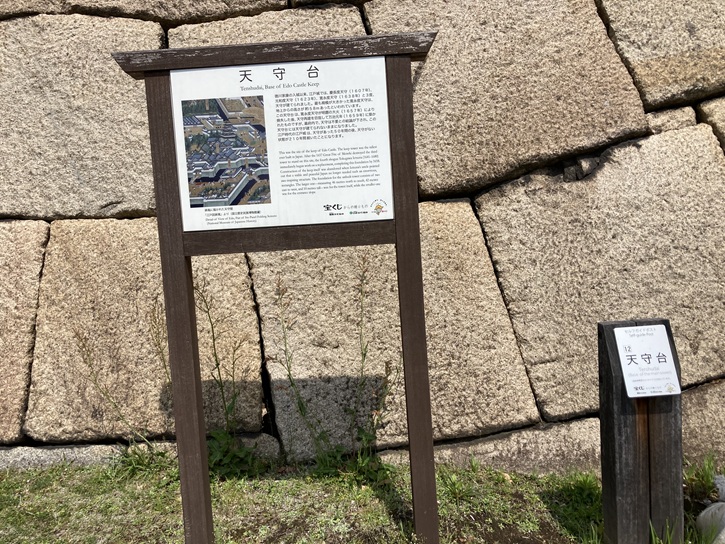
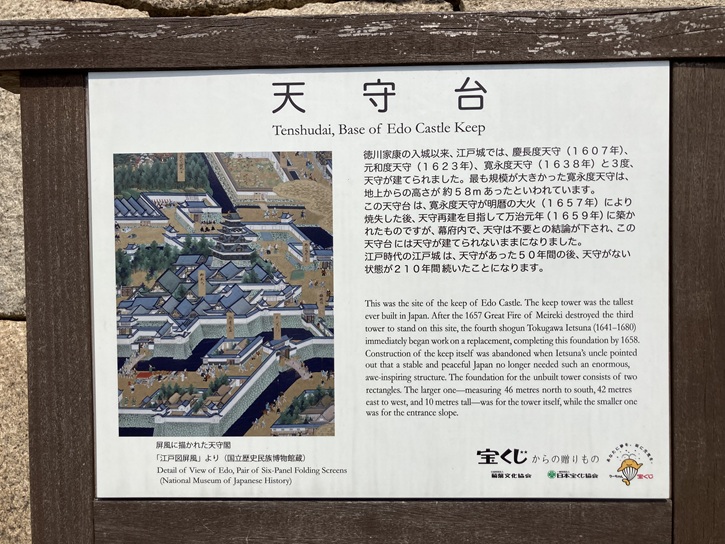
This was the site of the keep of Edo Castle. The keep tower was the tallest
ever built in Japan. After the 1657 Great Fire of Meireki destroyed the third
tower to stand on this site, the fourth shogun Tokugawa Ietsuna (1641-1680)
immediately began work on a replacement, completing this foundation by 1658.
Construction of the keep itself was abandoned when Ietsuna's uncle pointed
out that a stable and peaceful Japan no longer needed such an enormous,
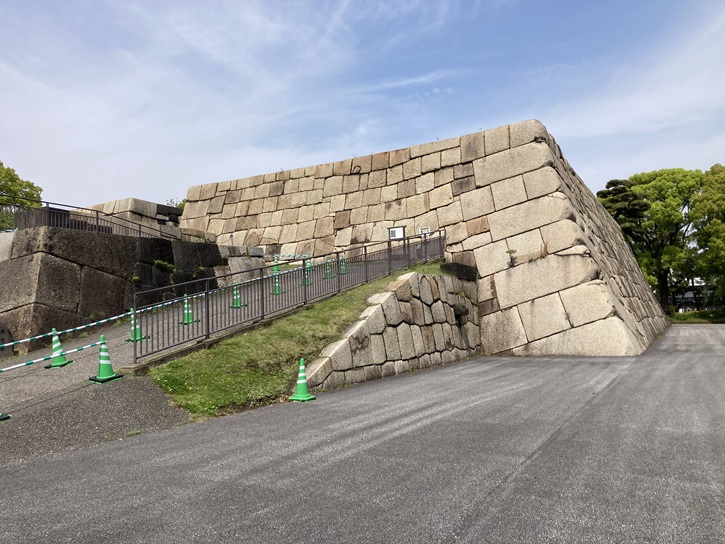
awe-inspiring structure. The foundation for the unbuilt tower consists of two
rectangles. The larger one-measuring 46 metres north to south, 42 metres
east to west, and 10 metres tall-was for the tower itself, while the smaller one
was for the entrance slope.
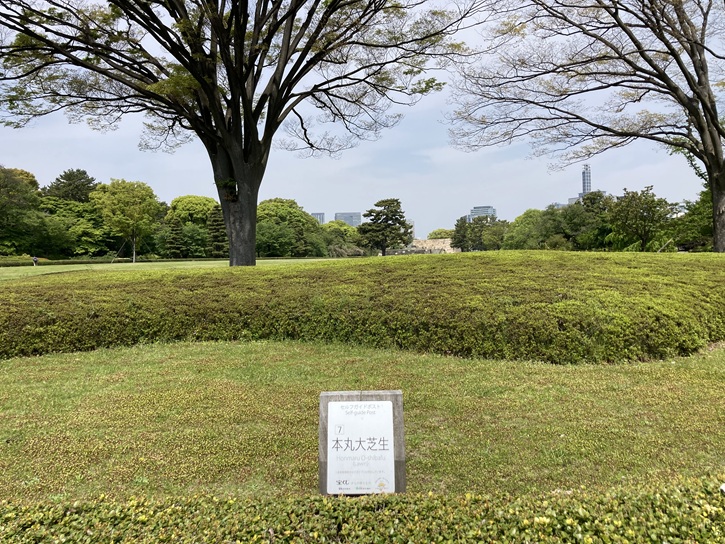
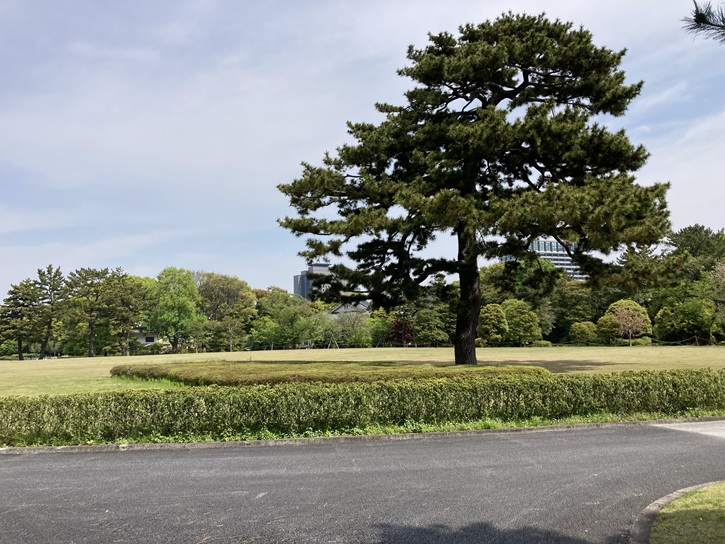
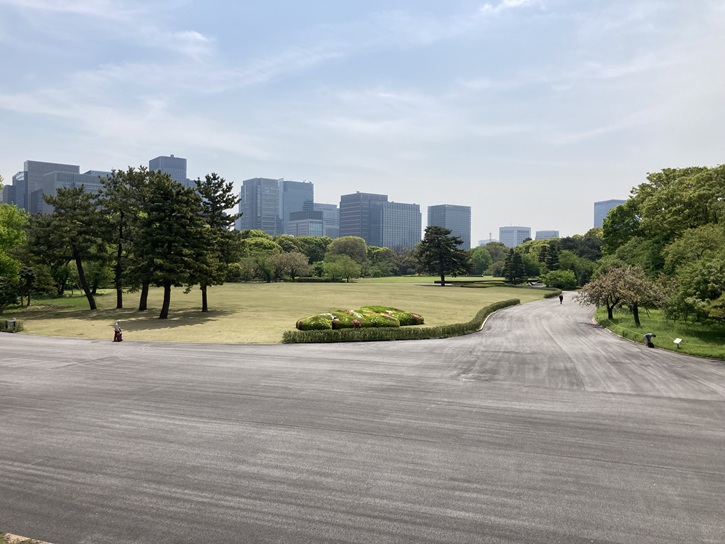
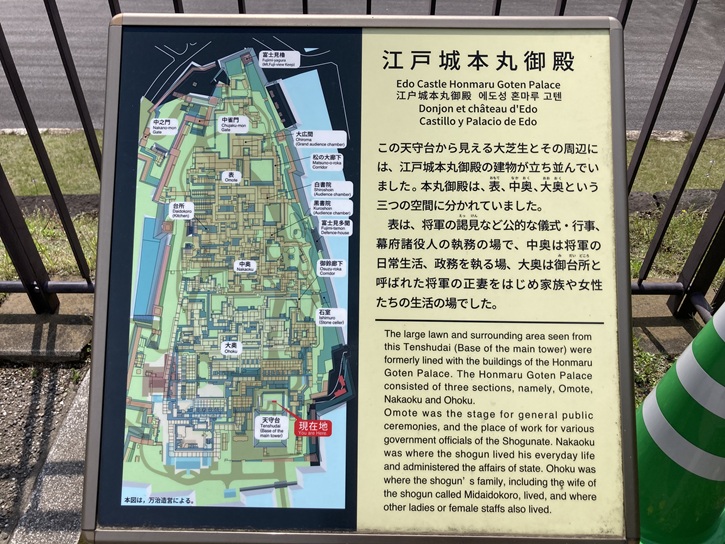
The large lawn and surrounding area seen from this Tenshudai (Base of the main tower) were formerly lined with the buildings of the Honmaru Goten Palace. The Honmaru Goten Palace consisted of three sections, namely, Omote, Nakaoku and Ohoku. Omote was the stage for general public ceremonies, and the place of work for various government officials of the Shogunate. Nakaoku was where the shogun lived his everyday life and administered the affairs of state. Ohoku was where the shogun's family, including the wife of the shogun called Midaidokoro, lived, and where other ladies or female staffs also lived.
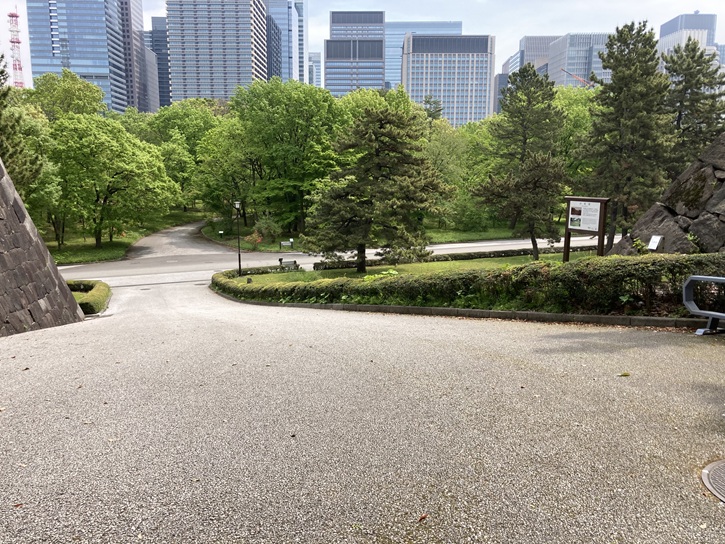
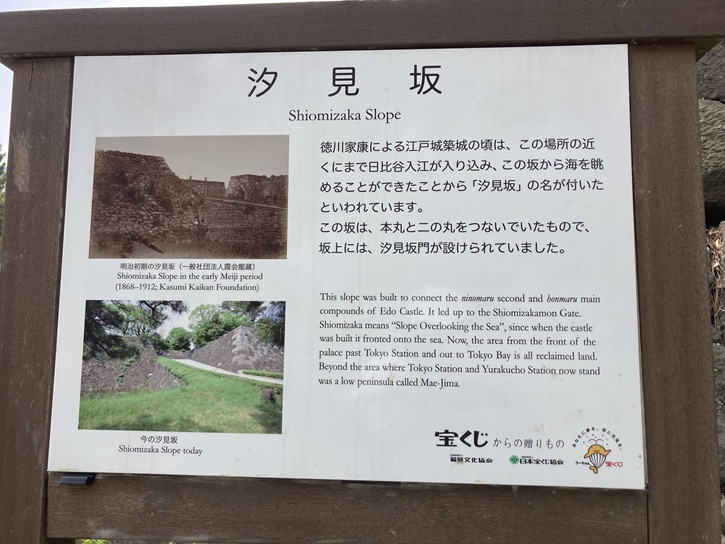
This slope was built to connect the ninomaru second and honmaru main compounds of Edo Castle. It led up to the Shiomizakamon Gate. Shiomizaka means "Slope Overlooking the Sea", since when the castle was built it fronted onto the sea. Now, the area from the front of the palace past Tokyo Station and out to Tokyo Bay is all reclaimed land. Beyond the area where Tokyo Station and Yurakucho Station now stand was a low peninsula called Mae-Jima.
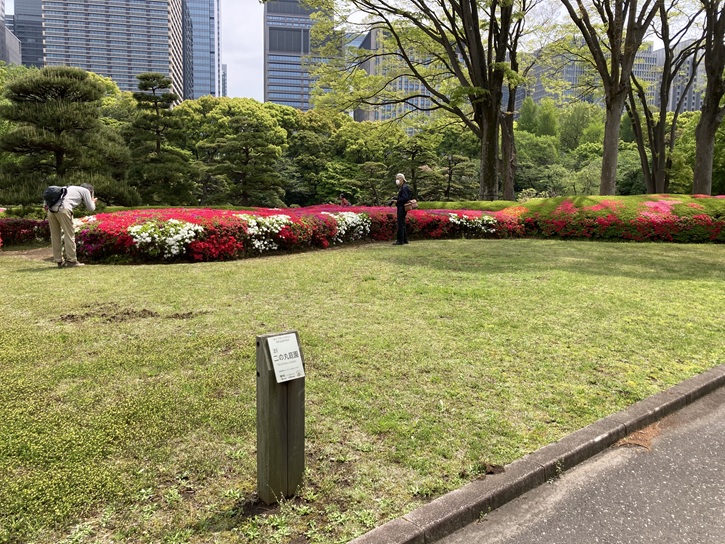
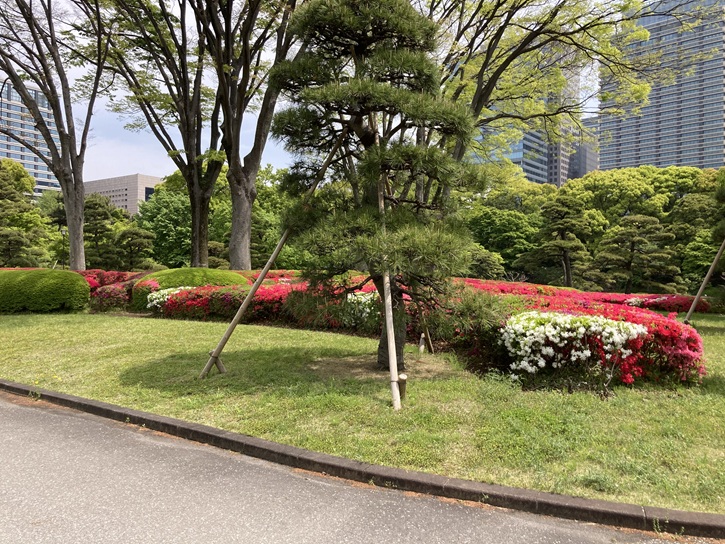
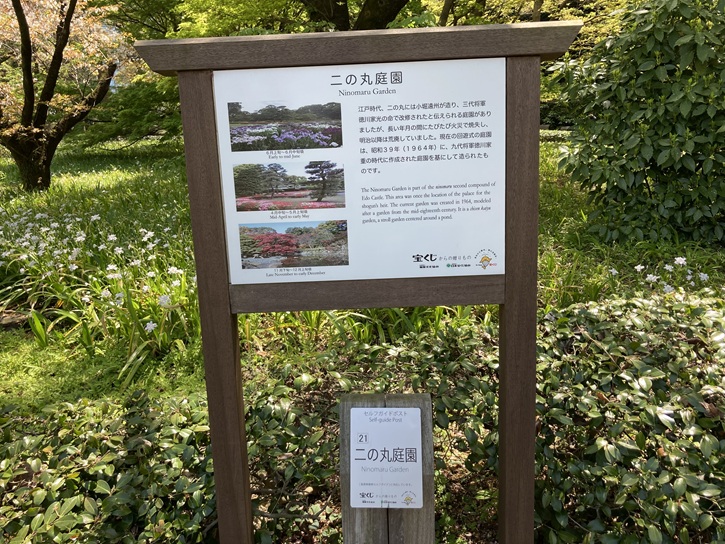
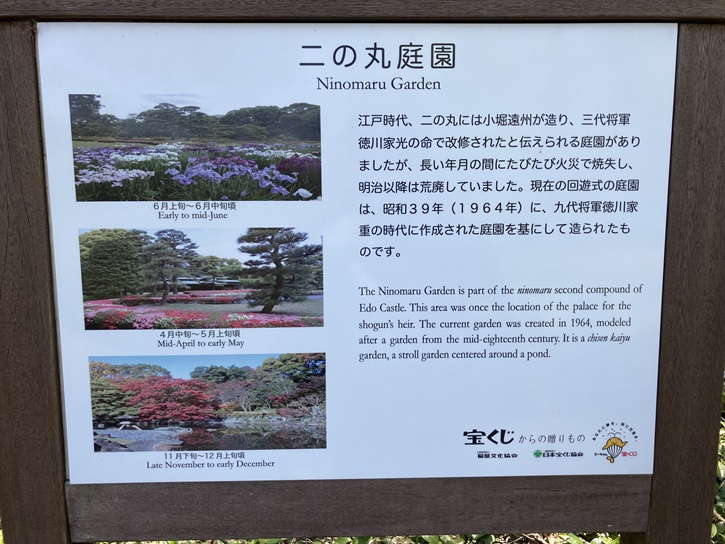
The Ninomaru Garden is part of the ninomaru second compound of Edo Castle. This area was once the location of the palace for the shogun's heir. The current garden was created in 1964, modeled after a garden from the mid-eighteenth century. It is a chisen kaiyu garden, a stroll garden centered around a pond.
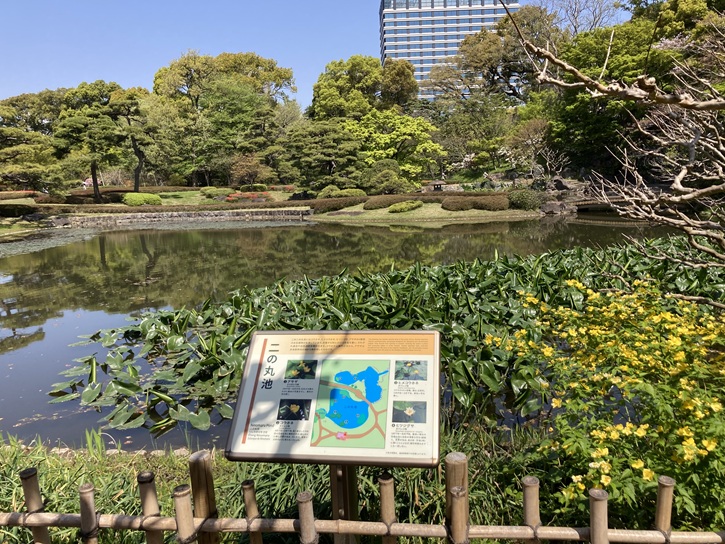
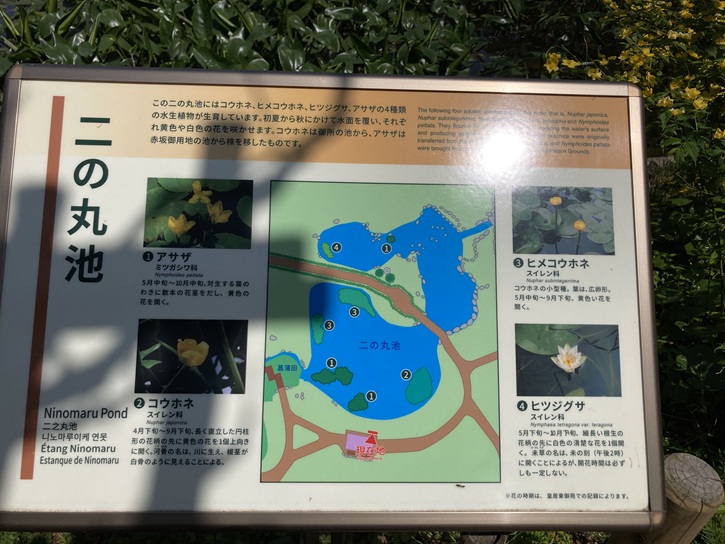
The following four aquatic species grow in this pond, that is, Nuphar japonica,
Nuphar subintegerrima, Nymphaea tetragona var tetragona and Nymphoides
peltata. They flourish from summer to autumn, covering the water's surface
and producing yellow or white flowers. Nuphar japonica were originally
transferred from the porid at the Imperial Residence, and Nymphoides peltata
were brought from the pond on the Akasaka Imperial Palace Grounds.
84 varieties of iris grow in this garden. These varieties have been carefully maintained since they were donated by the Iris Garden of Meiji Jingu Shrine in 1966 when the East Gardens of the Imperial Palace were being created.
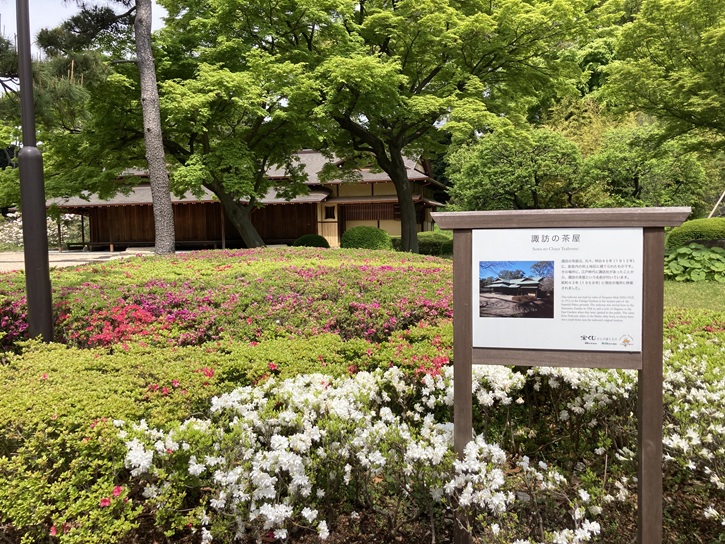
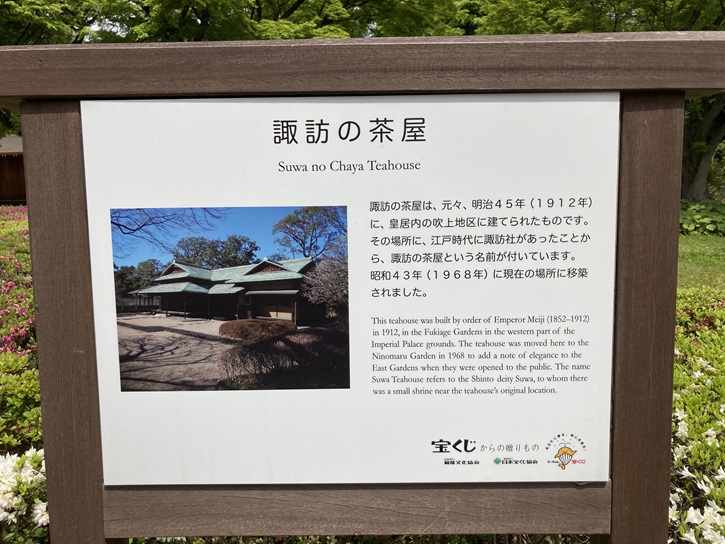
This teahouse was built by order of Emperor Meiji (1852-1912) in 1912, in the Fukiage Gardens in the western part of the Imperial Palace grounds. The teahouse was moved here to the Ninomaru Garden in 1968 to add a note of elegance to the
East Gardens when they were opened to the public. The name Suwa Teahouse refers to the Shinto deity Suwa, to whom there was a small shrine near the teahouse's original location.
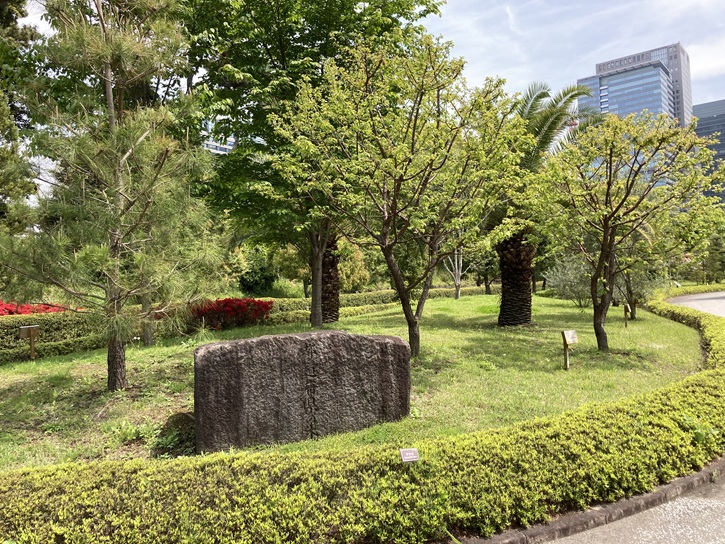
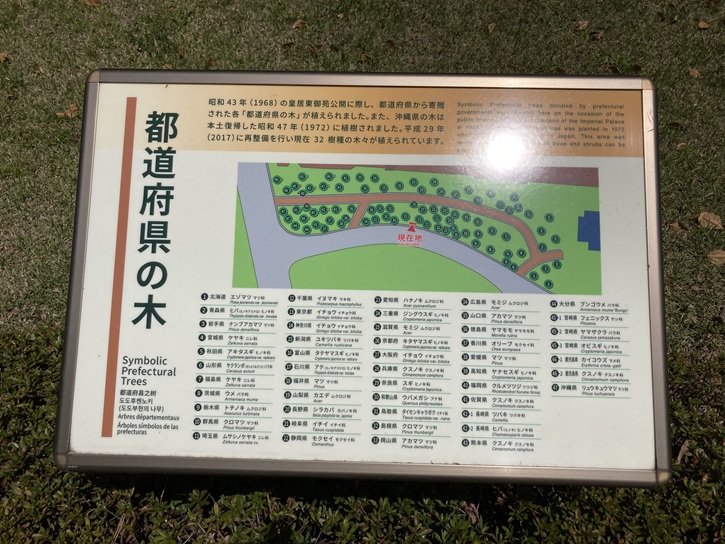
Symbolic Prefectural trees donated by prefectural governments were planted here on the occasion of the public opening of the East Gardens of the Imperial Palace in 1968. Okinawa's prefectural tree was planted in 1972 when Okinawa was returned to Japan. This area was renewed and 31 species of trees and shrubs can be seen here.
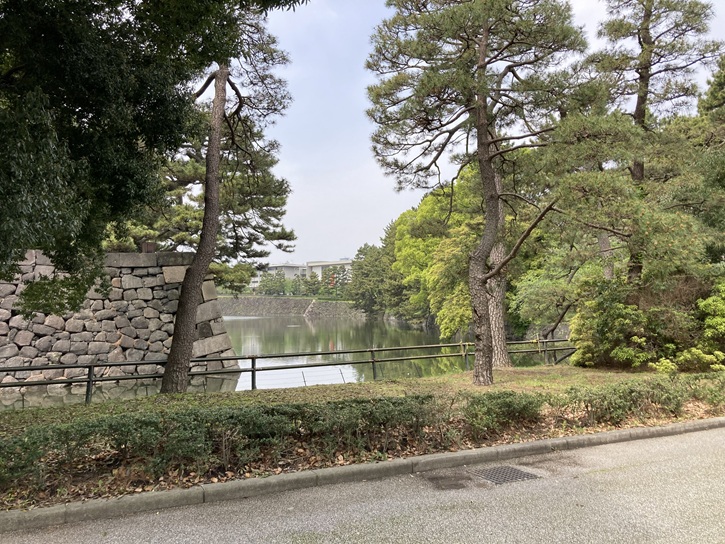
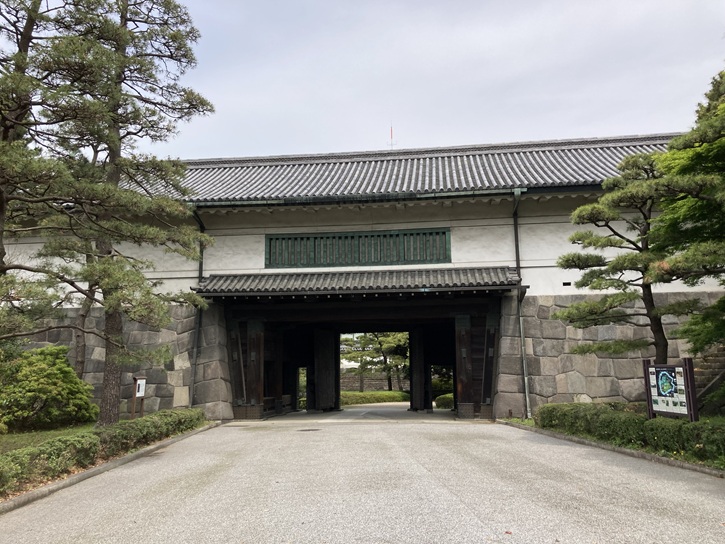
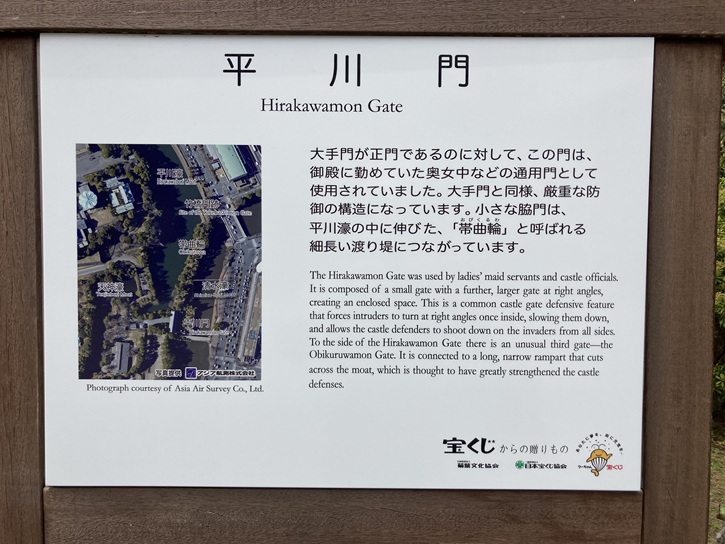
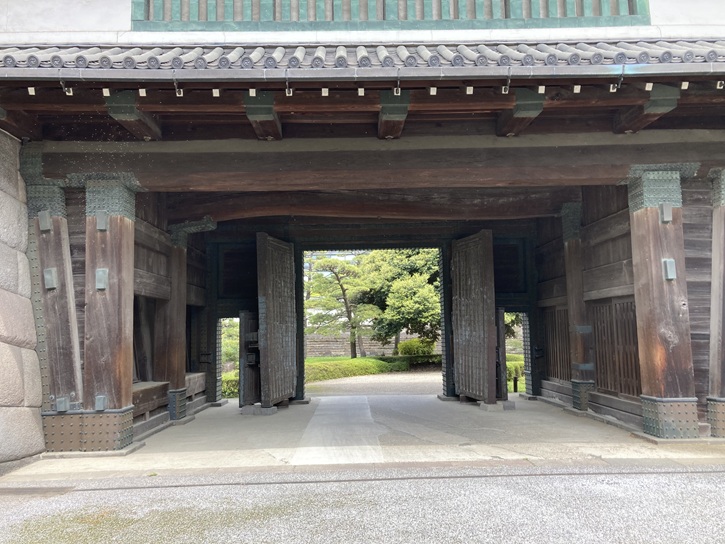
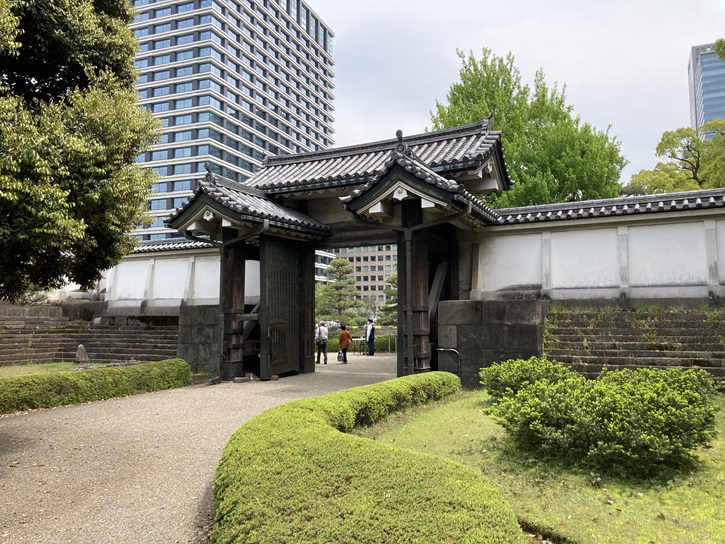
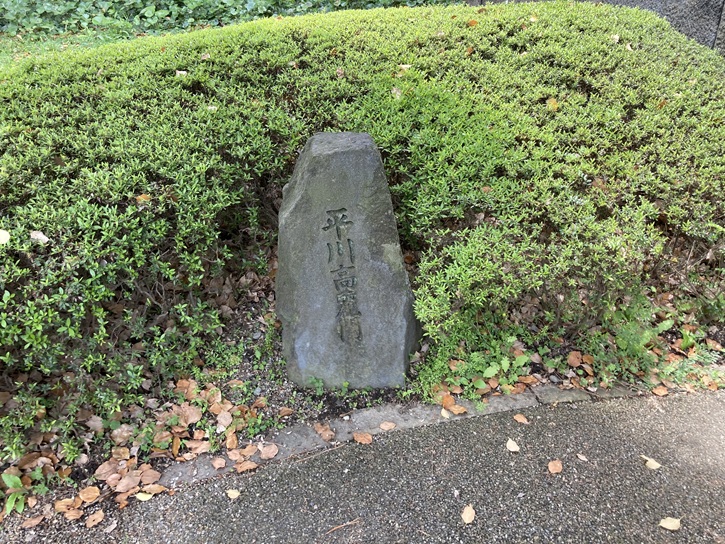
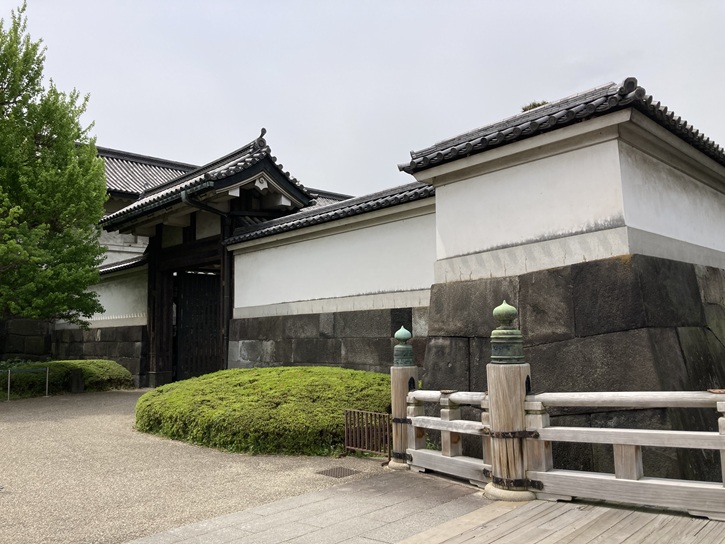
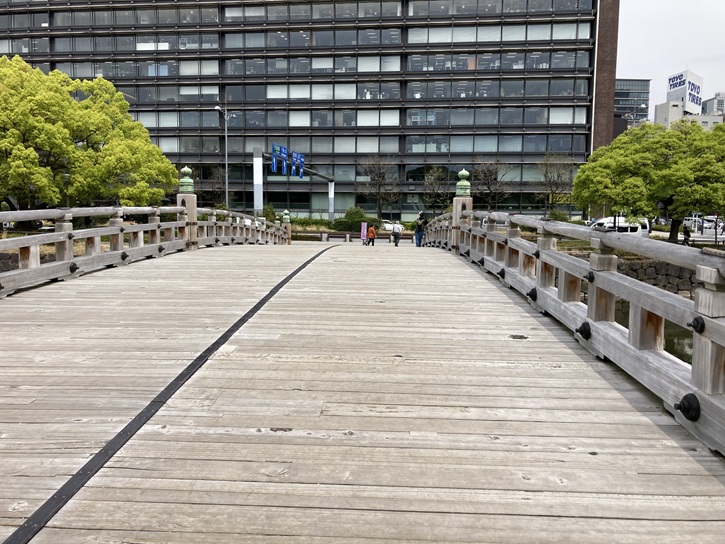
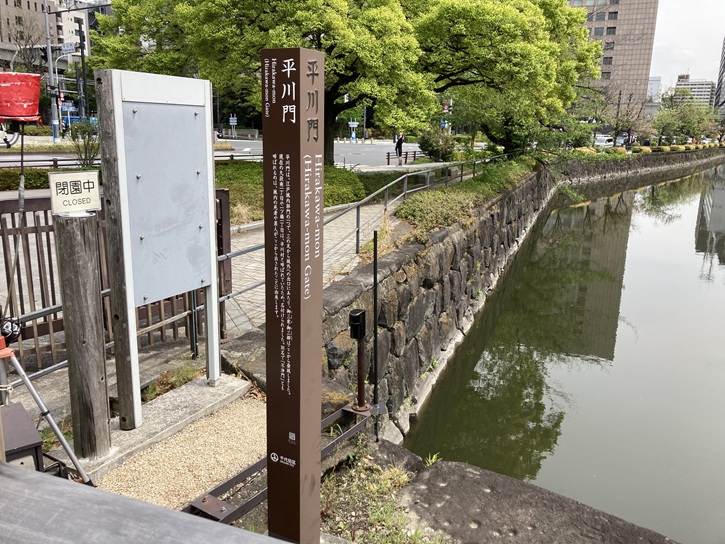
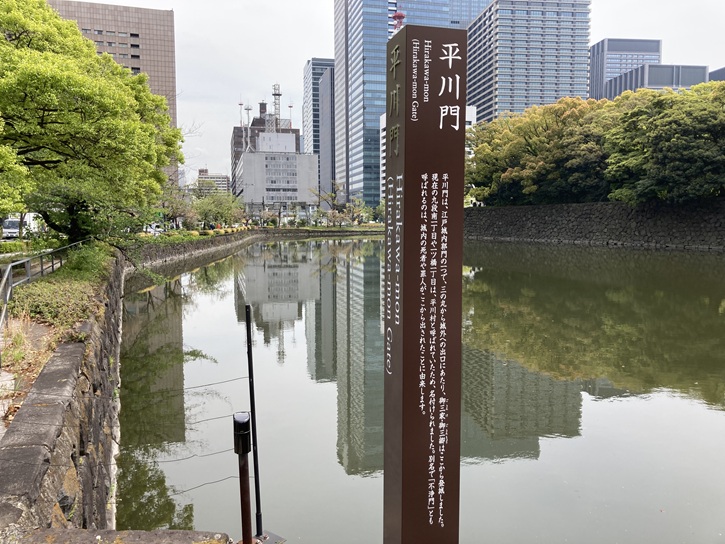
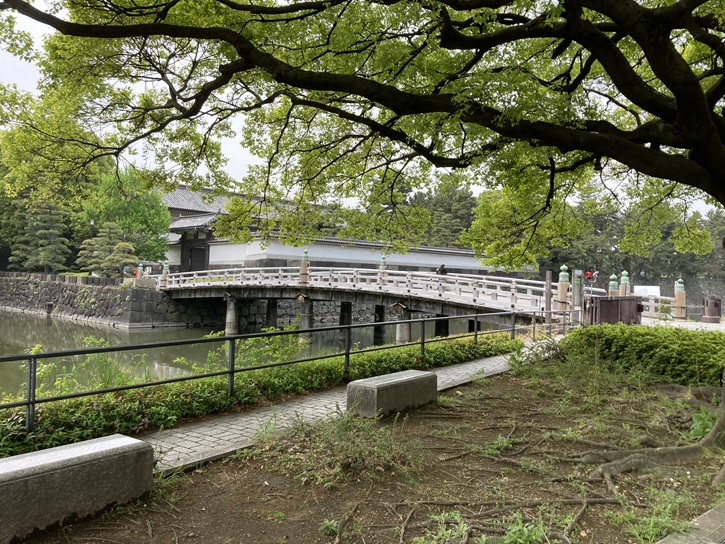
The Hirakawamon Gate was used by ladies' maid servants and castle officials.
It is composed of a small gate with a further, larger gate at right angles,
creating an enclosed space. This is a common castle gate defensive feature
that forces intruders to turn at right angles once inside, slowing them down,
and allows the castle defenders to shoot down on the invaders from all sides.
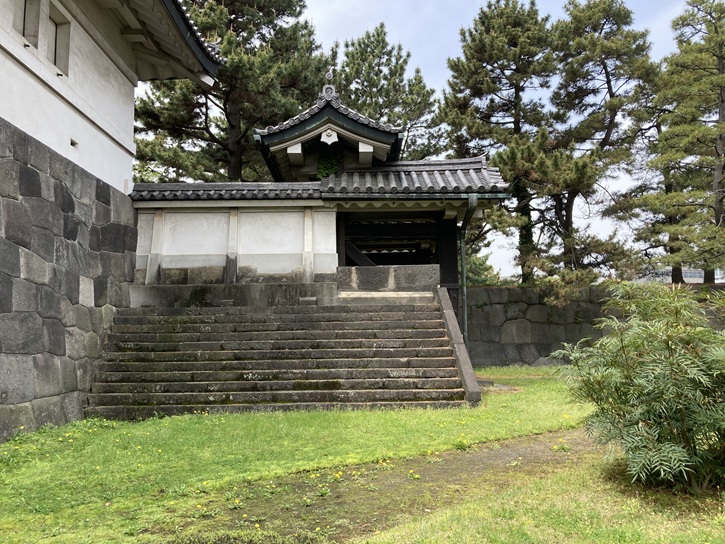
To the side of the Hirakawamon Gate there is an unusual third gate-the
Obikuruwamon Gate. It is connected to a long, narrow rampart that cuts
across the moat, which is thought to have greatly strengthened the castle
defenses.
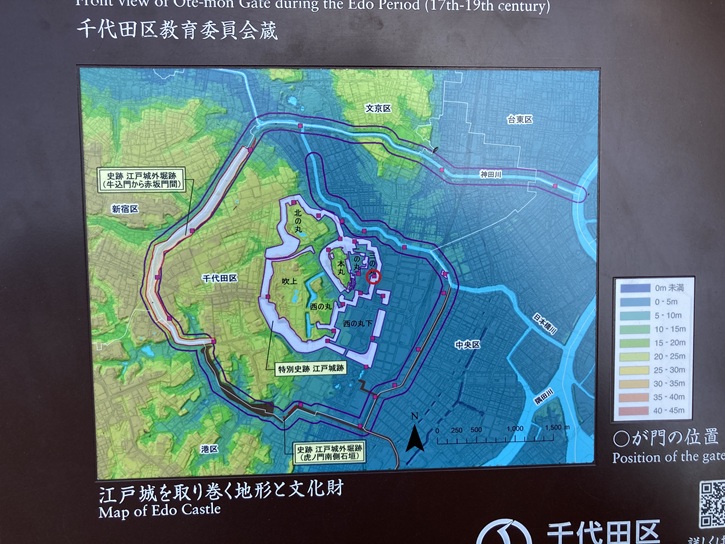
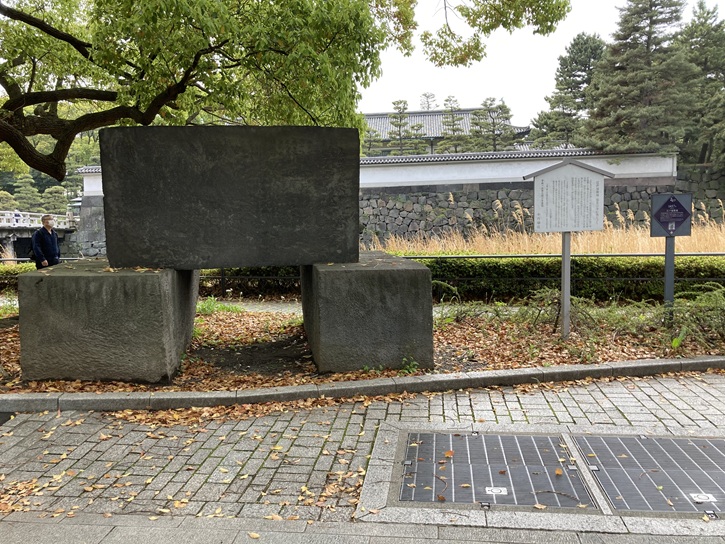
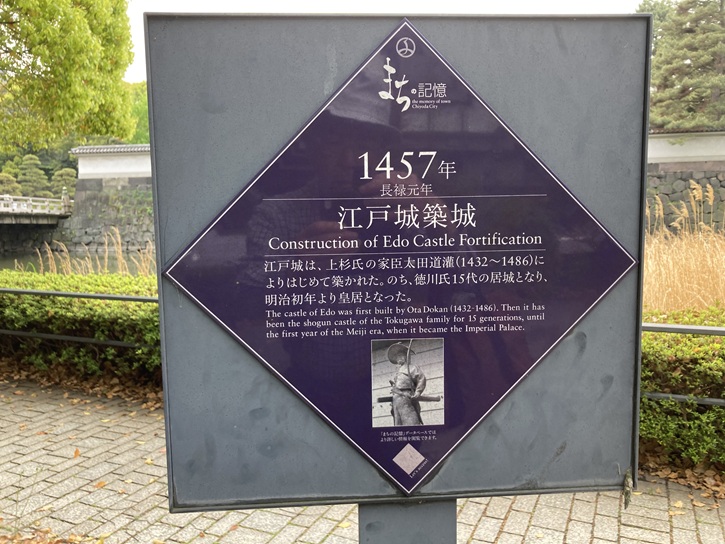
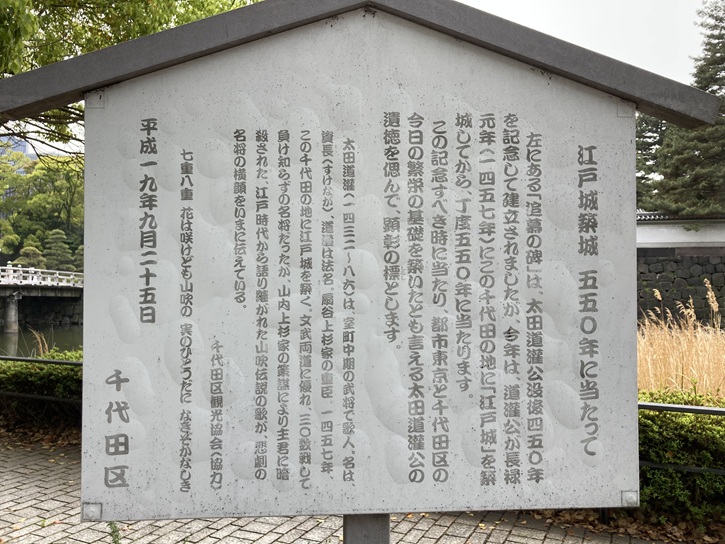
The castle of Edo was first built by Ota Dokan (1432-1486). Then it has been the shogun castle of the Tokugawa family for 15 generations, until the first year of the Meiji era, when it became the Imperial Palace.
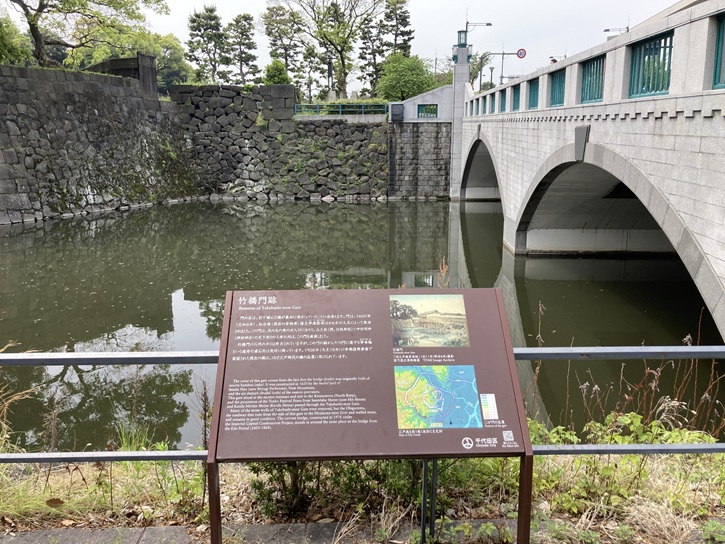
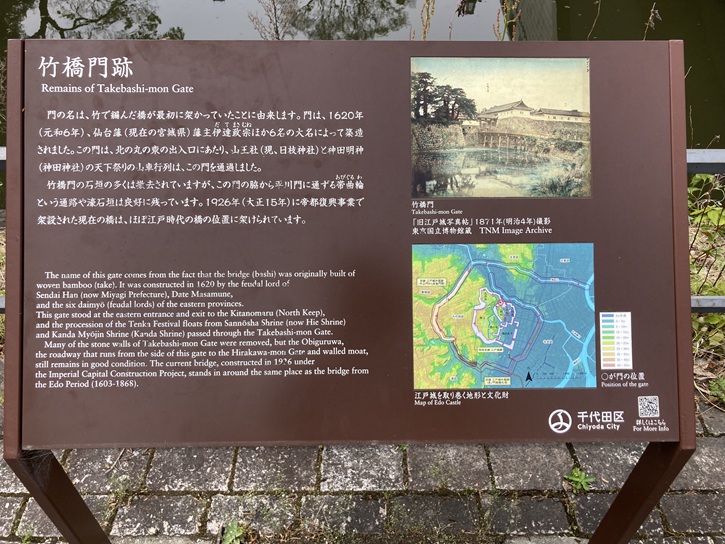
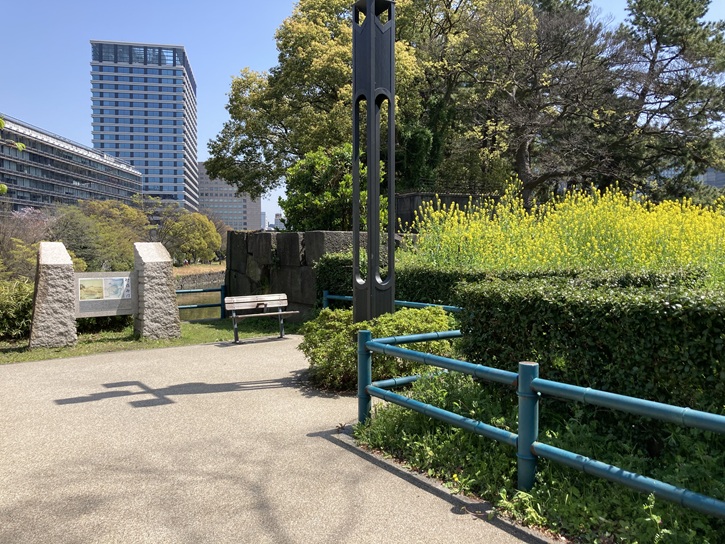
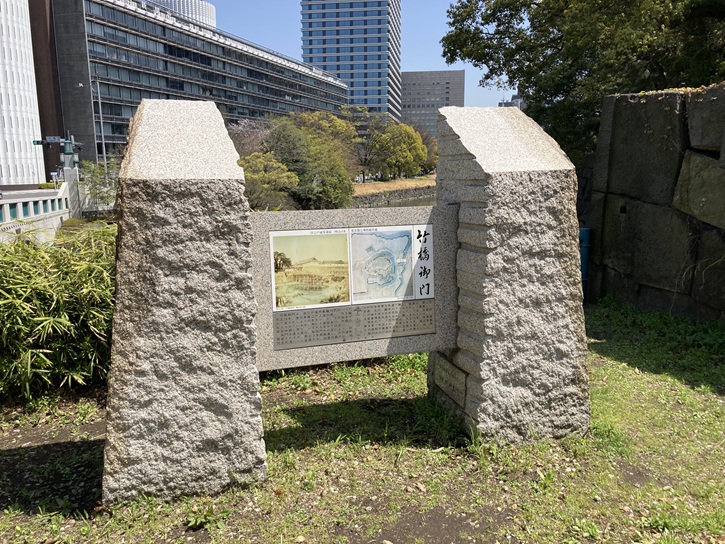
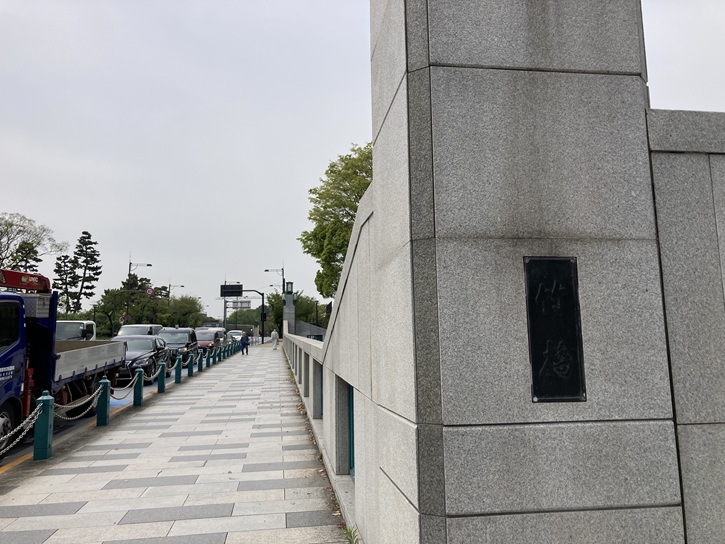
The name of this gate comes from the fact that the bridge (bashi) was originally built of woven bamboo (take). It was constructed in 1620 by the feudal lord of
Sendai Han (now Miyagi Prefecture), Date Masamune, and the six daimyo (feudal lords) of the eastern provinces. This gate stood at the eastern entrance and exit to the Kitanomaru (North Keep), and the procession of the Tenka Festival floats from Sannosha Shrine (now Hie Shrine) and Kanda Myojin Shrine (Kanda Shrine) passed through the Takebashi-mon Gate. Many of the stone walls of Takebashi-mon Gate were removed, but the Obiguruwa, the roadway that runs from the side of this gate to the Hirakawa-mon Gate and walled moat, still remains in good condition. The current bridge, constructed in 1926 under the Imperial Capital Construction Project, stands in around the same place as the bridge from
the Edo Period (1603-1868).
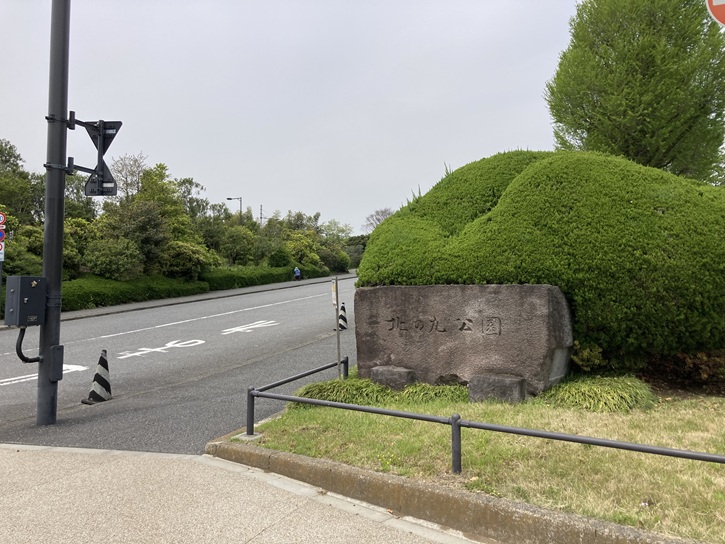
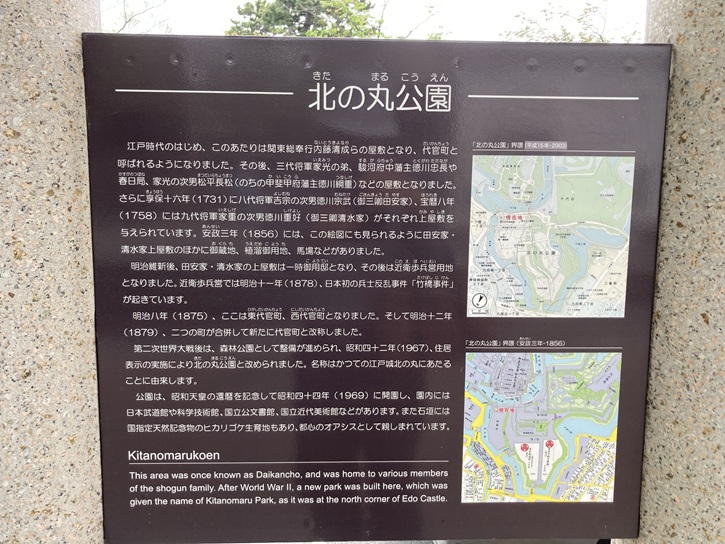
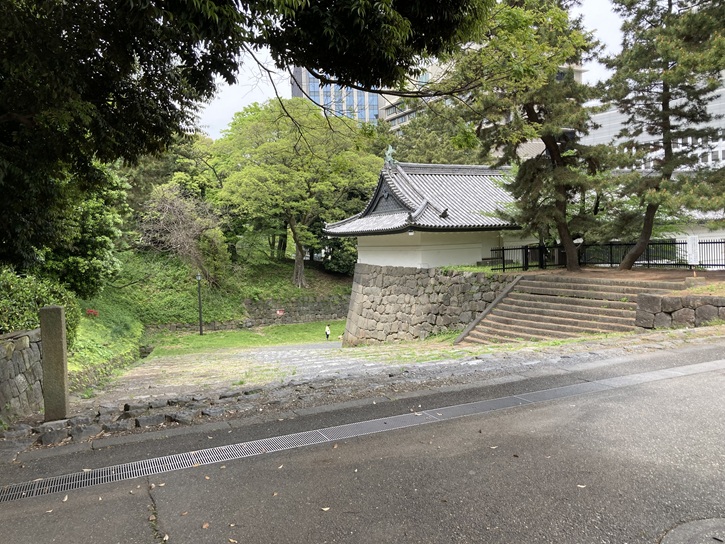
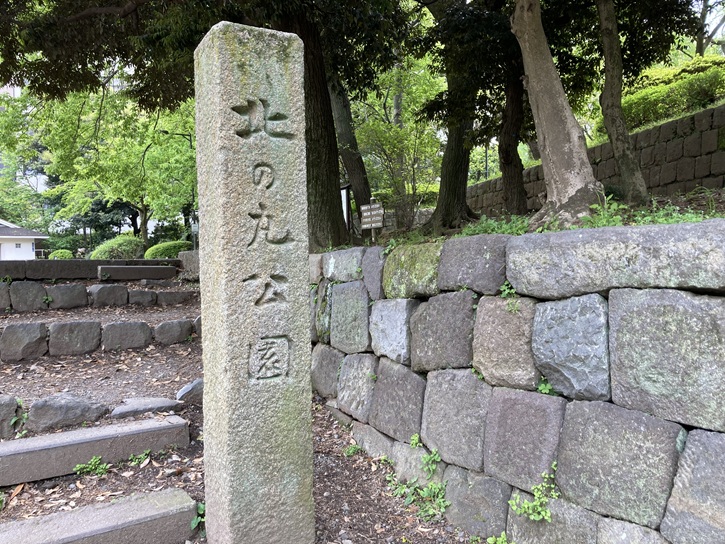
This area was once known as Daikancho, and was home to various members of the shogun family. After World War II, a new park was built here, which was given the name of Kitanomaru Park, as it was at the north corner of Edo Castle.
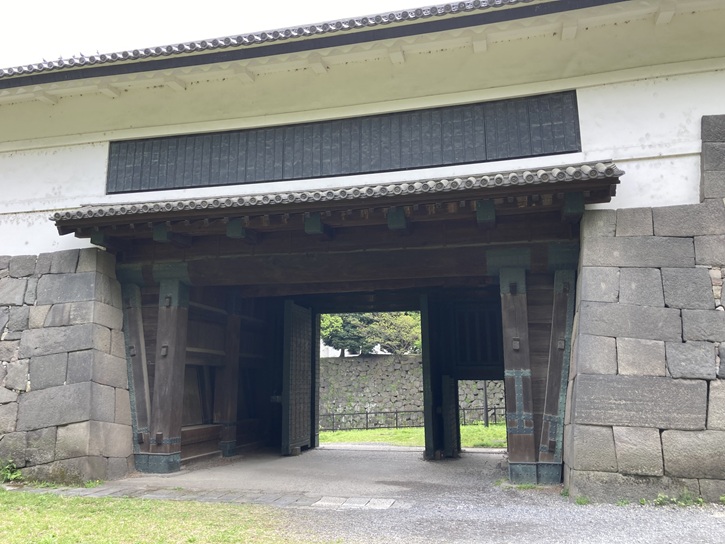
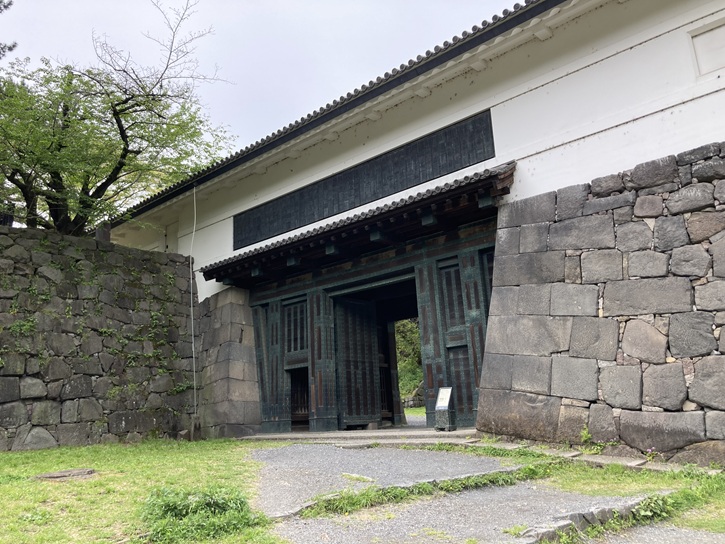
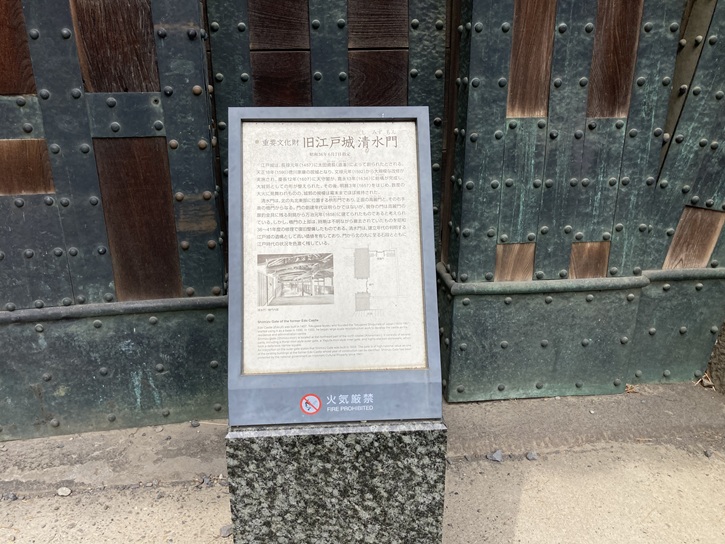
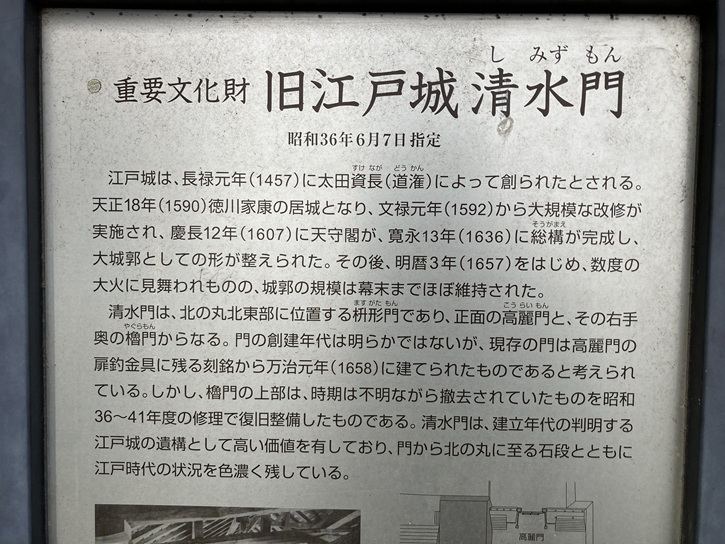
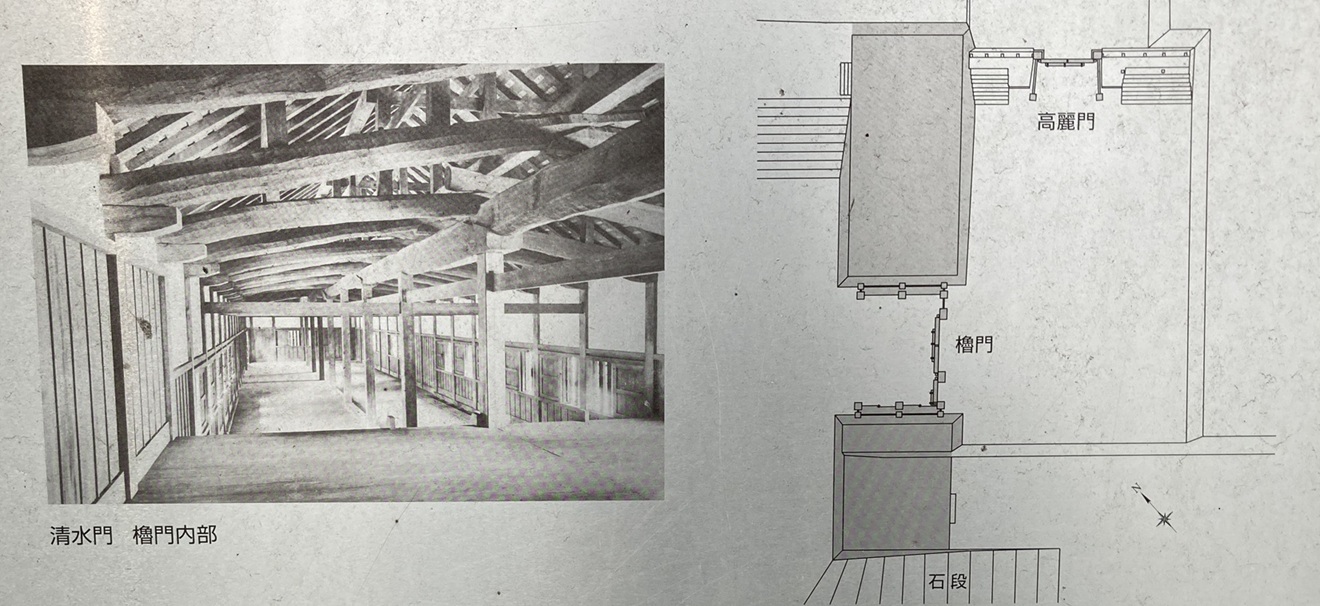
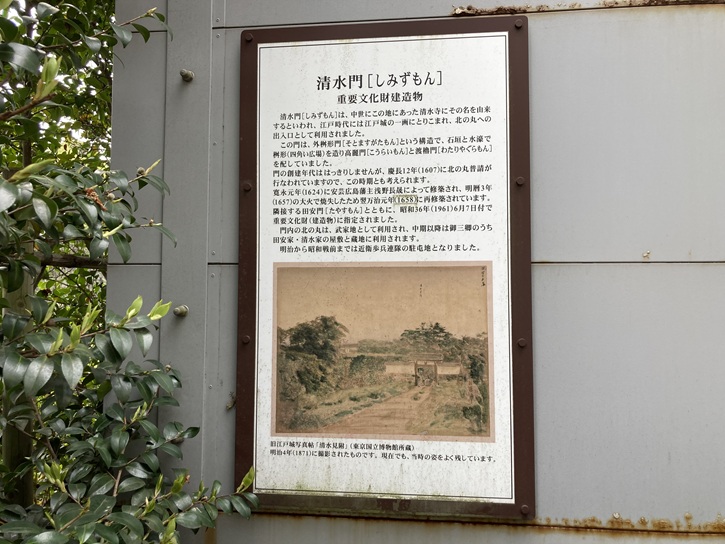
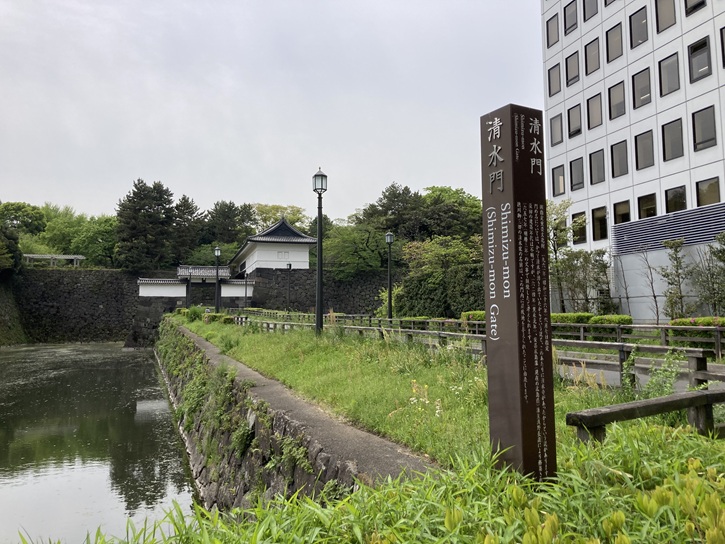
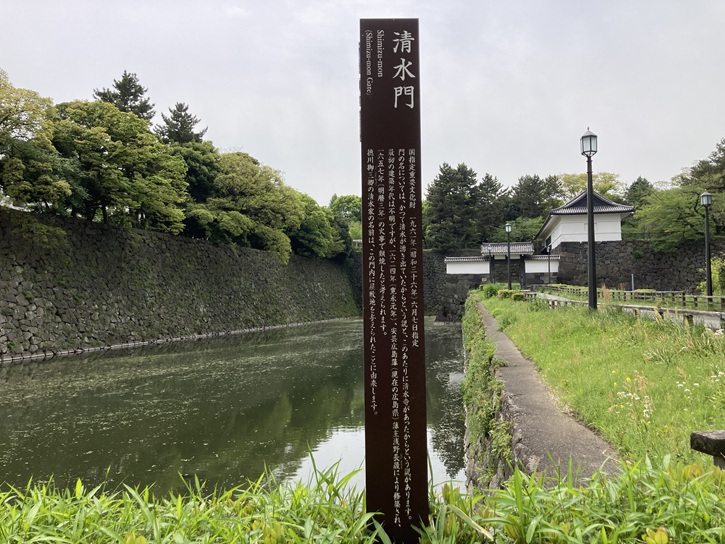
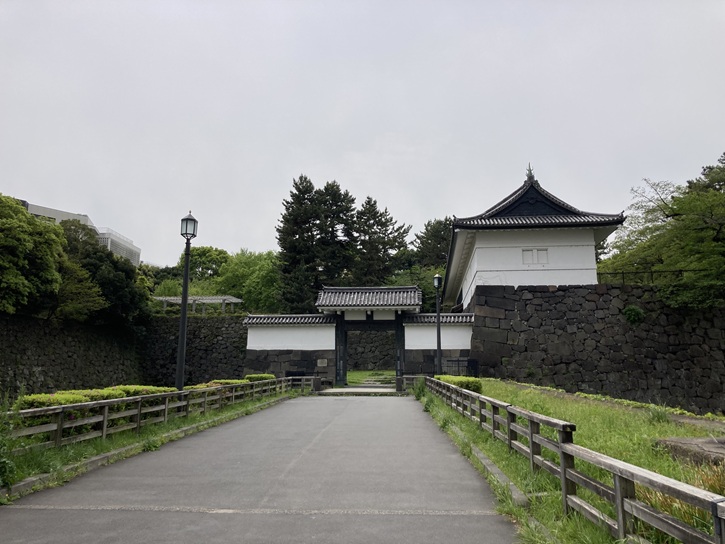
Edo Castle (Edo-jo) was built in 1457. Tokugawa leyasu who founded the Tokugawa Shogunate of Japan (1603-1867) started using it as a base in 1590. In 1592, he began large-scale reconstruction work to develop the castle as his residence and administration centre. Shimizu Gate (Shimizu-mon) is located at the northeast part of the north citadel (Kitanomaru). It consists of several parts, including a Korai-mon style outer gate, a Yagura-mon style inner gate, and highly-stacked stonewalls, which form a defensive narrow square. An inscription on the outer gate states that Shimizu Gate was built in 1658. The gate is of high national value as one of the existing buildings at the former Edo Castle whose year of construction can be identified. Shimizu Gate has been protected by the national government as Important Cultural Property since 1961.